The longest warranties
A desk warranty is usually three numbers, not one, and the frame number is the flattering one. The electronics are what usually fail — a control box or a keypad, five or eight years in — and the desktop is often covered for far less than the frame. The table below shows all three, and the gap between them is the interesting column.
20 desks qualify · Ranked by frame warranty length, longest first.
| Desk | Height range | Travel | Fits | Capacity | Warranty | Approx. |
|---|---|---|---|---|---|---|
| Vari Electric Standing Desk 60×30 | 25″–50.5″ | 25.5″ | 5′3″ to 6′9″ | 200 lb | lifetime frame / lifetime electronics / lifetime top | ~$829 |
| Vari Electric Standing Desk 72×30 | 25″–50.5″ | 25.5″ | 5′3″ to 6′9″ | 180 lb | lifetime frame / lifetime electronics / lifetime top | ~$929 |
| iMovR Lander | 23″–49″ | 26″ | 4′10″ to 6′7″ | 315 lb | lifetime frame / 10 yr electronics / 10 yr top | ~$1,195 |
| iMovR Lander Lite | 27.6″–47.75″ | 20.2″ | 5′9″ to 6′5″ | 225 lb | lifetime frame / 10 yr electronics | ~$499 |
| iMovR Jaxson | 22.5″–48.6″ | 26.1″ | 4′8″ to 6′6″ | 220 lb | lifetime frame / 15 yr electronics / 15 yr top | ~$995 |
| Deskhaus Apex Pro | 22.5″–48.5″ | 26″ | 4′8″ to 6′6″ | 600 lb | 20 yr frame / 10 yr electronics | ~$925 |
| Deskhaus Peak Pro | 25.6″–51.1″ | 25.5″ | 5′4″ to 6′10″ | 600 lb | 20 yr frame / 10 yr electronics | ~$725 |
| EFFYDESK Nimble Standing Desk | 24″–51″ | 27″ | 5′0″ to 6′10″ | 310 lb | 20 yr frame / 20 yr electronics / 2 yr top | ~$953 |
| Ergodriven Tempo Pro | 23.8″–49.4″ | 25.6″ | 5′0″ to 6′8″ | 360 lb | 16 yr frame / 16 yr electronics / 16 yr top | ~$599 |
| UPLIFT V3 Standing Desk | 22.6″–48.7″ | 26.1″ | 4′9″ to 6′7″ | 355 lb | 15 yr frame / 15 yr electronics / 15 yr top | ~$599 |
| UPLIFT V3 4-Leg Standing Desk | 22.6″–48.7″ | 26.1″ | 4′9″ to 6′7″ | 535 lb | 15 yr frame / 15 yr electronics / 15 yr top | ~$959 |
| UPLIFT V3 L-Shaped Standing Desk | 22.6″–48.7″ | 26.1″ | 4′9″ to 6′7″ | 535 lb | 15 yr frame / 15 yr electronics / 15 yr top | ~$1,249 |
| FlexiSpot E7 | 23.8″–49.4″ | 25.6″ | 5′0″ to 6′8″ | 355 lb | 15 yr frame / 15 yr electronics / 5 yr top | ~$340 |
| FlexiSpot E7 Pro | 26″–51.6″ | 25.6″ | 5′5″ to 6′11″ | 440 lb | 15 yr frame / 15 yr electronics / 5 yr top | ~$500 |
| FlexiSpot E7 Plus | 27″–52.6″ | 25.6″ | 5′8″ to 7′1″ | 440 lb | 15 yr frame / 15 yr electronics / 2 yr top | ~$700 |
| FlexiSpot E7L | 26″–51.8″ | 25.8″ | 5′5″ to 7′0″ | 330 lb | 15 yr frame / 15 yr electronics / 2 yr top | ~$740 |
| FlexiSpot Comhar Pro Q8 | 23.6″–48.8″ | 25.2″ | 4′11″ to 6′7″ | 220 lb | 15 yr frame / 15 yr electronics / 5 yr top | ~$700 |
| Progressive Desk Solo Ryzer | 24.6″–50.1″ | 25.5″ | 5′2″ to 6′9″ | 270 lb | 15 yr frame / 15 yr electronics / 15 yr top | ~$746 |
| Progressive Desk Corner Ryzer | 24.6″–50.1″ | 25.5″ | 5′2″ to 6′9″ | 330 lb | 15 yr frame / 15 yr electronics / 15 yr top | ~$983 |
| Vernal Core3 | 24.9″–50.4″ | 25.5″ | 5′2″ to 6′9″ | 353 lb | 15 yr frame / 15 yr electronics / 15 yr top | ~$460 |
Vari sells convenience and a long warranty. The desk ships as a few parcels and assembles in minutes with the tools in the box, and Vari covers the whole thing for life — frame, surface, motors and electronics. For a lot of buyers that combination settles it, especially anyone who has read what building a 72-inch frame from parts involves. The mechanical specification is where it gives ground: 200 lb is among the lowest ratings of any full-size desk here, and Vari publishes neither travel speed nor noise, which makes it hard to compare on anything but convenience and the 25 to 50.5-inch range. The range itself is good, three-stage and wide. Treat it as the desk you buy when you want it working quickly and you are not hanging a tower off it.
Fits 5′3″ to 6′9″ (est.)
Best for: Anyone who wants a full-size desk with a quick build and a lifetime warranty, and will not load it heavily.
Full spec sheetThe six-foot version of the same desk, and the place where the compromise gets sharper. The rated capacity falls to 180 lb on the wider top — lower than the 60-inch version of the same desk — because the longer unsupported span between two legs is the limiting factor, not the motors. That is the honest trade for a 72-inch two-leg desk: the span that gives you six feet of surface is the span that constrains what you can put on it and how still it stays at 50 inches. Like the 60-inch model it assembles in minutes with the included tools, and Vari covers the frame, surface, motors and electronics for life. If you want six feet of surface and a heavy setup, a four-leg frame is the answer; if you want six feet with a quick build and that warranty, this is a strong one.
Fits 5′3″ to 6′9″ (est.)
Best for: A wide desk in a room where nobody wants to spend an afternoon building one.
Full spec sheet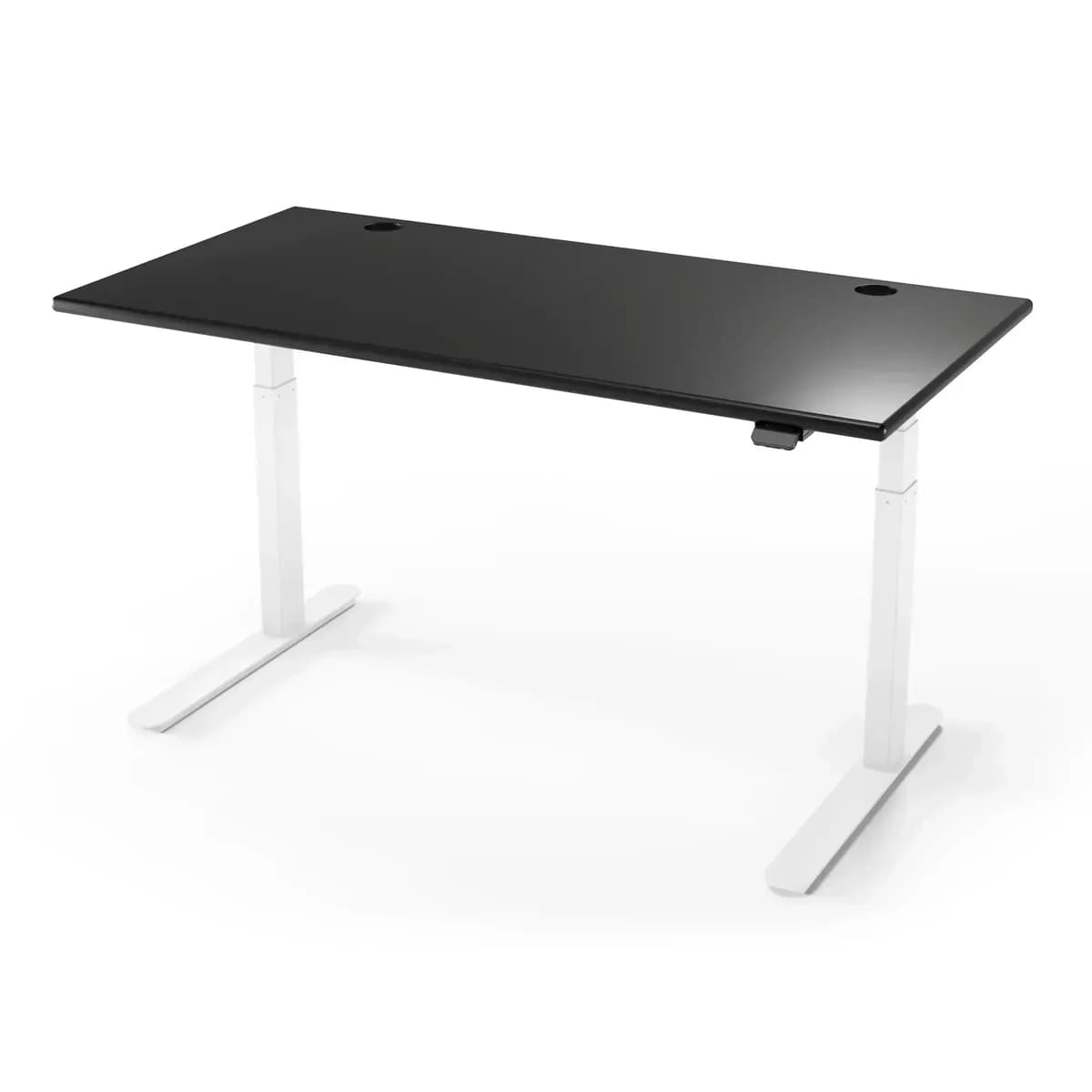
iMovR
iMovR Lander
The Lander's selling point is that it arrives almost built. iMovR bonds the top to the frame at its factory in Michigan and ships it as close to one piece as a desk that size can be, so setup is a matter of minutes rather than an afternoon — the single biggest complaint about every other desk in this catalog simply does not apply. The 3D-laminate surface is a seamless thermoformed skin with no visible edge band to peel, which is a real durability advantage over the edge-banded tops that dominate the price bracket, and it is covered for ten years along with the motors and electronics, while the steel frame has a lifetime warranty. The 23-inch minimum is genuinely low and the 315 lb rating is ample. What you pay is money and choice: $1,195 is the entry point, the finishes are fewer than a configurator-driven brand offers, and this is a made-to-order product with a lead time rather than something that ships tomorrow.
Fits 4′10″ to 6′7″ (est.)
Best for: Someone who will pay a premium never to assemble a desk, and wants a surface that will not delaminate.
Full spec sheet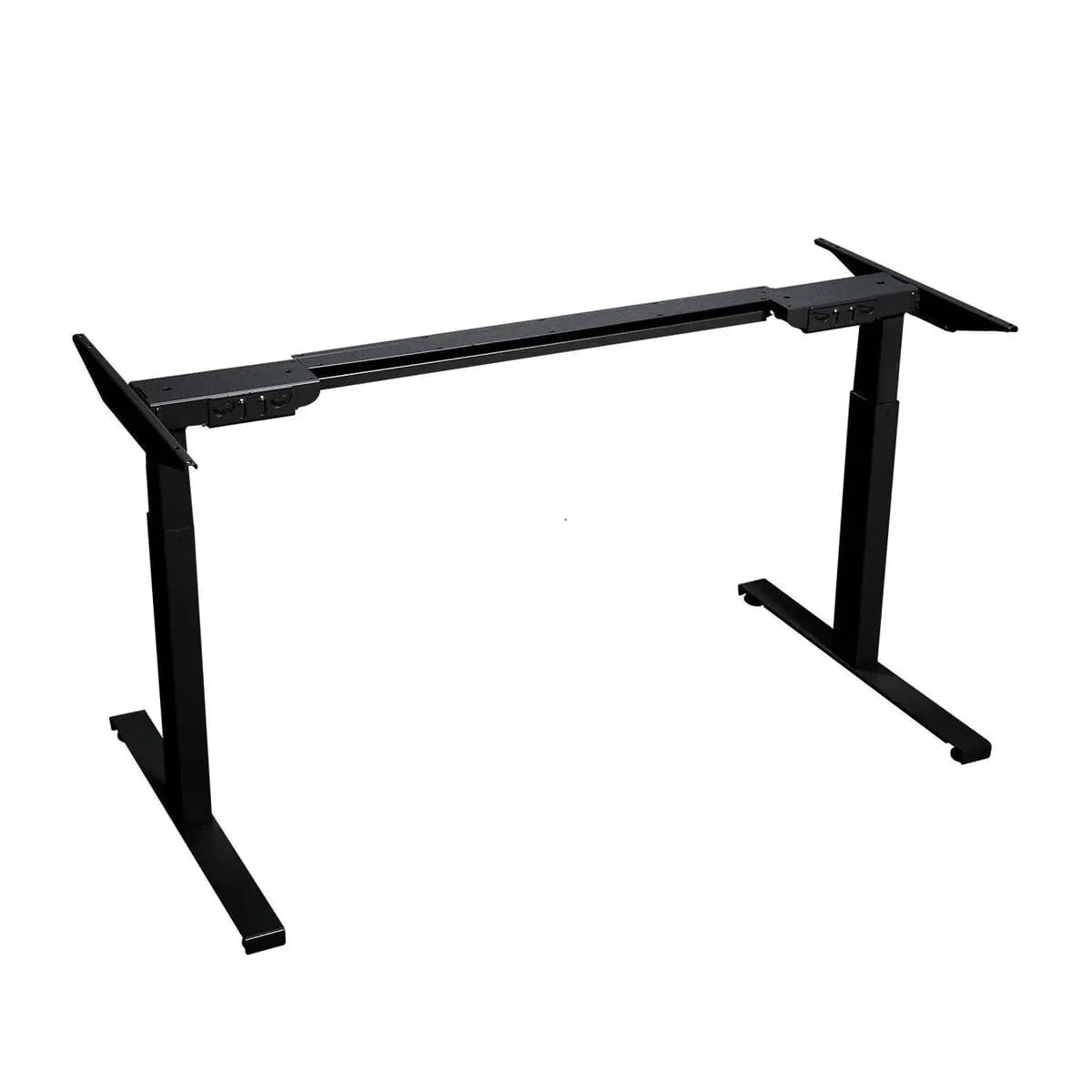
iMovR
iMovR Lander Lite
The Lander Lite is iMovR's base for people bringing their own top, and the specification to watch is which base you are actually buying. The standard base's frame travels 26.6 to 46.75 inches — a narrow 20-inch span with a high floor and a low ceiling, which by the elbow-height rule suits a fairly narrow band of people. The XT base covers 23.25 to 49.25, a much more useful window, and it is the one most buyers should want. Both carry iMovR's lifetime frame warranty with ten years on the motors and electronics, and both use a paddle control with two programmable heights. At 225 lb it is a light-duty base by the standards of this catalog, so pair it with a laminate or bamboo top rather than a two-inch slab.
Fits 5′9″ to 6′5″ (est.)
Best for: A DIY build with a lightweight top, from someone who wants a long US-backed warranty on the base.
Full spec sheet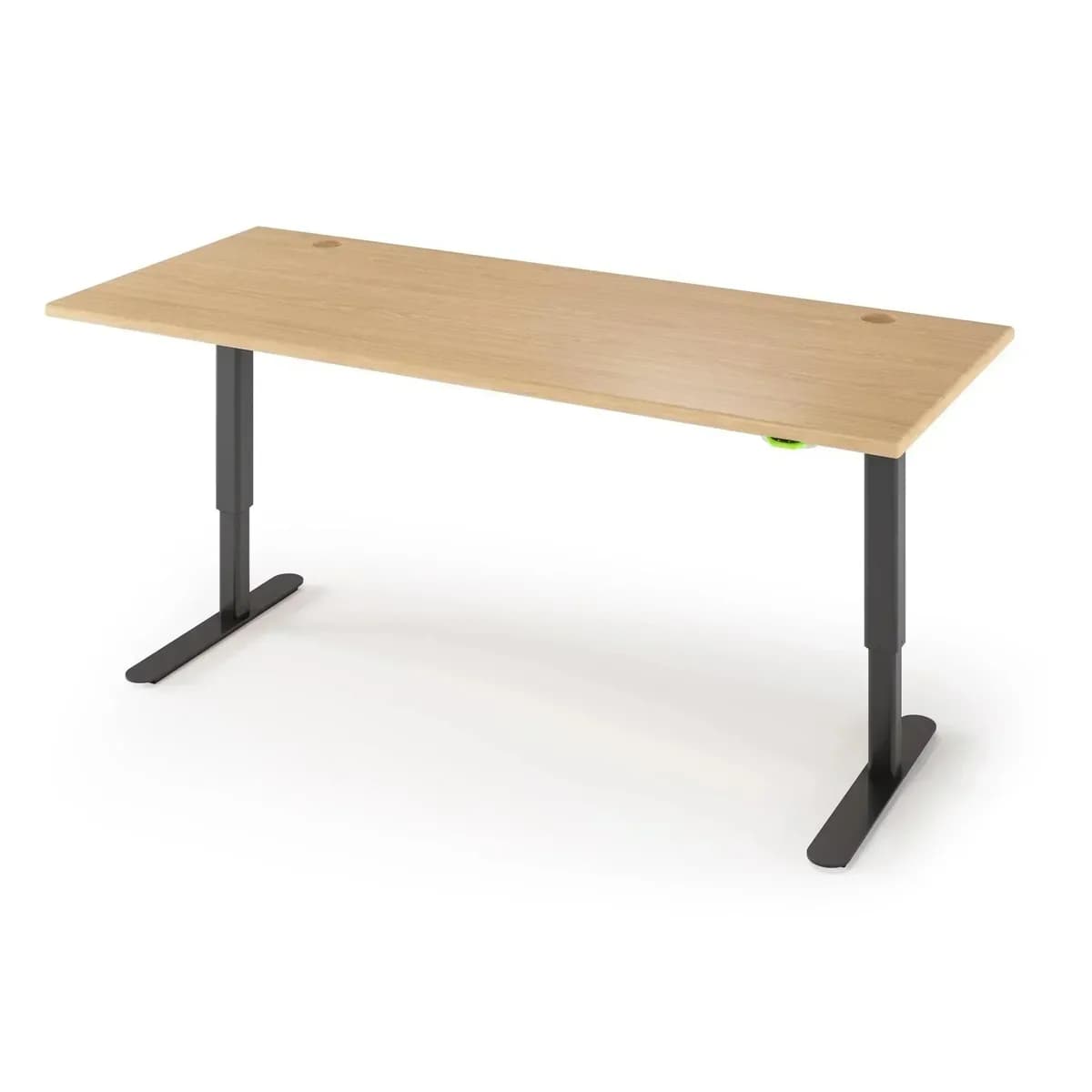
iMovR
iMovR Jaxson
The Jaxson is the Lander's cheaper sibling and its dual-stage base drops to 21.5 inches before the top goes on, about 22.5 at the work surface — among the lowest in this catalog, which by the seated-elbow rule reaches down to users around 4 ft 8 in. It uses inline brushless motors, which is the quieter and longer-lived arrangement, and the steel frame carries a lifetime warranty. The complication is the same one that runs through iMovR's line: two bases ship under one product name. The single-stage frame starts at 26.9 inches and the dual-stage at 21.5, and optional 6-inch height extenders lift the dual-stage frame to 53.6 inches for very tall users, giving up the low end. Read the configuration before the price. At 220 lb it is a light-duty desk, so it suits a normal monitor-and-laptop setup rather than a tower.
Fits 4′8″ to 6′6″ (est.)
Best for: Short users, or a desk shared by people of very different heights, where the floor is what matters.
Full spec sheet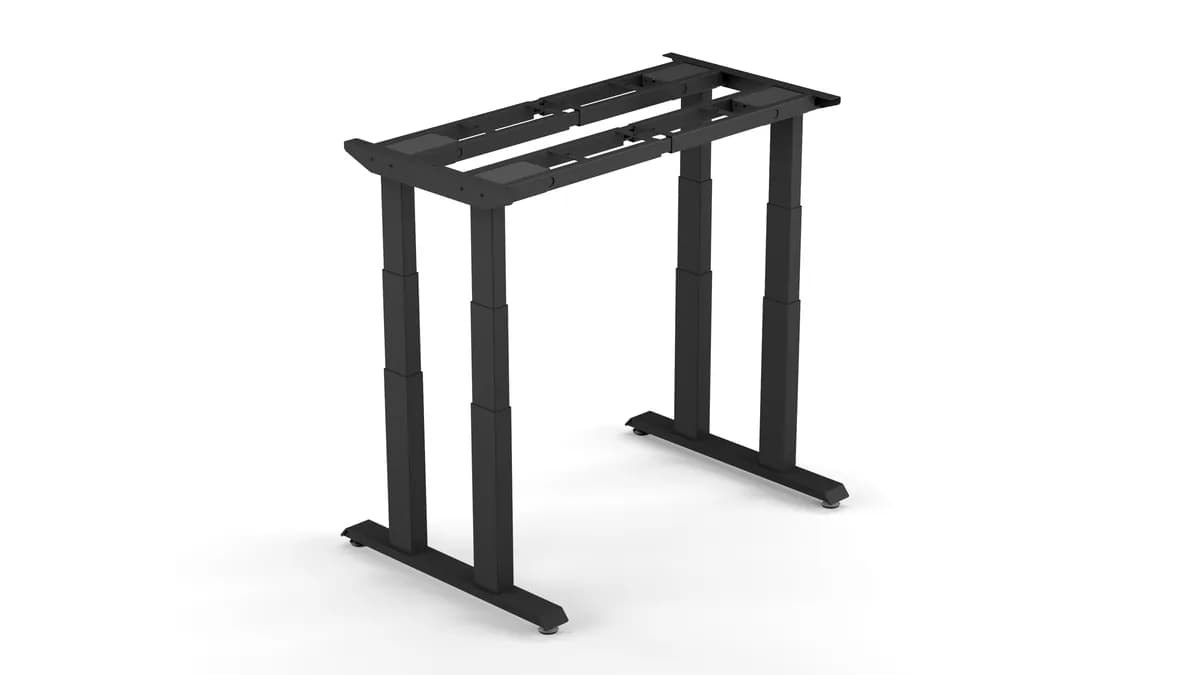
Deskhaus
Deskhaus Apex Pro
Four columns with an independent motor in each, a 600 lb rating and a twenty-year frame warranty — the Apex Pro is the frame people upgrade to after a two-leg desk disappoints them, and the accounts of that switch are strikingly consistent: the front-to-back movement simply stops. It is a base only, which suits its audience, because the people who buy it are usually pairing it with a slab they picked themselves. The paddle controller shows a live height readout, which turns out to matter when you have a drawer unit underneath and need to stop short of it. Two things to know before ordering. Deskhaus sells it as a preorder item, with the shorter and longer foot sizes on a 20-business-day lead time. And the brand's visibility in enthusiast discussion has drawn scepticism about how organic that enthusiasm is, which is worth knowing when you read glowing write-ups, this one included.
Fits 4′8″ to 6′6″ (est.)
Best for: Pairing with a heavy slab you chose yourself, especially if a previous two-leg desk wobbled.
Full spec sheet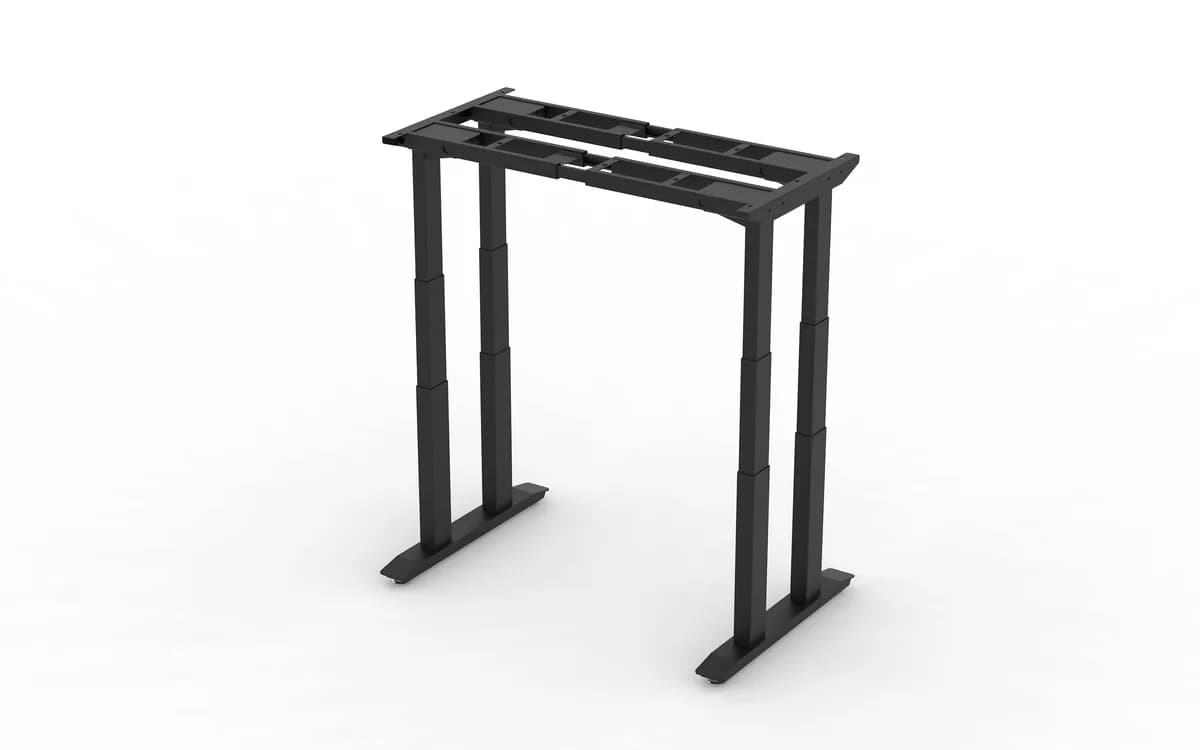
Deskhaus
Deskhaus Peak Pro
The Peak Pro is the Apex Pro's three-stage sibling: same four independent motors, same 600 lb rating, same twenty-year warranty, but 25.5 inches of travel that tops out at 51.1 — high enough for someone around 6 ft 6 in to stand at properly. It spans tops up to 80 inches wide, and instead of crossbars it uses support wedges under the surface to take the flex out of a long span, which keeps the floor clear. The trade against the Apex is at the bottom: the three-stage columns start at 25.6 inches rather than 22.5. That is a real loss for shorter users and the reason the cheaper Apex remains the better desk for a lot of people. Think of the Peak as the tall person's version, not the upgraded one.
Fits 5′4″ to 6′10″ (est.)
Best for: Tall users with wide tops, where the ceiling matters more than how low the desk goes.
Full spec sheetEFFYDESK
EFFYDESK Nimble Standing Desk
EFFYDESK is a Vancouver brand whose current line is the Nimble, Terra, Wildwood and Grove, and the Nimble is the mainstream one. Three-segment columns and dual motors give it a 27-inch span — 24 to 51 inches at the surface, which is a wider window than most desks at any price and reaches both a genuinely low sitting height and a standing height for someone near 6 ft 10 in. The rest of the specification is unusually complete for the money: 310 lb of lift, a gyroscope-based anti-collision sensor rather than motor-current sensing, a published 45 dB noise ceiling and 35 mm/s travel, a cable tray and grommet in the box, and twenty years on the frame, motors and electronics, with two on the top. The compromises are the surface and the sizes. Tops are high-density particle board in three fixed widths, with no bamboo or solid-wood option, and the US storefront charges $953 for the 47-inch desk that costs C$715 in Canada, close to double at the exchange rate.
Fits 5′0″ to 6′10″ (est.)
Best for: A household where the tallest and shortest people are far apart, and for anyone who wants published noise and speed figures at this price.
Full spec sheet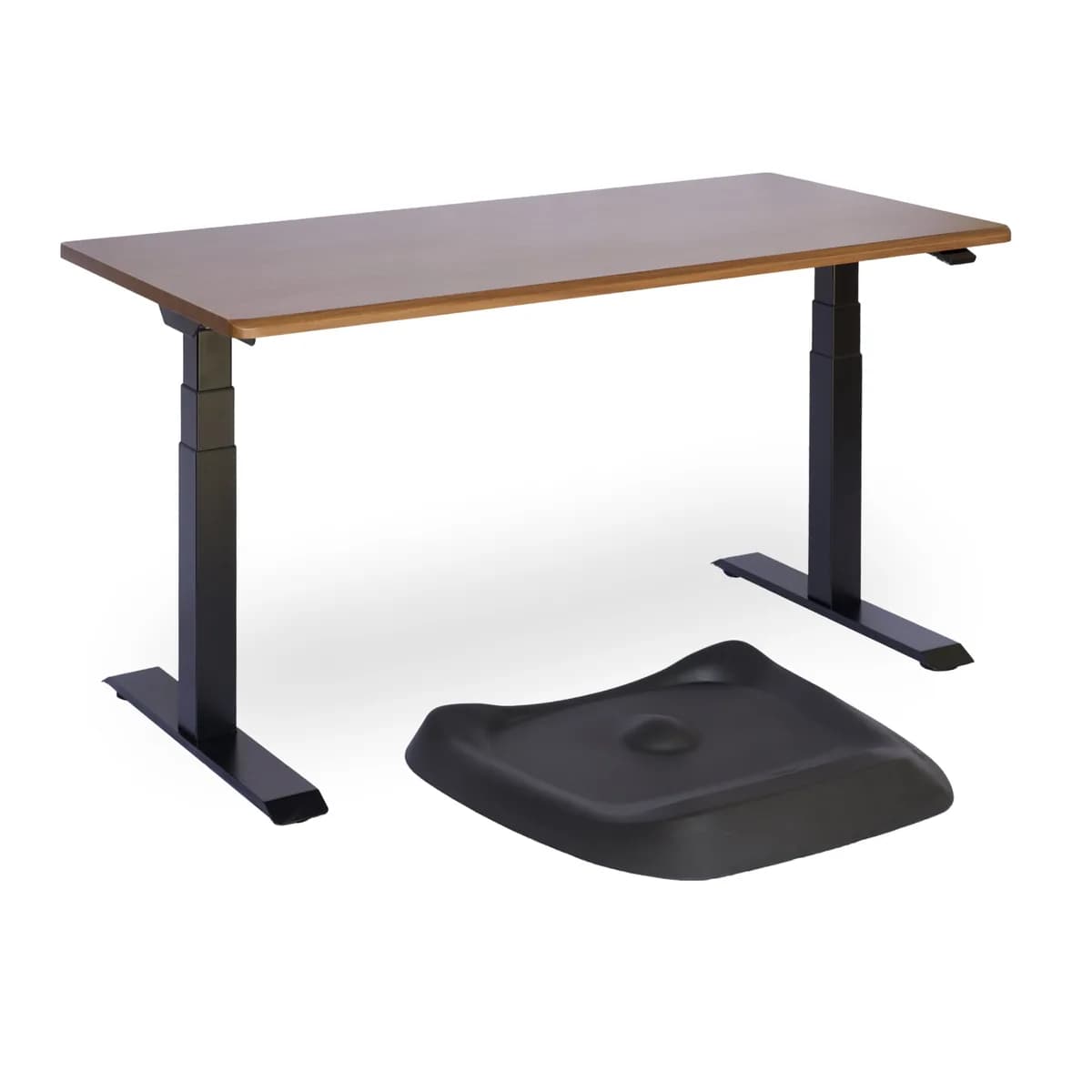
Ergodriven
Ergodriven Tempo Pro
The Tempo's argument is that the hard part of owning a standing desk is not the desk, it is remembering to use it. The controller is built into the surface, senses that someone is there, and moves the desk on a cadence rather than waiting to be asked — which addresses the single most common failure, a desk that spends a year at one height. The frame under it is a strong specification in its own right: three stages that put the 1-inch top at 23.8 to 49.4 inches, 360 lb, 40 dB, and sixteen years on the frame, motors, electronics and top together. The thing to weigh is whether automatic movement suits you. A desk that rises on a schedule is either the feature that finally makes the habit stick, or an interruption you disable in week two, and there is no way to know which you are until you live with it.
Fits 5′0″ to 6′8″ (est.)
Best for: Someone who has owned a standing desk before and left it at one height for a year.
Full spec sheet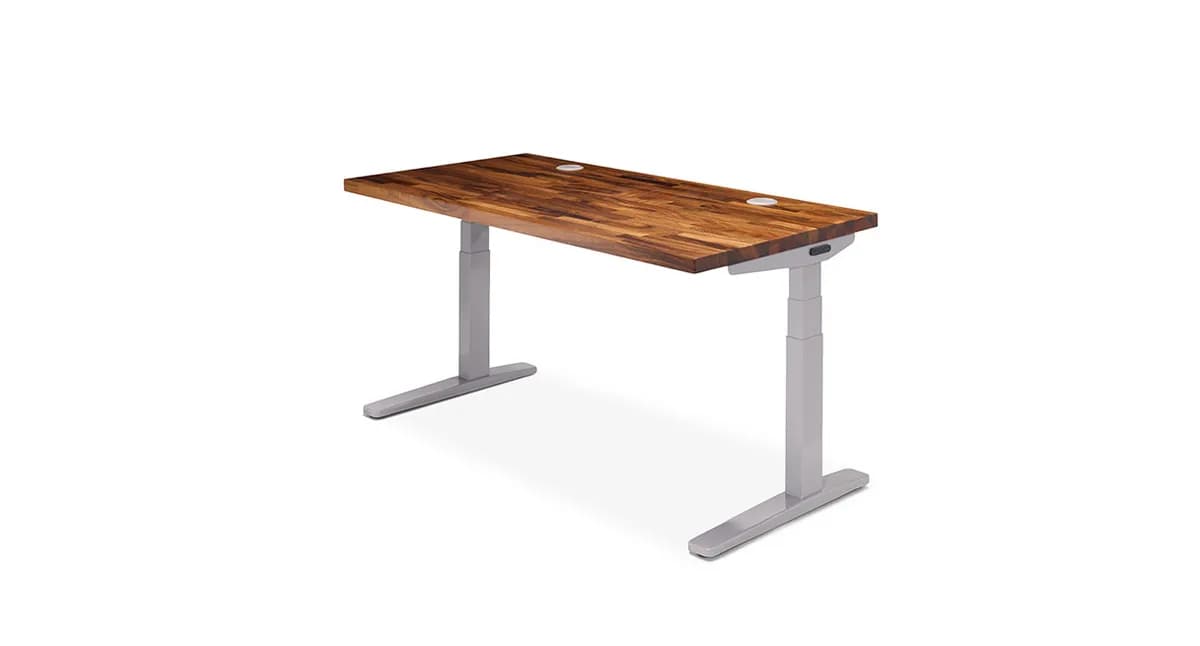
UPLIFT
UPLIFT V3 Standing Desk
The V3 replaced the V2 that dominated home-office recommendations for five years, and the changes are the ones people had been asking for: the frame drops to 22.6 inches, travels at two inches a second rather than 1.57, and the assembly went from thirty-two screws to sixteen. It is a two-leg C-frame with three-segment columns, which is what lets it cover the full ANSI/BIFMA window from a genuinely low sitting height to 48.7 inches. There is no lower stretcher between the legs — the stiffness comes from a deep I-beam upper rail and a stability plate at the foot — so you keep clear floor for a chair mat and a tower, and you accept the trade every two-leg desk makes. The warranty covers the frame, motors, electronics and top together for fifteen years, and the configurator is the widest, from a $599 laminate build to reclaimed fir and pheasantwood slabs. Owner accounts of the two-leg frames are consistent on one point: front-to-back movement at full standing height is real, and the wider the top the more you feel it.
Fits 4′9″ to 6′7″ (est.)
Best for: A single-desk home office where the widest choice of tops and the longest warranty matter more than absolute rigidity at standing height.
Full spec sheetThis is the answer to the complaint that follows every two-leg desk. Four columns, one motor each, a telescoping frame that spans 42 to 80 inches, and a 535 lb rating — the wobble that owners describe on wide two-leg tops at standing height largely stops being a topic. The height window is identical to the two-leg V3 because it uses the same three-segment columns, so nothing is given up on fit: it still reaches 22.6 inches for sitting and 48.7 for standing. What you pay is money, floor space and assembly time. Four legs mean more hardware than the two-leg desk, the extra legs take floor space a rolling drawer unit wants, and the entry price is $959 against $599. For an 80-inch top, a heavy tower on the frame or a three-monitor arm, that is the trade most owners who upgraded say they should have made first time.
Fits 4′9″ to 6′7″ (est.)
Best for: Wide tops, heavy multi-monitor rigs, or anyone who has already owned a two-leg desk and been annoyed by it.
Full spec sheetA corner desk that actually raises and lowers is a different engineering problem from a straight one: three legs have to arrive at the same height at the same moment across two wings that are not the same length. UPLIFT's L-shaped V3 does it with three synchronised motors on the same three-stage columns as the straight desk, so the height window and the fit range are unchanged, and it is rated for 535 lb across the whole surface. It is the configuration to buy if you want a standing desk and a second work surface without the hard seam and mismatched heights of two desks pushed together. Budget properly: the $1,149 entry price is for UPLIFT's older V2 C-frame, the V3 frame described here is $100 more, and a realistic build is closer to $1,800.
Fits 4′9″ to 6′7″ (est.)
Best for: A corner office where one continuous surface beats two desks, and the budget stretches past most straight desks.
Full spec sheet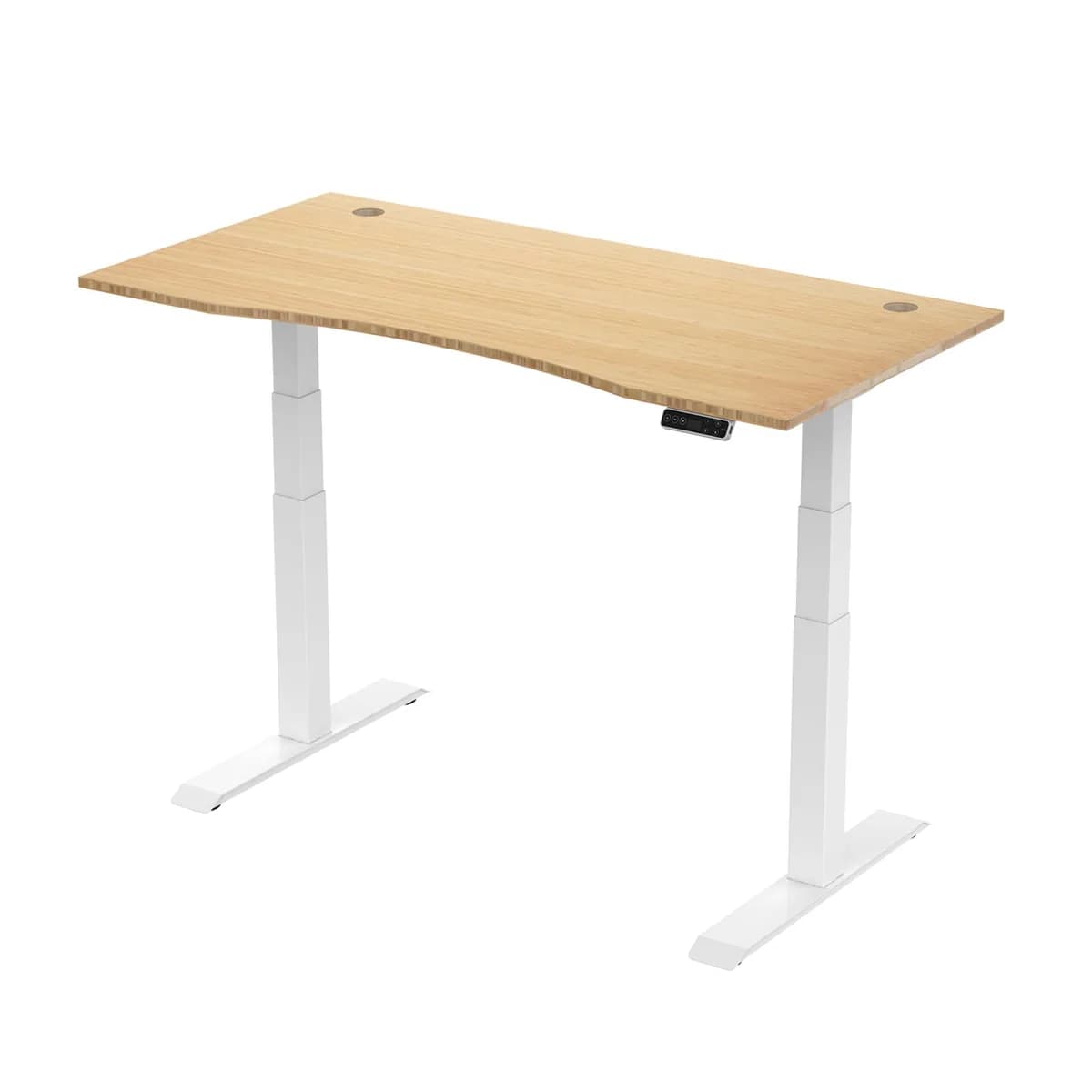
FlexiSpot
FlexiSpot E7
The E7 is the frame that made the mid-market: three-stage legs, a frame that drops to 22.8 inches (23.8 at the surface of a 1-inch top), a 355 lb rating and a fifteen-year warranty at a price that undercuts the American brands by several hundred dollars. It is the default recommendation for anyone putting their own top on a frame, and the reason is the combination of that low minimum with square 2×2-inch columns that resist twist better than the round legs on cheaper frames. The E7's specific advantage inside its own family is easy to miss: it goes lower than the E7 Pro. If you are short, or you sit low, the plain E7 is the better desk despite being the cheaper one. The trade is the same one every two-leg frame makes — owners report it is rock solid seated and moves at standing height, more so as the top gets wider — and the cable tray that the Pro includes is an extra here.
Fits 5′0″ to 6′8″ (est.)
Best for: Putting a butcher block or an existing top on a well-made frame without paying American-brand prices.
Full spec sheet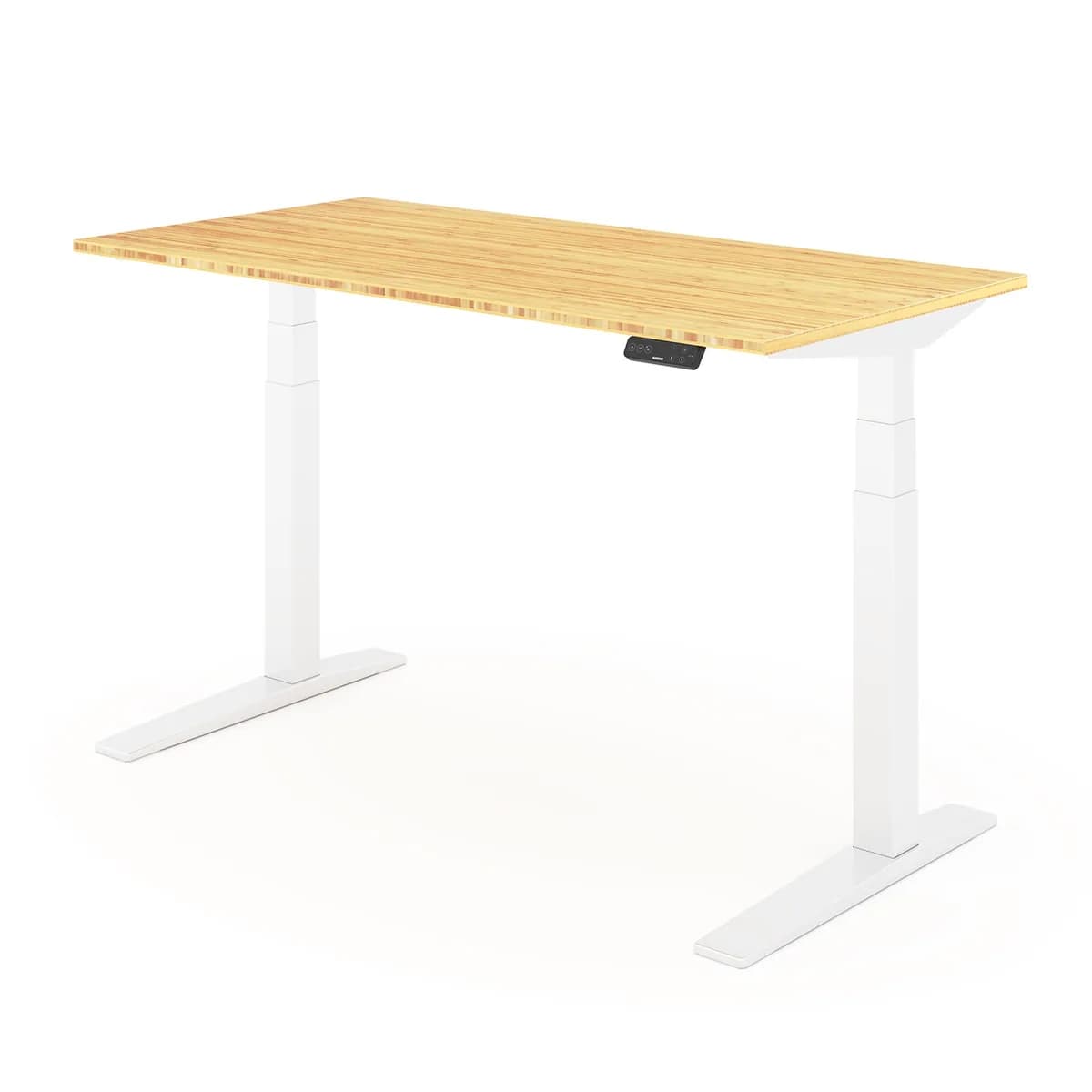
FlexiSpot
FlexiSpot E7 Pro
The Pro is the E7 with heavier columns: 440 lb instead of 355, ten more pounds of steel in the frame, an LED touch keypad with a USB charging port, and a collision system that reverses rather than just stopping. It reaches 51.6 inches at the work surface, which is what makes it one of the few frames that genuinely suits someone around 6 ft 5 in standing. But it buys that top end by giving up the bottom: the working minimum is 26 inches against the plain E7's 23.8. That is the decision. If you are tall, the Pro. If you are short, or you share the desk with someone who is, the cheaper E7 fits more people. Owners describe it as extremely solid seated, with the usual two-leg movement appearing at standing height, and consistently flag one practical detail — set the legs wider than the default if you intend to hang the drawer accessory, because otherwise you knee it all day.
Fits 5′5″ to 6′11″ (est.)
Best for: Tall users and heavy rigs, as long as nobody short needs to sit at the same desk.
Full spec sheet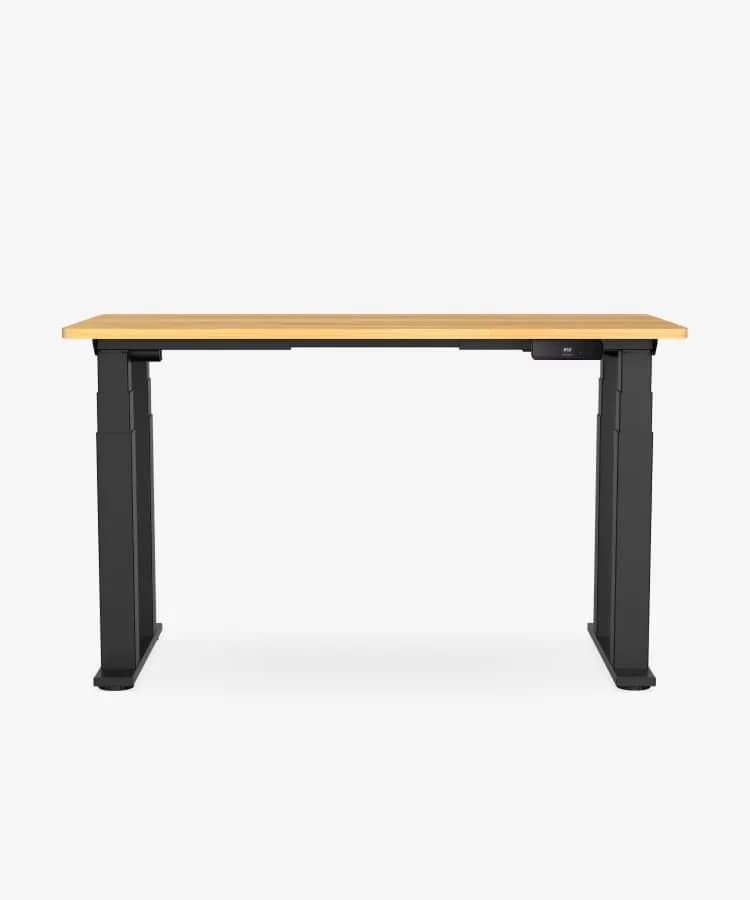
FlexiSpot
FlexiSpot E7 Plus
Four legs, a 440 lb lifting rating and a 52.6-inch working ceiling — the E7 Plus is FlexiSpot's answer to the wobble that dogs every two-leg desk, and owners who bought it specifically to stop their monitors shaking report exactly that outcome at both sitting and standing height. At about $700 with a laminate top it is the cheapest four-leg desk here, which is the whole argument for it, and it carries the same fifteen years on the frame and electronics as FlexiSpot's two-leg frames, with two on the laminate top. The 27-inch working minimum is high — this is not the desk for a short user — and four legs plus crossbars make for a long build and an awkward footprint around a drawer unit.
Fits 5′8″ to 7′1″ (est.)
Best for: Killing monitor shake on a budget, for anyone tall enough that a 27-inch working minimum is not a problem.
Full spec sheet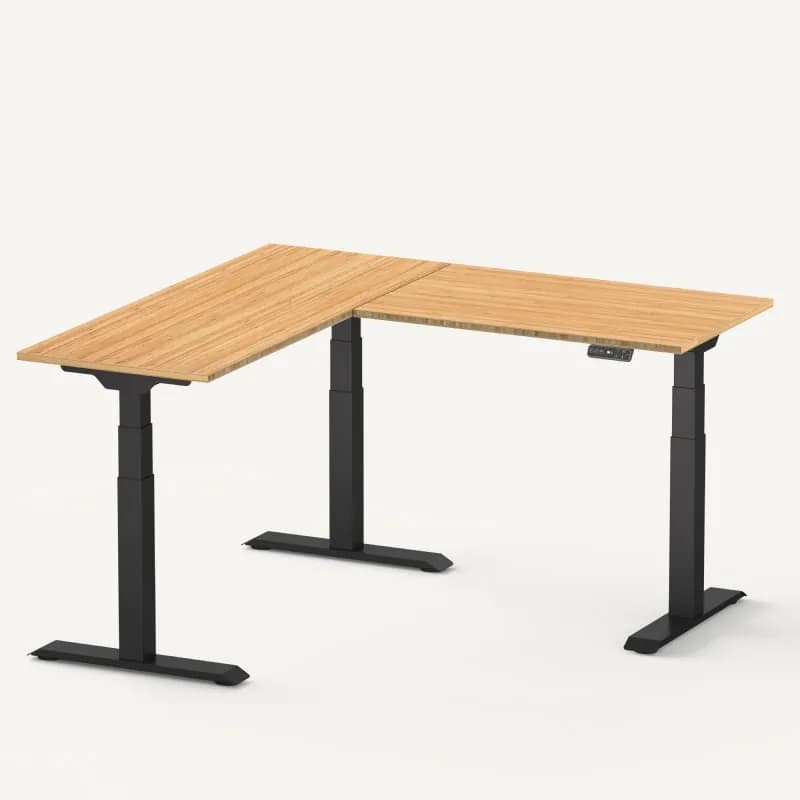
FlexiSpot
FlexiSpot E7L
Three legs, three motors, and a laminate corner top of 63 by 47 or 71 by 48 inches. The E7L is the cheap way into a powered L-desk, well under the other corner desks here, and the third leg is doing real work — the usual criticism of two-leg desks, that the far end of a wide top moves when you type, does not apply the same way when a leg sits under the corner. It travels at 1.5 inches per second, and its 330 lb static rating is already beyond what a corner setup normally carries. The catch is the family's: a 26-inch working minimum too high for short users. The warranty is not one — fifteen years on the frame and electronics, two on the laminate top. Sizing matters more than usual here — an L-desk is nearly impossible to move once built, so measure the room before, not after.
Fits 5′5″ to 7′0″ (est.)
Best for: A corner workspace on a budget, for someone tall enough to live with a 26-inch working minimum.
Full spec sheet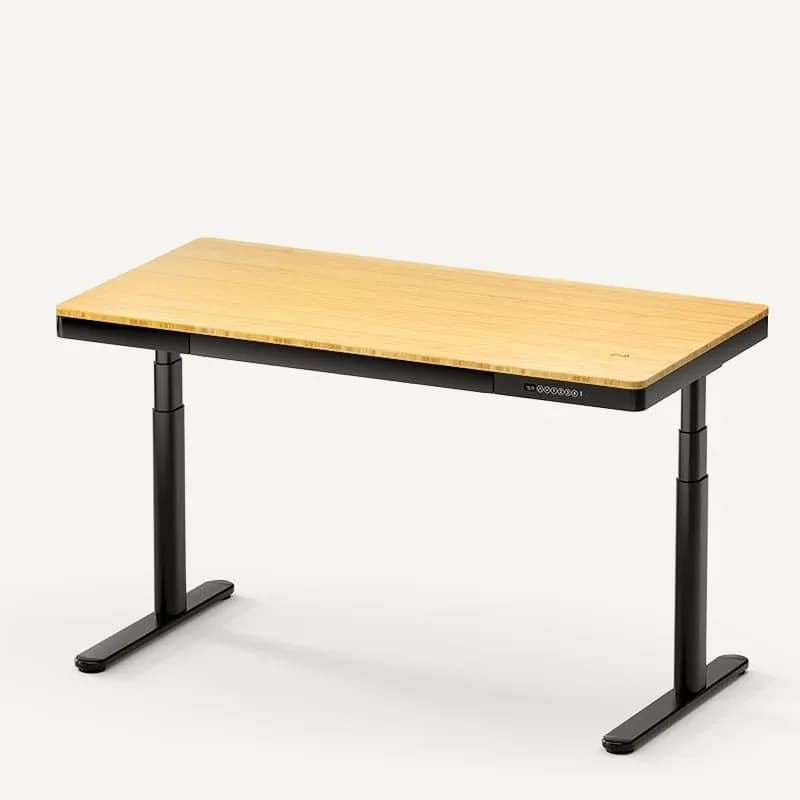
FlexiSpot
FlexiSpot Comhar Pro Q8
The Q8 is the one that doesn't look like a standing desk. A single 55×28 bamboo surface with a shallow drawer built into it, a Qi charging pad set into the top, three USB ports in the front edge and no visible cable tray — it is designed for a bedroom or a living room where an office frame would be an eyesore. Underneath it is a proper three-stage desk, 23.6 to 48.8 inches, which is a wider range than plenty of frames that look far more serious. The limits follow from the design: one size, one shape, 220 lb of capacity, and a drawer that eats the space a keyboard tray would use. It is also not cheap for what it carries. Buy it for the integration and the look; if you want capacity and choice for the same $700 the E7 Plus is four-legged and lifts 440 lb.
Fits 4′11″ to 6′7″ (est.)
Best for: A bedroom or living-room desk that has to look like furniture and still reach a proper sitting height.
Full spec sheet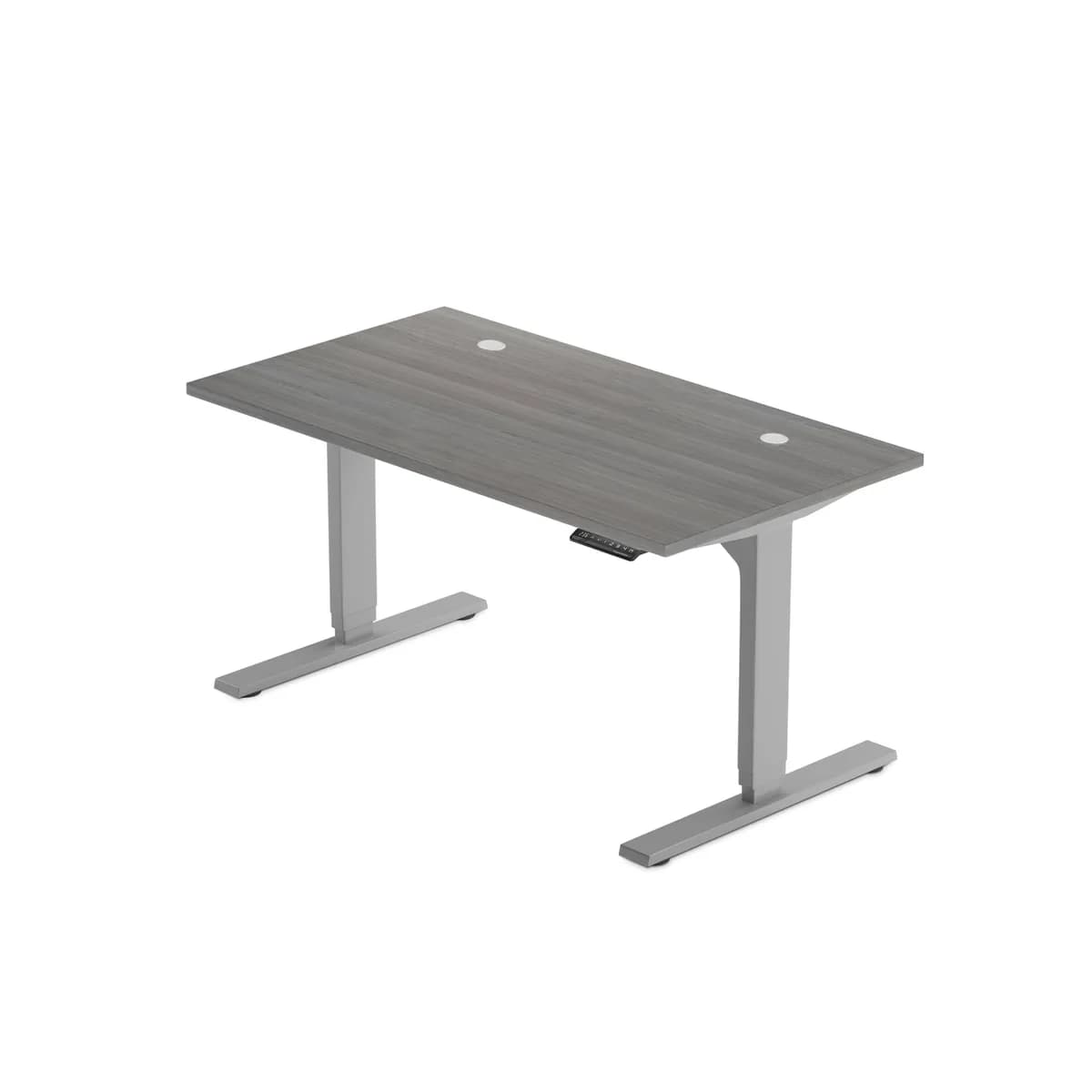
Progressive Desk
Progressive Desk Solo Ryzer
Progressive Desk builds around linear actuators from its own parent company rather than buying a generic control system, which is an unusual amount of vertical integration for a desk brand this size and shows up in a fifteen-year warranty that covers the frame, the electronics and the top alike. The Solo Ryzer is the straight two-leg desk: three-stage legs that put the work surface at about 24.6 to 50.1 inches with a 1-inch top, 270 lb, four presets, and a bamboo or solid-wood surface option at a price where laminate is normal. It is a Canadian brand with US distribution, so it turns up in cross-border comparisons more often than in domestic ones, and its prices move with promotions more than most. Nothing here is class-leading in isolation; the combination of three stages, a published 1.57 in/s and fifteen years of cover on everything at this price is the reason to look.
Fits 5′2″ to 6′9″ (est.)
Best for: A mid-budget build where a long warranty on the whole desk matters more than brand recognition.
Full spec sheet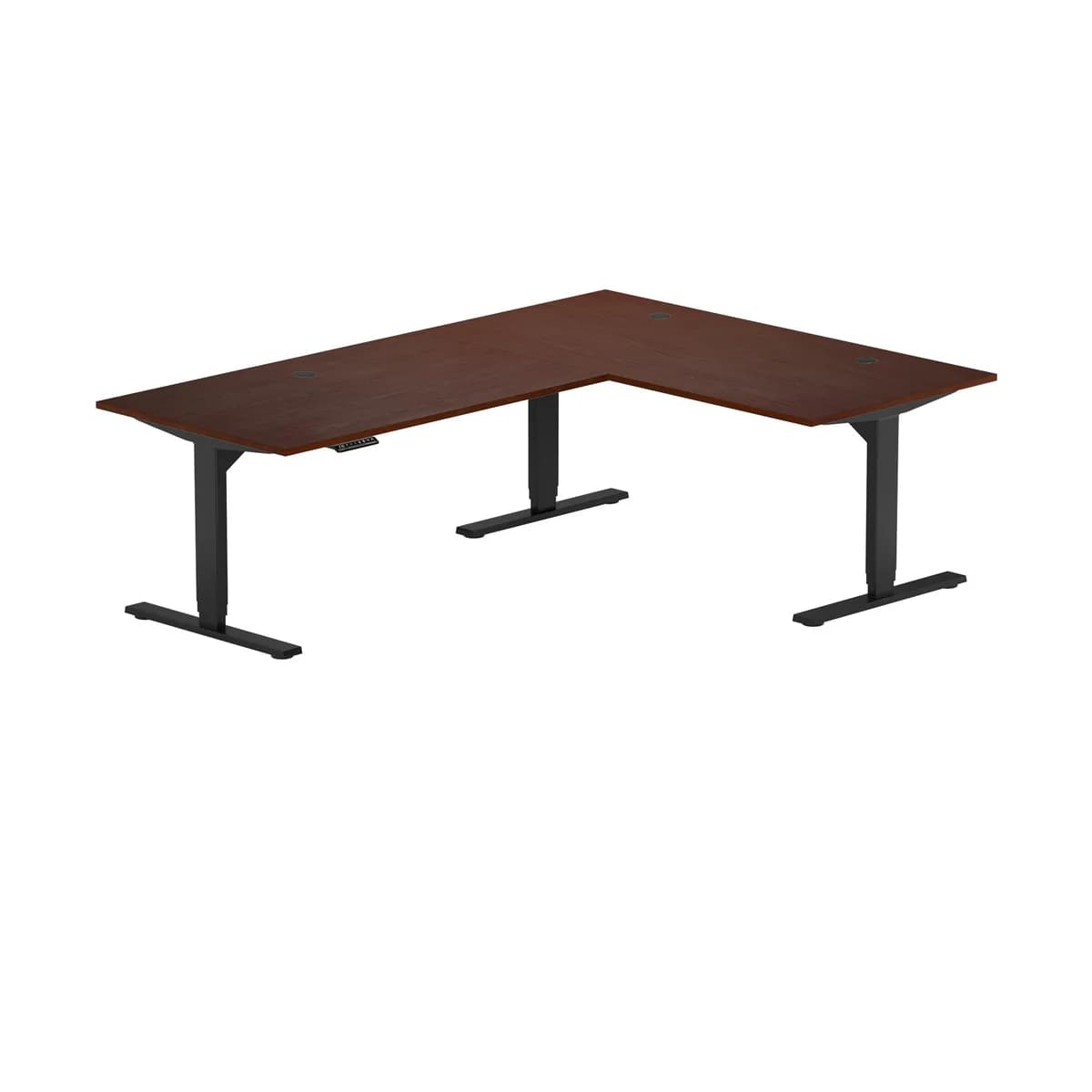
Progressive Desk
Progressive Desk Corner Ryzer
The corner version of the Solo Ryzer, on the same three-stage columns, so the work surface runs from about 24.6 to 50.1 inches — range that corner desks often give up. It comes in eighteen sizes, from a compact 60×48 to 90×72. Three motors drive the two wings together, it is rated for 330 lb across the surface, and it travels at 1.57 inches per second. As with the straight Ryzer, fifteen years covers the frame, the electronics and the tops. The honest caveats are a corner desk's usual ones: it is a two-person build, it is essentially immovable afterwards, and you should measure the room and the door before ordering rather than after. Progressive's pricing also moves enough with promotions that the figure here is a snapshot rather than a quote.
Fits 5′2″ to 6′9″ (est.)
Best for: A corner workspace that needs an exact size, from a compact 60×48 up to 90×72.
Full spec sheet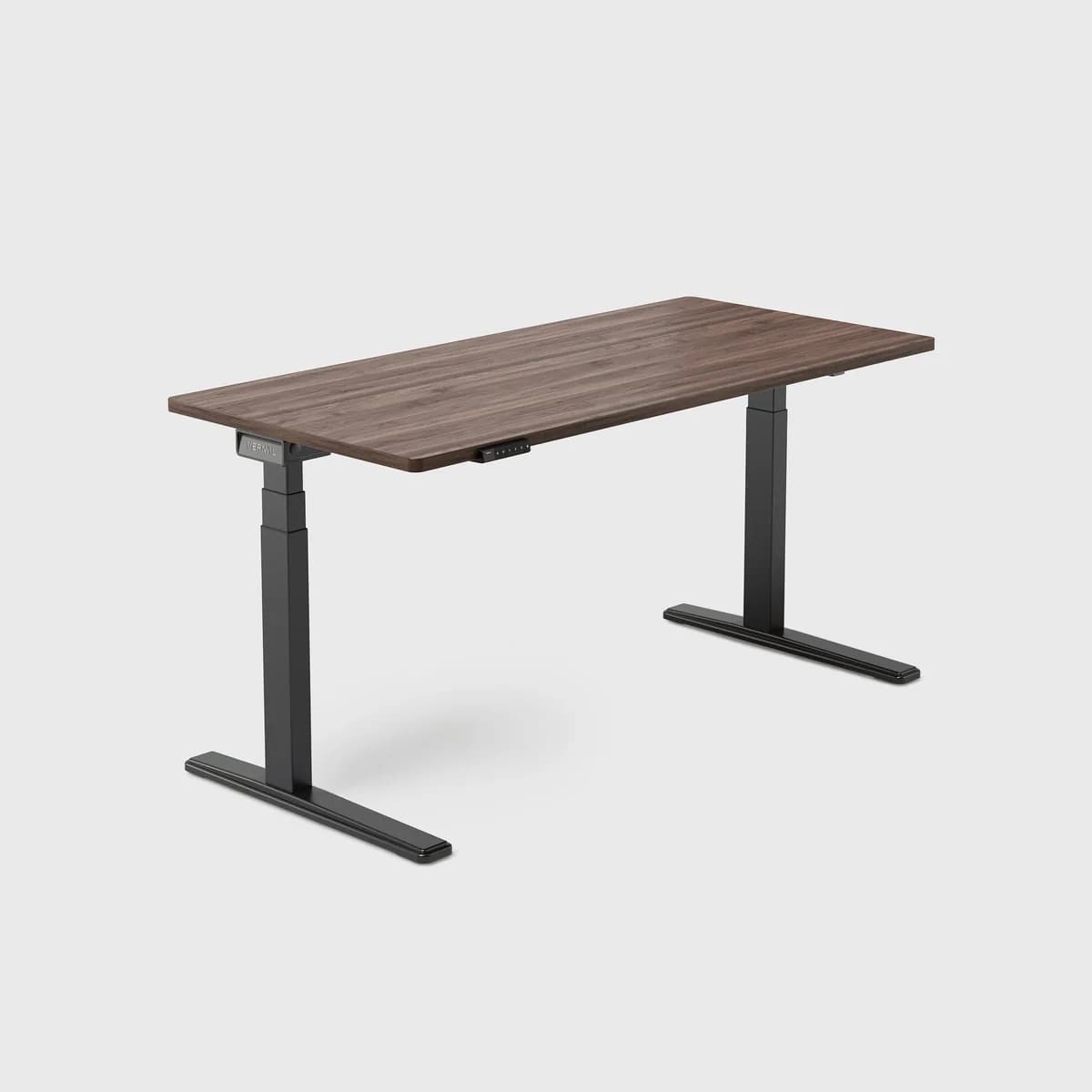
Vernal
Vernal Core3
Vernal is the newer name that keeps coming up in shortlists against FlexiSpot and UPLIFT, and on paper the reason is obvious: three-stage legs, 353 lb, a 25.5-inch travel span, fifteen years on the frame, the motors and the electronics together — and a complete desk from $460. Fifteen years on the electronics matches the best of the mid-market, and three memory presets come on the standard keypad. The company also publishes third-party stability testing rather than describing its desk as sturdy, which is a better sign than any adjective. One honest note: a fifteen-year warranty is only as good as the company still being there in fifteen years, which is the unavoidable risk with a brand this new — an entirely different proposition from Steelcase's twelve.
Fits 5′2″ to 6′9″ (est.)
Best for: Getting premium-tier numbers on a mid-tier budget, if a newer brand's warranty is a risk you will take.
Full spec sheet