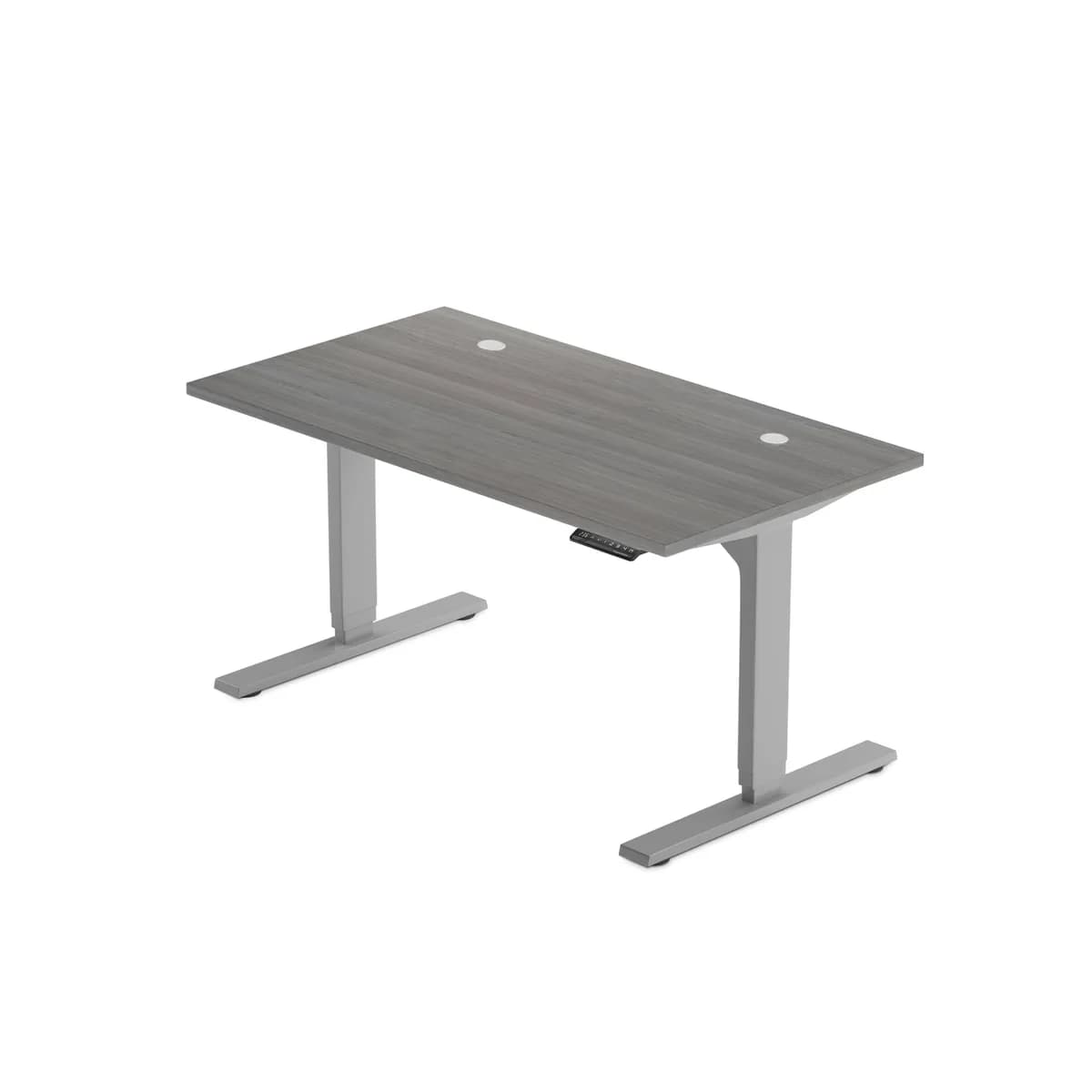
Progressive Desk Solo Ryzer
Progressive Desk builds around linear actuators from its own parent company rather than buying a generic control system, which is an unusual amount of vertical integration for a desk brand this size and shows up in a fifteen-year warranty that covers the frame, the electronics and the top alike. The Solo Ryzer is the straight two-leg desk: three-stage legs that put the work surface at about 24.6 to 50.1 inches with a 1-inch top, 270 lb, four presets, and a bamboo or solid-wood surface option at a price where laminate is normal. It is a Canadian brand with US distribution, so it turns up in cross-border comparisons more often than in domestic ones, and its prices move with promotions more than most. Nothing here is class-leading in isolation; the combination of three stages, a published 1.57 in/s and fifteen years of cover on everything at this price is the reason to look.
Who this desk fits
estimated, not measured
Reaching 24.6″ at the bottom and 50.1″ at the top, this desk can hit both a sitting and a standing elbow height for people roughly 5′2″ to 6′9″ tall.
How the height is quoted: Work-surface height with a 1-inch top: Progressive publishes 23.6–49.1 in as the frame height, so the top is added.
Enter your height — 5'11", 71 or 180cm all work.
What ~$746 buys: Regular price of the complete desk with a 60×30 MDF top ($745.99–$758.99 by colour); it sold for $536.99–$545.99 on sale in October 2026.
Specifications
At a glance
Features
- Three-stage legs, 24.6–50.1 in at the work surface
- 270 lb rated lift, 1.57 in/s
- Four memory presets
- In-house linear actuators rather than a generic control system
- 15-year warranty covering the desk and its top
- Laminate, bamboo and solid-wood tops
In its favour
- 24.6 inches at the work surface suits users down to about 5 ft 2 in
- Fifteen years on the frame, the electronics and the top alike
- Bamboo and solid-wood surfaces at a laminate price point
- Built on the parent company's own actuators rather than a generic control box
Against it
- Prices swing with promotions, so any quoted figure ages fast
- No published noise figure
- Lower US brand presence means less secondhand support and fewer parts on hand
These points come from the published specification and the desk's design, not from owner reports — this model has not yet had enough owner discussion collected to draw on.
What owners say
Summarised from owner discussions and long-term write-ups, not from anything we tested ourselves.
Progressive Desk is the Canadian brand that turns up constantly in cross-border shortlists, and the reason is a specification that punches above its price: three-stage legs on a 23.6-inch frame minimum, 270 lb, four presets, fifteen years on the frame, electronics and top, and bamboo or solid-wood surfaces at a point where laminate is what you normally get.
The unusual thing about the company is that it builds on its parent's own linear actuators rather than buying a generic control system, which is a level of vertical integration you do not often see at this size. Owner builds — a Solo Ryzer with an acacia top is a recurring one — are the kind people post because they are pleased rather than because something went wrong, which is its own signal.
The practical caveats are commercial rather than mechanical: promotional pricing means quotes date fast, and a thinner US footprint means fewer parts and less resale support than the volume brands.
What owners like
- A 23.6-inch frame minimum on three-stage legs
- Fifteen years on the frame, the electronics and the top alike
- Built on the parent company's own linear actuators rather than a generic control system, which is unusual vertical integration at this size
- Bamboo and solid-wood surfaces are offered where laminate is the expected material
- Owners pairing it with acacia and other hardwood tops post finished builds they are happy with
Common complaints
- Prices move enough with promotions that any quoted figure ages quickly
- No published noise figure
- A smaller US presence means fewer parts on hand and a thinner secondhand market
Questions owners ask
How does it compare with a FlexiSpot E7?
Why does the price keep changing?
Is it a good frame for a custom top?
Progressive Desk Solo Ryzer, head-to-head
Desks people look at alongside it
More from Progressive Desk →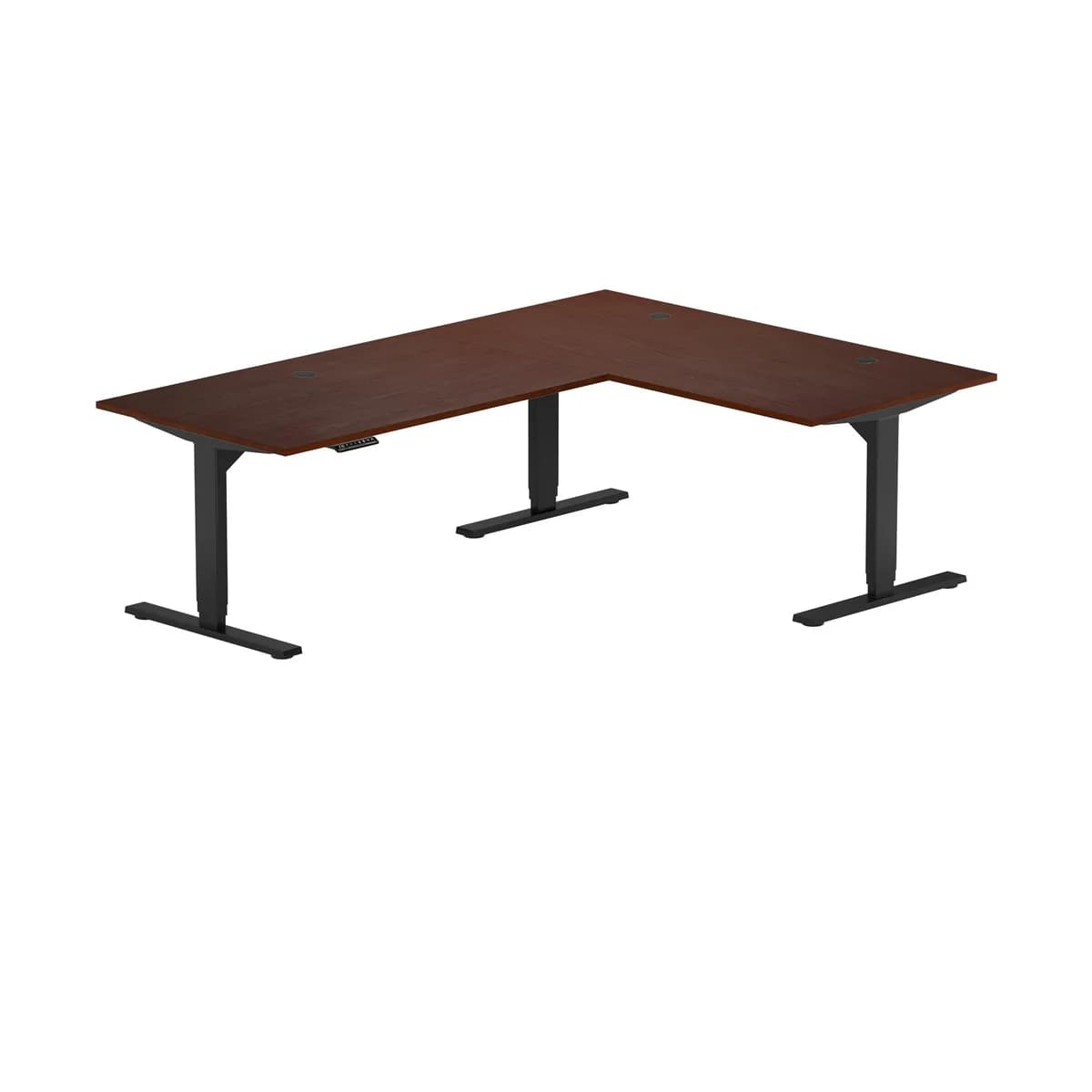
Progressive Desk
Progressive Desk Corner Ryzer
The corner version of the Solo Ryzer, on the same three-stage columns, so the work surface runs from about 24.6 to 50.1 inches — range that corner desks often give up. It comes in eighteen sizes, from a compact 60×48 to 90×72. Three motors drive the two wings together, it is rated for 330 lb across the surface, and it travels at 1.57 inches per second. As with the straight Ryzer, fifteen years covers the frame, the electronics and the tops. The honest caveats are a corner desk's usual ones: it is a two-person build, it is essentially immovable afterwards, and you should measure the room and the door before ordering rather than after. Progressive's pricing also moves enough with promotions that the figure here is a snapshot rather than a quote.
Fits 5′2″ to 6′9″ (est.)
Best for: A corner workspace that needs an exact size, from a compact 60×48 up to 90×72.
Full spec sheet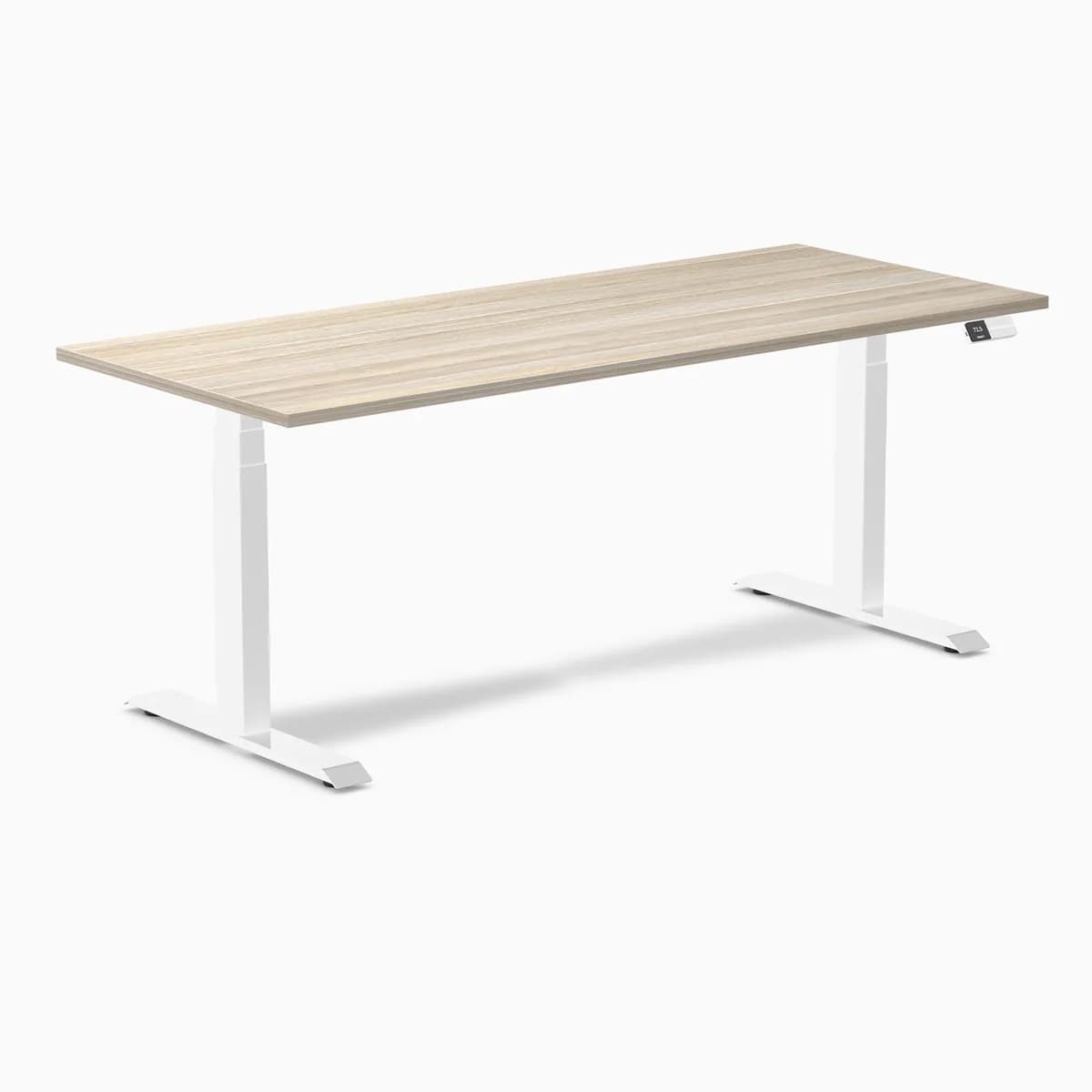
Desky's core desk gets the two numbers that matter right: 24.6 inches at the bottom with its 1-inch top, which is low enough for most people to sit at properly, and 40 dB in motion, among the quietest published figures in this catalog — quiet enough that raising the desk mid-call is not an event. Ten years covers the frame, the motors and the electronics together, which few brands extend to the electronics. The legs are three-stage, so the 25.6 inches of travel comes with a 50.2-inch ceiling, and they move at 1.6 inches a second. The range of surfaces is unusually deep for a mid-price desk, running from laminate up through bamboo and rubberwood to solid hardwood. Two honest limits: the cable and power channel is sold separately, and assembly on the 72-inch sizes is documented as running past an hour. At 331 lb it carries a normal heavy setup but is not in four-leg territory.
Fits 5′2″ to 6′9″ (est.)
Best for: A quiet home office where the desk moves during calls and the surface has to look like furniture.
Full spec sheetVari sells convenience and a long warranty. The desk ships as a few parcels and assembles in minutes with the tools in the box, and Vari covers the whole thing for life — frame, surface, motors and electronics. For a lot of buyers that combination settles it, especially anyone who has read what building a 72-inch frame from parts involves. The mechanical specification is where it gives ground: 200 lb is among the lowest ratings of any full-size desk here, and Vari publishes neither travel speed nor noise, which makes it hard to compare on anything but convenience and the 25 to 50.5-inch range. The range itself is good, three-stage and wide. Treat it as the desk you buy when you want it working quickly and you are not hanging a tower off it.
Fits 5′3″ to 6′9″ (est.)
Best for: Anyone who wants a full-size desk with a quick build and a lifetime warranty, and will not load it heavily.
Full spec sheet