Autonomous SmartDesk Connect vs Progressive Desk Solo Ryzer
Autonomous
Autonomous SmartDesk Connect
Not sold new in the USNot sold new in the US. Autonomous no longer sells the SmartDesk Connect: its page returns an error, and its app-controlled successor is the Desk Pro AI.
Fits 5′3″ to 6′10″ (est.)
Autonomous has stopped selling the SmartDesk Connect: its page is gone, and the app-controlled desk it sells now is the Desk Pro AI. The Connect was the SmartDesk Pro with a Wi-Fi controller and a phone app: schedule the desk to rise, track how long you actually stood, drive it from the sofa. Underneath it is the same three-stage frame at the same 310 lb and the same 2.3 inches per second, for $100 more. Whether that is worth it depends entirely on whether you will use the reminders, and the honest answer for most people is that a preset button and a calendar alarm do the same job for free. The app does one thing a keypad cannot: it makes the stand-up habit measurable, which is the actual difficulty with a standing desk. Note it uses the proprietary Autonomous controller, so third-party desk controllers are not an option here.
Progressive Desk
Progressive Desk Solo Ryzer
Fits 5′2″ to 6′9″ (est.)
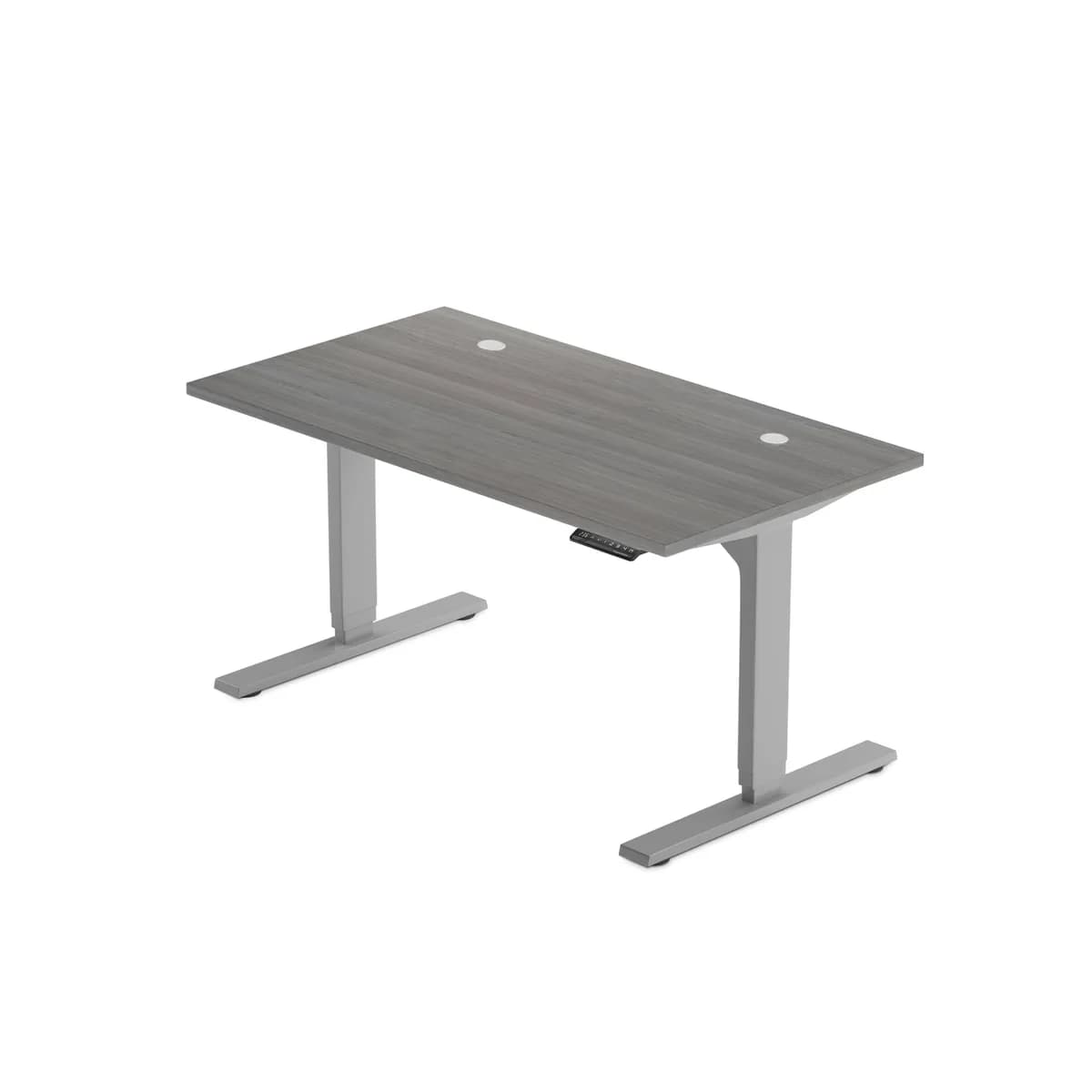
Progressive Desk builds around linear actuators from its own parent company rather than buying a generic control system, which is an unusual amount of vertical integration for a desk brand this size and shows up in a fifteen-year warranty that covers the frame, the electronics and the top alike. The Solo Ryzer is the straight two-leg desk: three-stage legs that put the work surface at about 24.6 to 50.1 inches with a 1-inch top, 270 lb, four presets, and a bamboo or solid-wood surface option at a price where laminate is normal. It is a Canadian brand with US distribution, so it turns up in cross-border comparisons more often than in domestic ones, and its prices move with promotions more than most. Nothing here is class-leading in isolation; the combination of three stages, a published 1.57 in/s and fifteen years of cover on everything at this price is the reason to look.
Where they actually differ
- The Progressive Desk Solo Ryzer gets 0.6″ lower, which matters if anyone using the desk is short — it reaches a sitting height for people down to about 5′2″, against 5′3″ for the Autonomous SmartDesk Connect.
- The Autonomous SmartDesk Connect reaches 0.9″ higher, suiting standing users to about 6′10″ against 6′9″.
- The Autonomous SmartDesk Connect is rated for 40 lb more lift, though most home setups stay well under either figure.
- The Progressive Desk Solo Ryzer is about $53 cheaper as configured — note what each price actually includes, since one may be a bare frame.
- Frame cover runs longer on the Progressive Desk Solo Ryzer (15 yr frame / 15 yr electronics / 15 yr top). The electronics figure is the one worth reading twice — it is usually the part that fails.
Every line above is generated from the two spec sheets, not from an opinion. Height ranges are quoted on each maker's own basis — check both desk pages before comparing the figures directly.
| Spec | Autonomous SmartDesk Connect | Progressive Desk Solo Ryzer |
|---|---|---|
| Approx. price | ~$799 | ~$746 |
| Height range | 25.2″–51″ | 24.6″–50.1″ |
| Travel | 25.8″ | 25.5″ |
| Fits users | 5′3″ to 6′10″ | 5′2″ to 6′9″ |
| Lift capacity | 310 lb | 270 lb |
| Leg stages | 3-stage | 3-stage |
| Motors | 2 motors | 2 motors |
| Speed | 2.3 in/s | 1.57 in/s |
| Noise | 45 dB | not published |
| Memory presets | 3 | 4 |
| Anti-collision | Motor current | Motor current |
| Crossbar | No | No |
| Leg shape | Square | Square |
| Warranty | 7 yr frame / 2 yr electronics / 2 yr top | 15 yr frame / 15 yr electronics / 15 yr top |
| Assembly | Full DIY | Full DIY |
| Cable management | Optional | Optional |
| Desktop sizes | 53×29, 70.5×30 | 48×30, 55×28, 60×30, 72×30 |
| Desktop materials | Laminate, Dark bamboo | Laminate, Bamboo, Solid wood |
| Type | Electric 3-stage | Electric 3-stage |
Tinted rows are the specs on which these two desks differ.