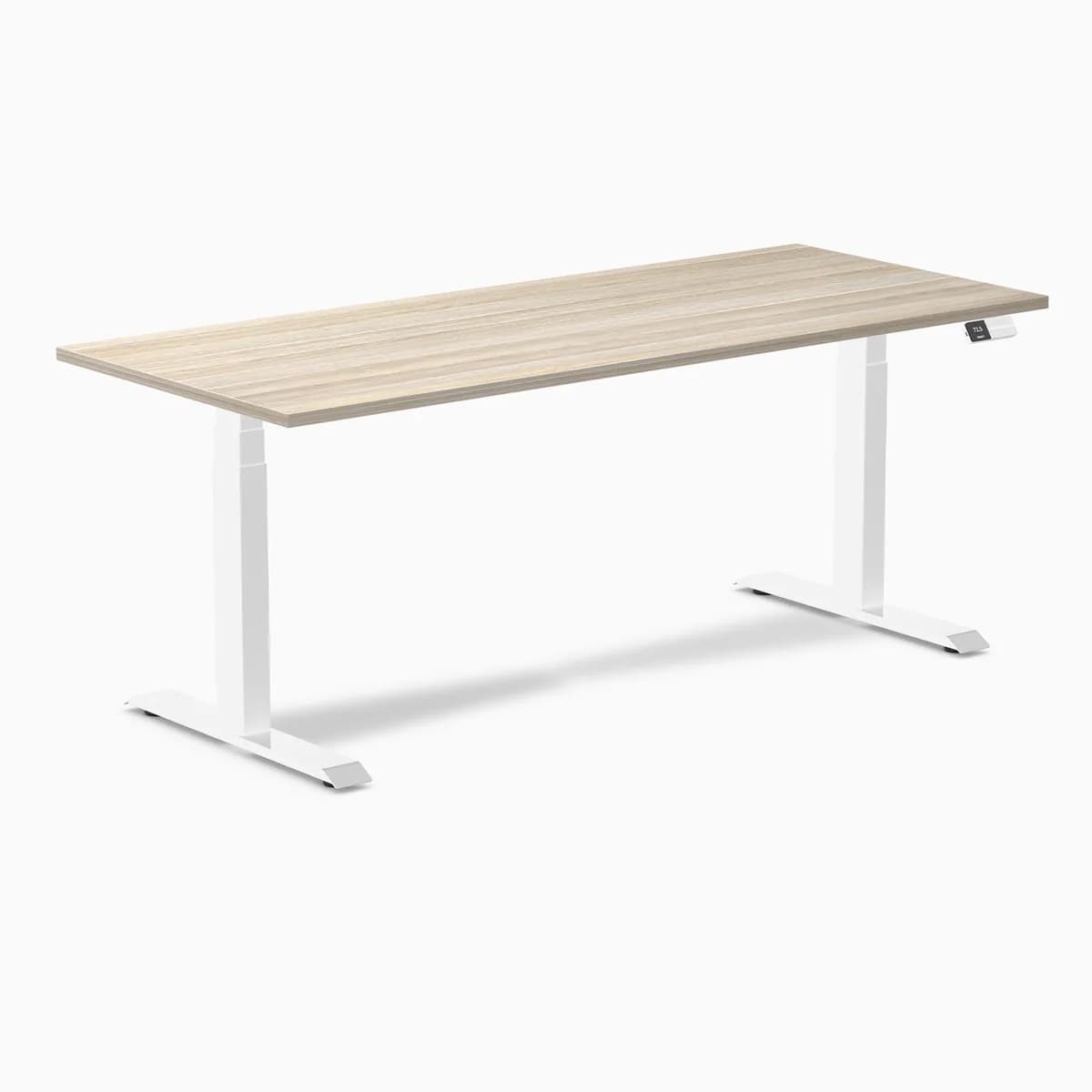
Desky Dual Sit Stand Desk
Desky's core desk gets the two numbers that matter right: 24.6 inches at the bottom with its 1-inch top, which is low enough for most people to sit at properly, and 40 dB in motion, among the quietest published figures in this catalog — quiet enough that raising the desk mid-call is not an event. Ten years covers the frame, the motors and the electronics together, which few brands extend to the electronics. The legs are three-stage, so the 25.6 inches of travel comes with a 50.2-inch ceiling, and they move at 1.6 inches a second. The range of surfaces is unusually deep for a mid-price desk, running from laminate up through bamboo and rubberwood to solid hardwood. Two honest limits: the cable and power channel is sold separately, and assembly on the 72-inch sizes is documented as running past an hour. At 331 lb it carries a normal heavy setup but is not in four-leg territory.
Who this desk fits
estimated, not measured
Reaching 24.6″ at the bottom and 50.2″ at the top, this desk can hit both a sitting and a standing elbow height for people roughly 5′2″ to 6′9″ tall.
How the height is quoted: Work-surface height with Desky's 1-inch laminate top: Desky publishes 23.6–49.2 in for the frame "(without desktop)" and gives the top as 1 in thick.
Enter your height — 5'11", 71 or 180cm all work.
What ~$639 buys: Complete desk with the 47.2×29.5 laminate top; the 59.1, 70.9 and 78.7-inch laminate sizes are $739, $809 and $889, and solid wood runs well past that.
Specifications
At a glance
Features
- 24.6–50.2 in with the 1-inch top, on three-stage legs
- 331 lb rated lift, 1.6 in/s
- 40 dB in motion
- Four memory presets
- Five surface materials from melamine to hardwood
- 10 years on frame, motors and electronics
- Cable and power channel sold separately
In its favour
- 40 dB in motion is among the quietest published figures here, well under the 50 dB group
- Ten years on the electronics as well as the frame and motors
- 24.6 inches at the work surface suits users down to about 5 ft 2 in sitting
- Five surface materials including real hardwood
- Three-stage legs at 1.6 inches a second make the full change of height take about 16 seconds
Against it
- The cable and power channel is an extra purchase
- Assembly on the 60 and 72-inch sizes takes over an hour
- 331 lb is fine for normal use but well short of the four-leg heavy-duty frames
- Top warranty is five years against ten on everything else
These points come from the published specification and the desk's design, not from owner reports — this model has not yet had enough owner discussion collected to draw on.
What owners say
Summarised from owner discussions and long-term write-ups, not from anything we tested ourselves.
On paper this is one of the better mid-price desks here: 24.6 inches at the bottom with its 1-inch top, 40 dB of travel noise — among the quietest figures published here — and ten years covering the electronics as well as the frame.
The counterweight is a detailed and widely-read owner account that is worth reading before ordering. An owner who spent close to $2,000 reports the desktop arriving damaged, the desk failing within a month, weeks of unanswered support email, repeated demands for video evidence over a $30 paddle replacement, and the delivered pheasantwood having none of the colour variation the photographs showed. That is one experience rather than a pattern, but it is a specific and documented one about a premium-priced order, and it is the kind of thing worth weighing against a warranty that is only as good as the support behind it.
What owners like
- 40 dB is among the quietest published figures here, and owners notice it against the 50 dB group
- Ten years covering the electronics as well as the frame and motors
- A 24.6-inch minimum with the top on reaches short users
- The surface range runs from melamine up to real hardwood, which is deeper than most mid-price desks offer
Common complaints
- There is a prominent owner account of a $2,000 Desky arriving damaged, failing within a month, and support going unanswered for weeks before responding
- The same account reports the marketing photographs not matching the wood delivered, specifically on pheasantwood
- Assembly on the 60 and 72-inch sizes runs past an hour
Questions owners ask
Is 40 dB actually noticeable?
How reliable is Desky's support?
Do the wood finishes look like the photographs?
Dual or Quad?
Desky Dual Sit Stand Desk, head-to-head
Desks people look at alongside it
More from Desky →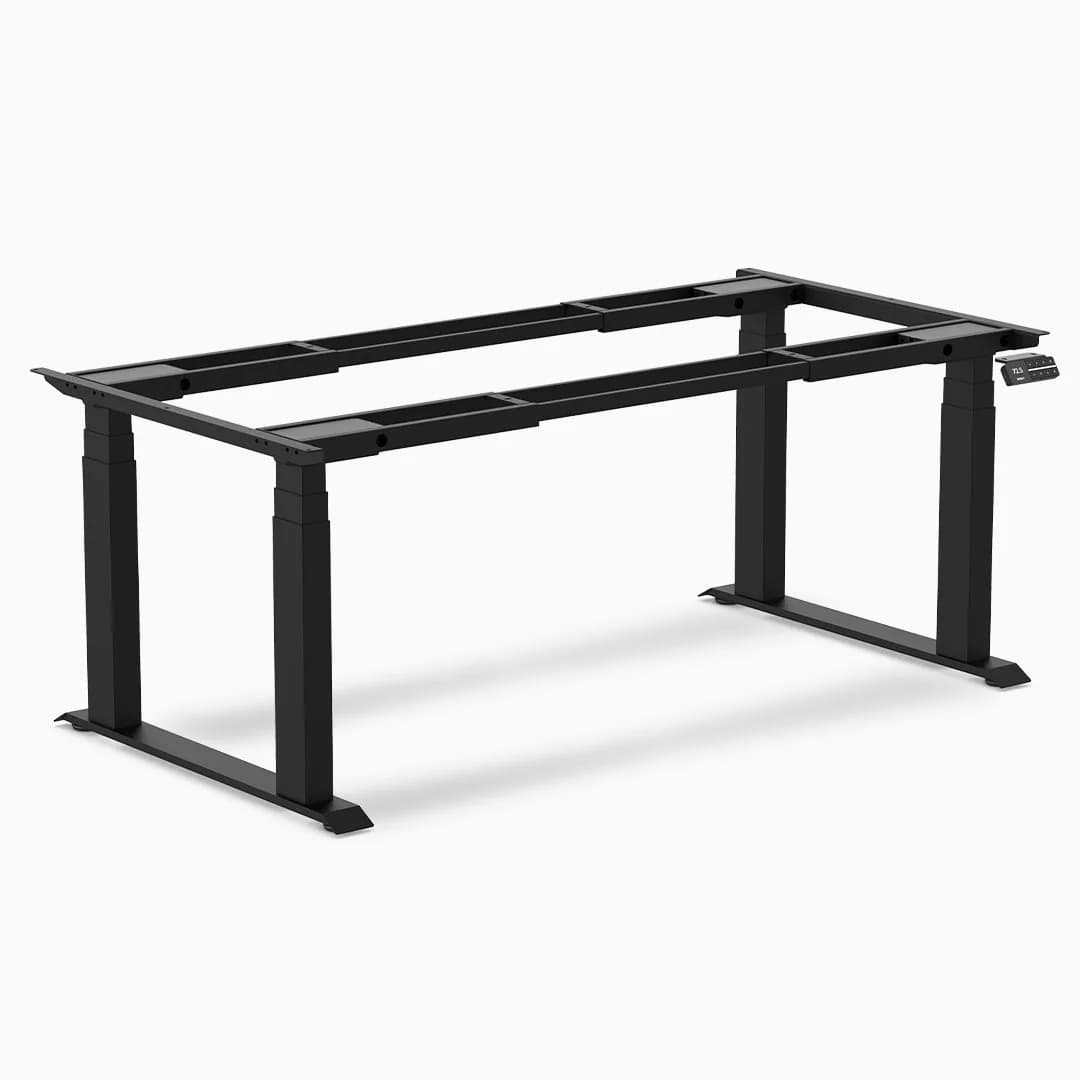
661 lb on four independently driven three-stage legs, under tops up to 94 inches wide — the Quad is the heaviest-rated frame in this catalog, and its span is matched only by Desky's own two-leg Dual. That combination is the whole product: the widest span, the highest rating, and a 24.6-inch working minimum with a 1-inch top, which heavy-duty frames often give up in exchange for their ceiling. It stays at 40 dB in motion, which is remarkable for four motors. The reasons not to buy it are size and money. Desky sells the Quad only as a frame, so $1,249 buys the base alone and a laminate top adds $369 to $539; the cable tray is extra too. A 94-inch desk needs a room that can take one, and for a two-monitor home office it is emphatically more desk than the job needs.
Fits 5′2″ to 6′9″ (est.)
Best for: A very wide surface, a multi-machine setup, or a workshop bench that also has to sit down.
Full spec sheet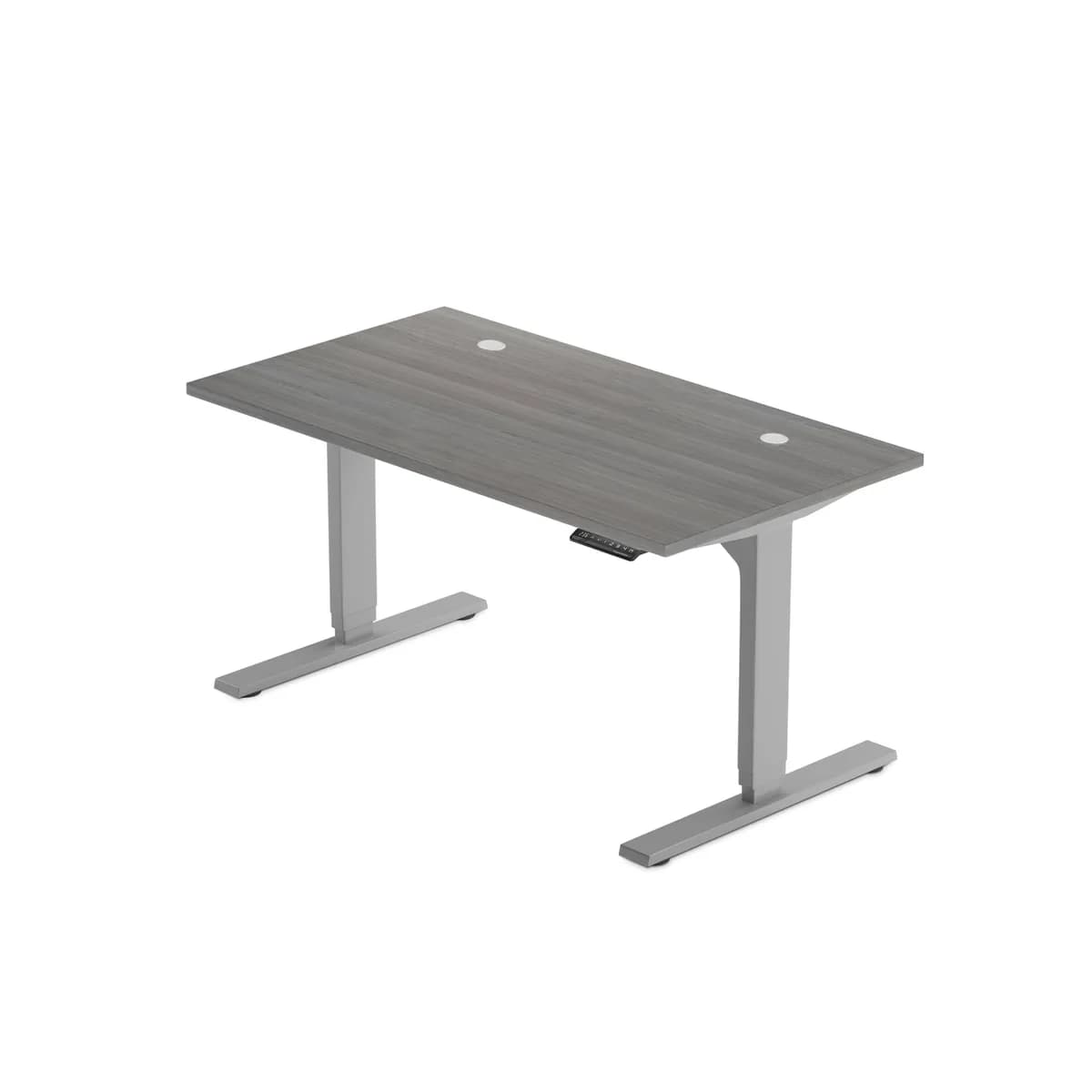
Progressive Desk
Progressive Desk Solo Ryzer
Progressive Desk builds around linear actuators from its own parent company rather than buying a generic control system, which is an unusual amount of vertical integration for a desk brand this size and shows up in a fifteen-year warranty that covers the frame, the electronics and the top alike. The Solo Ryzer is the straight two-leg desk: three-stage legs that put the work surface at about 24.6 to 50.1 inches with a 1-inch top, 270 lb, four presets, and a bamboo or solid-wood surface option at a price where laminate is normal. It is a Canadian brand with US distribution, so it turns up in cross-border comparisons more often than in domestic ones, and its prices move with promotions more than most. Nothing here is class-leading in isolation; the combination of three stages, a published 1.57 in/s and fifteen years of cover on everything at this price is the reason to look.
Fits 5′2″ to 6′9″ (est.)
Best for: A mid-budget build where a long warranty on the whole desk matters more than brand recognition.
Full spec sheet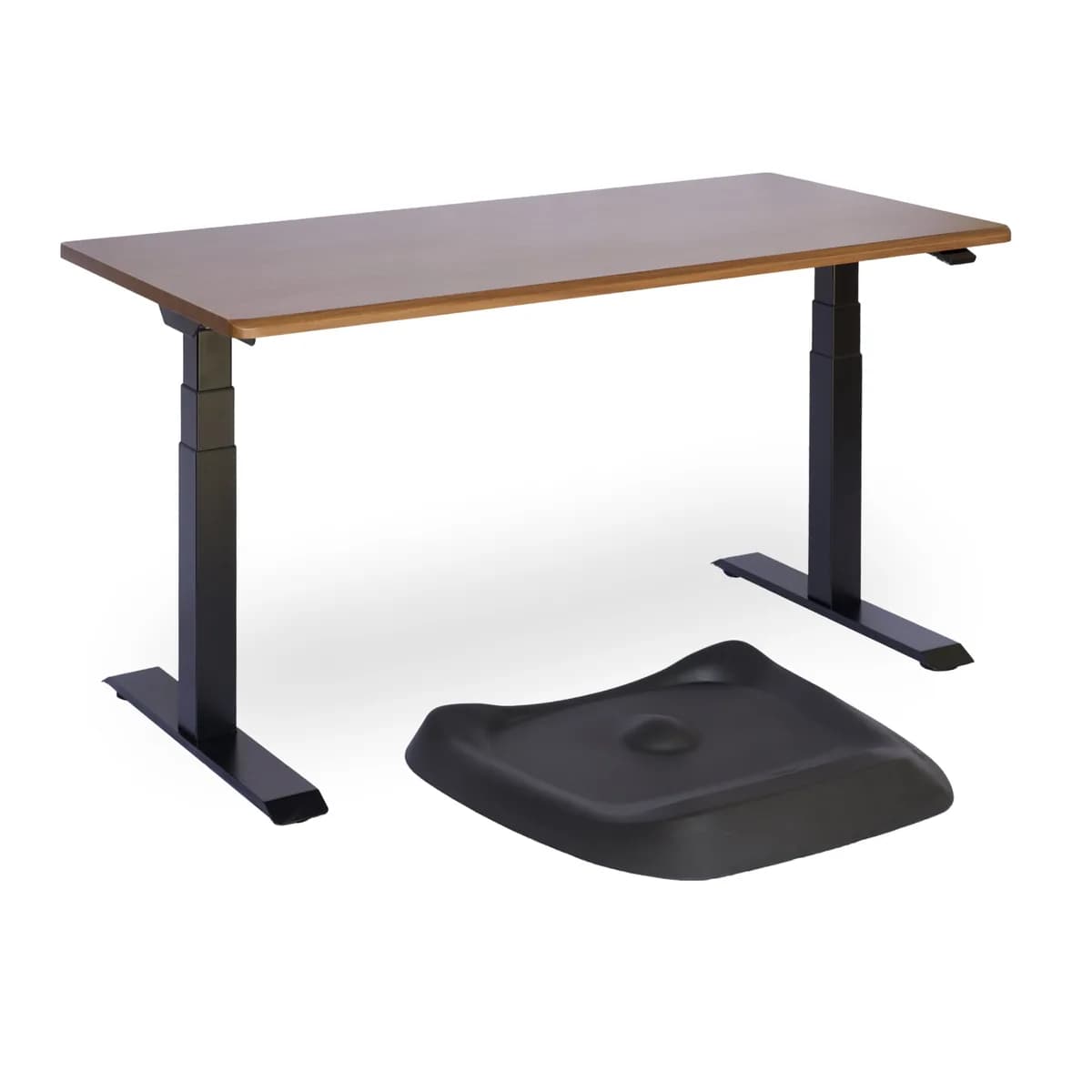
Ergodriven
Ergodriven Tempo Pro
The Tempo's argument is that the hard part of owning a standing desk is not the desk, it is remembering to use it. The controller is built into the surface, senses that someone is there, and moves the desk on a cadence rather than waiting to be asked — which addresses the single most common failure, a desk that spends a year at one height. The frame under it is a strong specification in its own right: three stages that put the 1-inch top at 23.8 to 49.4 inches, 360 lb, 40 dB, and sixteen years on the frame, motors, electronics and top together. The thing to weigh is whether automatic movement suits you. A desk that rises on a schedule is either the feature that finally makes the habit stick, or an interruption you disable in week two, and there is no way to know which you are until you live with it.
Fits 5′0″ to 6′8″ (est.)
Best for: Someone who has owned a standing desk before and left it at one height for a year.
Full spec sheet