Frames sold without a top
Buying a frame and choosing your own surface is how you get a solid hardwood desk for the price of a laminate one, and it is the route most people who care about the top end up taking. The number that decides compatibility is frame span — the range of widths the base adjusts to — and it is in the table below alongside the usual specs. Remember to add your top's thickness to both ends of the height range.
5 desks qualify · Ranked by minimum height, lowest first.
| Desk | Height range | Travel | Fits | Capacity | Warranty | Approx. |
|---|---|---|---|---|---|---|
| Deskhaus Apex Pro | 22.5″–48.5″ | 26″ | 4′8″ to 6′6″ | 600 lb | 20 yr frame / 10 yr electronics | ~$925 |
| Desky Quad Sit Stand Desk | 24.6″–50.2″ | 25.6″ | 5′2″ to 6′9″ | 661 lb | 10 yr frame / 10 yr electronics | ~$1,249 |
| Deskhaus Peak Pro | 25.6″–51.1″ | 25.5″ | 5′4″ to 6′10″ | 600 lb | 20 yr frame / 10 yr electronics | ~$725 |
| iMovR Lander Lite | 27.6″–47.75″ | 20.2″ | 5′9″ to 6′5″ | 225 lb | lifetime frame / 10 yr electronics | ~$499 |
| VIVO Manual Crank Desk Frame | 28.5″–46.7″ | 18.2″ | 5′11″ to 6′3″ | 110 lb | 3 yr frame | ~$130 |
Deskhaus
Deskhaus Apex Pro
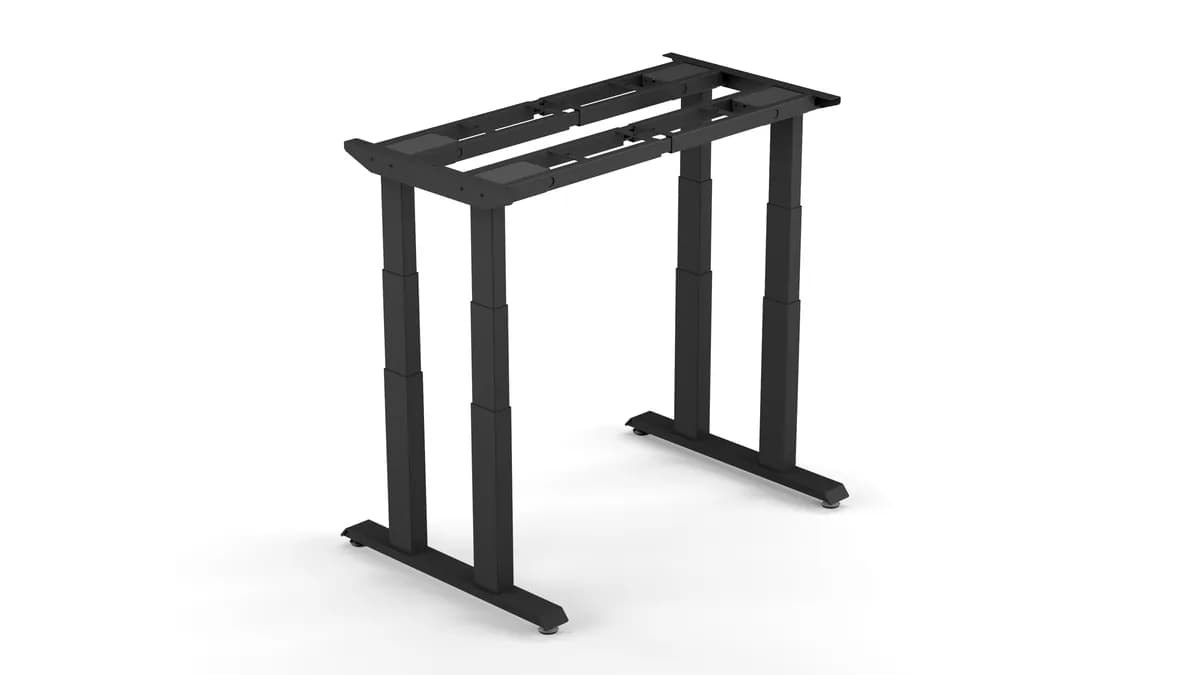
Four columns with an independent motor in each, a 600 lb rating and a twenty-year frame warranty — the Apex Pro is the frame people upgrade to after a two-leg desk disappoints them, and the accounts of that switch are strikingly consistent: the front-to-back movement simply stops. It is a base only, which suits its audience, because the people who buy it are usually pairing it with a slab they picked themselves. The paddle controller shows a live height readout, which turns out to matter when you have a drawer unit underneath and need to stop short of it. Two things to know before ordering. Deskhaus sells it as a preorder item, with the shorter and longer foot sizes on a 20-business-day lead time. And the brand's visibility in enthusiast discussion has drawn scepticism about how organic that enthusiasm is, which is worth knowing when you read glowing write-ups, this one included.
Fits 4′8″ to 6′6″ (est.)
Best for: Pairing with a heavy slab you chose yourself, especially if a previous two-leg desk wobbled.
Full spec sheet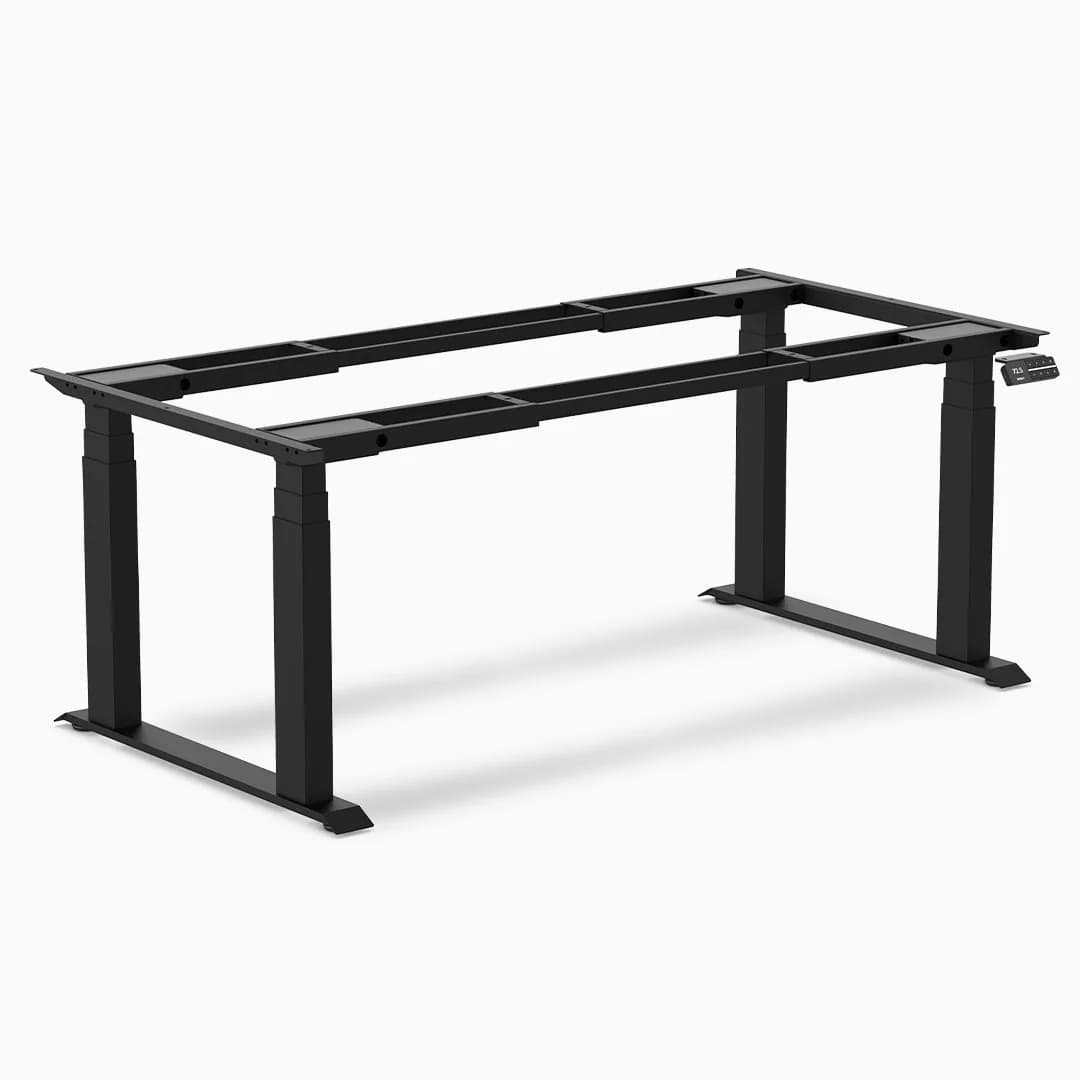
661 lb on four independently driven three-stage legs, under tops up to 94 inches wide — the Quad is the heaviest-rated frame in this catalog, and its span is matched only by Desky's own two-leg Dual. That combination is the whole product: the widest span, the highest rating, and a 24.6-inch working minimum with a 1-inch top, which heavy-duty frames often give up in exchange for their ceiling. It stays at 40 dB in motion, which is remarkable for four motors. The reasons not to buy it are size and money. Desky sells the Quad only as a frame, so $1,249 buys the base alone and a laminate top adds $369 to $539; the cable tray is extra too. A 94-inch desk needs a room that can take one, and for a two-monitor home office it is emphatically more desk than the job needs.
Fits 5′2″ to 6′9″ (est.)
Best for: A very wide surface, a multi-machine setup, or a workshop bench that also has to sit down.
Full spec sheet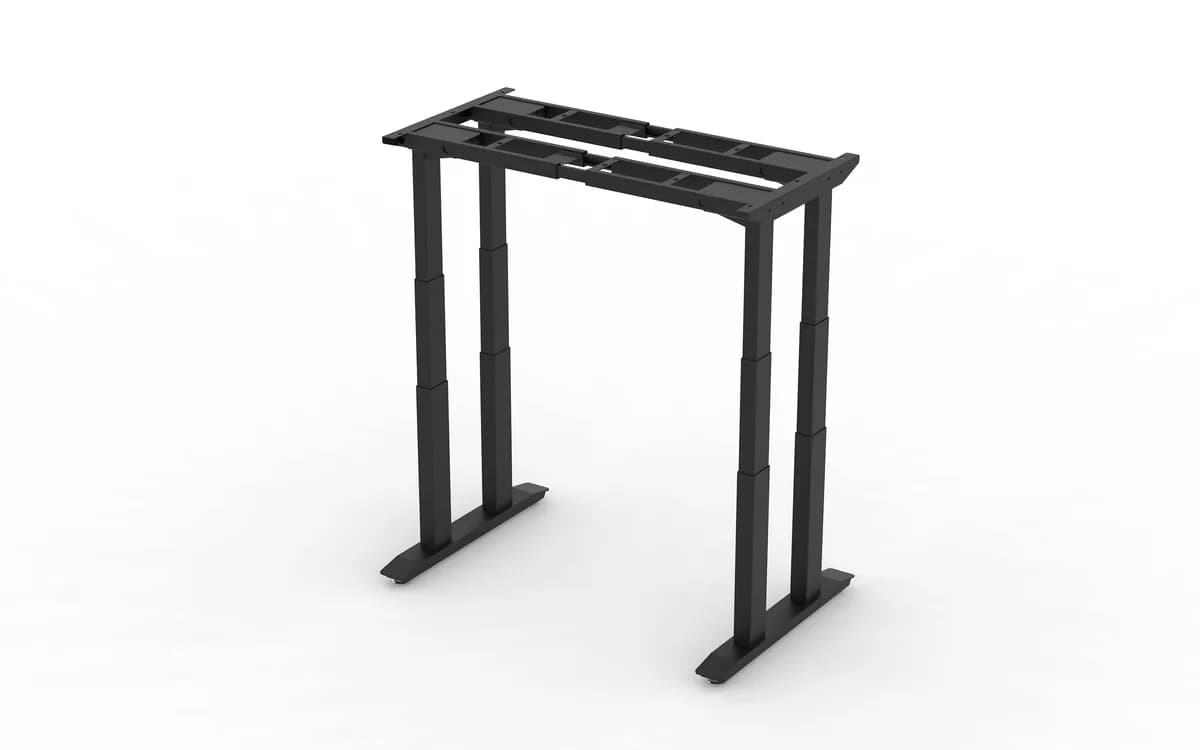
Deskhaus
Deskhaus Peak Pro
The Peak Pro is the Apex Pro's three-stage sibling: same four independent motors, same 600 lb rating, same twenty-year warranty, but 25.5 inches of travel that tops out at 51.1 — high enough for someone around 6 ft 6 in to stand at properly. It spans tops up to 80 inches wide, and instead of crossbars it uses support wedges under the surface to take the flex out of a long span, which keeps the floor clear. The trade against the Apex is at the bottom: the three-stage columns start at 25.6 inches rather than 22.5. That is a real loss for shorter users and the reason the cheaper Apex remains the better desk for a lot of people. Think of the Peak as the tall person's version, not the upgraded one.
Fits 5′4″ to 6′10″ (est.)
Best for: Tall users with wide tops, where the ceiling matters more than how low the desk goes.
Full spec sheet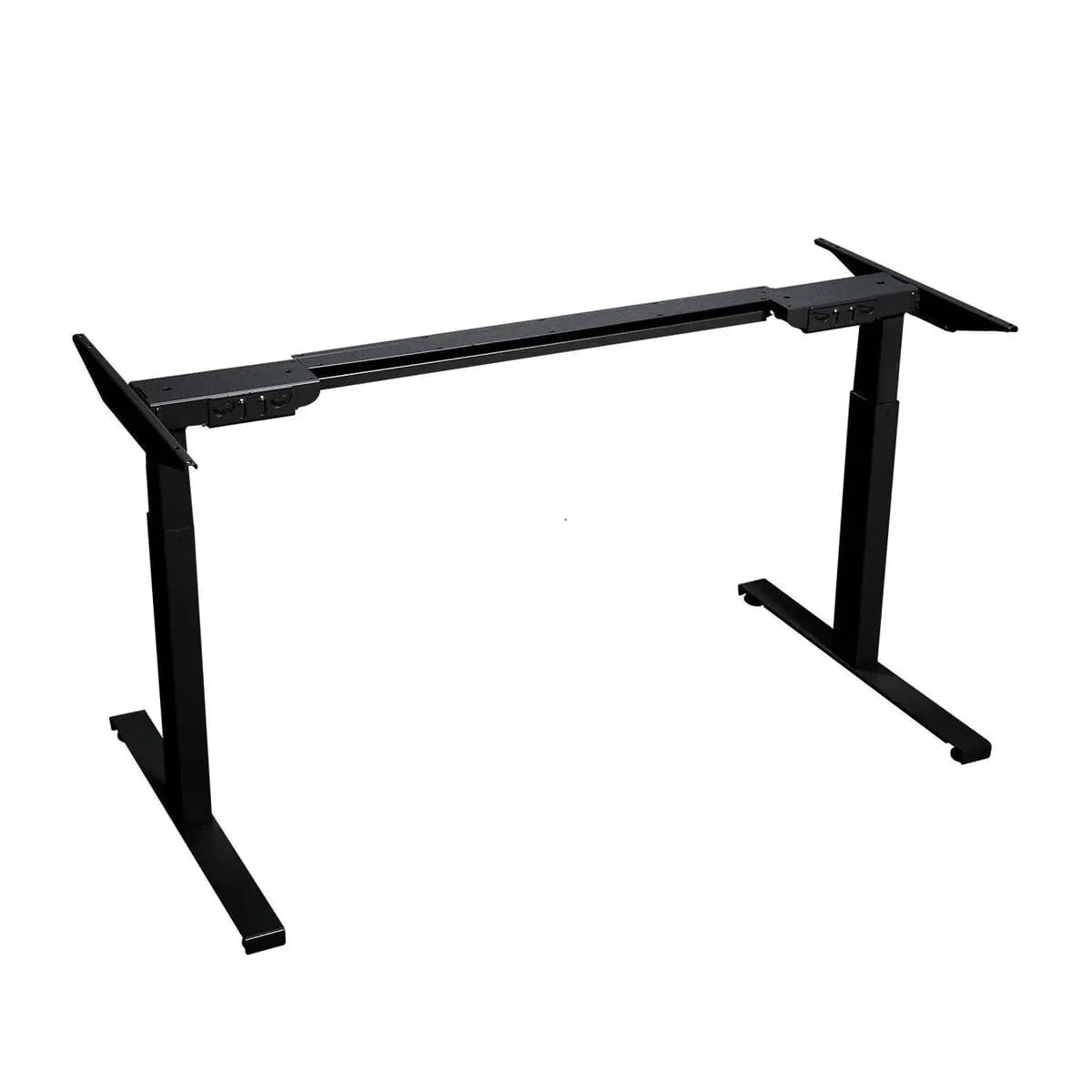
iMovR
iMovR Lander Lite
The Lander Lite is iMovR's base for people bringing their own top, and the specification to watch is which base you are actually buying. The standard base's frame travels 26.6 to 46.75 inches — a narrow 20-inch span with a high floor and a low ceiling, which by the elbow-height rule suits a fairly narrow band of people. The XT base covers 23.25 to 49.25, a much more useful window, and it is the one most buyers should want. Both carry iMovR's lifetime frame warranty with ten years on the motors and electronics, and both use a paddle control with two programmable heights. At 225 lb it is a light-duty base by the standards of this catalog, so pair it with a laminate or bamboo top rather than a two-inch slab.
Fits 5′9″ to 6′5″ (est.)
Best for: A DIY build with a lightweight top, from someone who wants a long US-backed warranty on the base.
Full spec sheet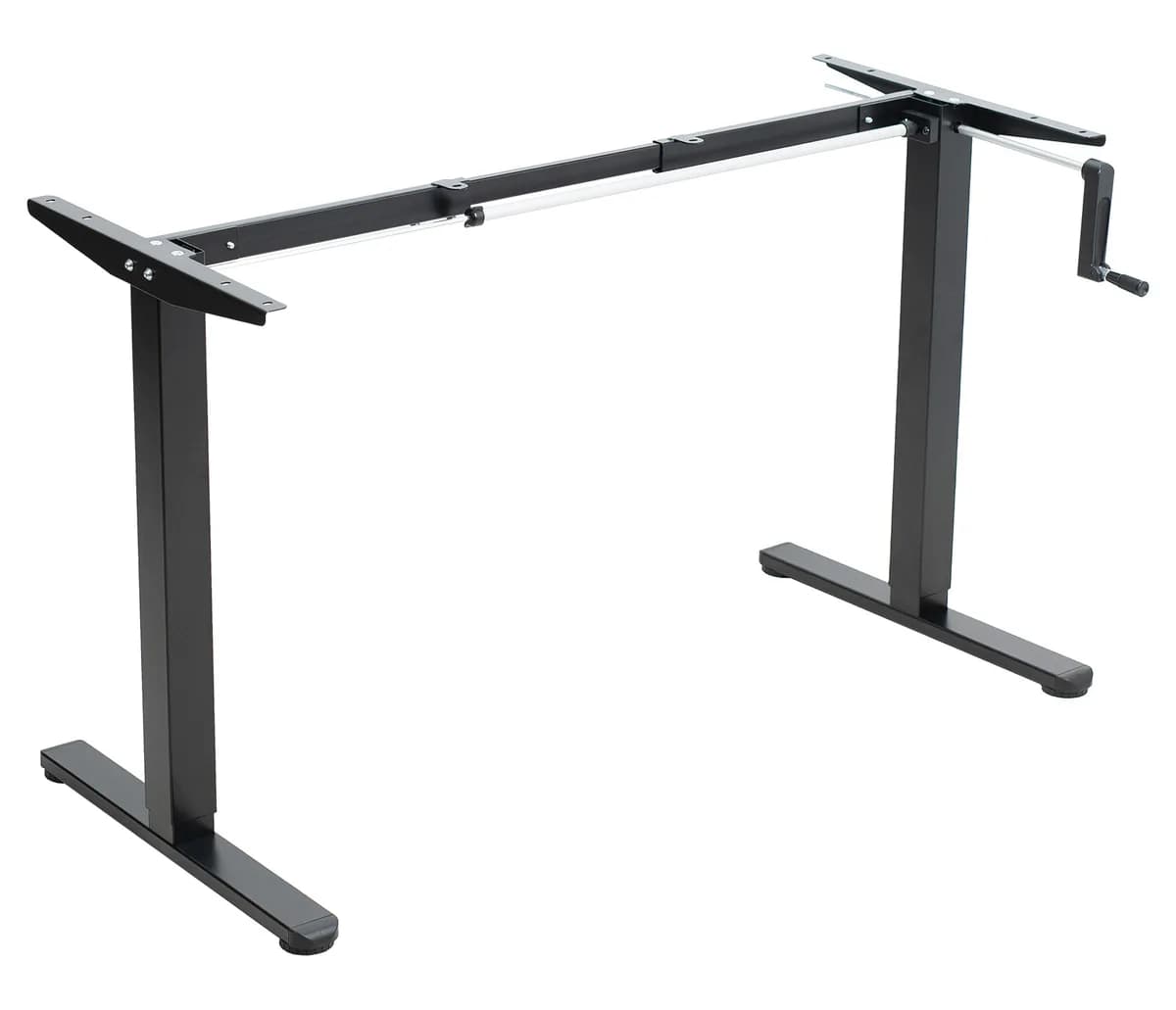
The cheapest way into height adjustment in this catalog, and a useful reality check on what the powered desks are actually charging for. A hand crank, a crossbar-braced two-stage frame, 110 lb of capacity and room for a top from 37 to 77 inches long, for about $130. There is nothing to fail: no control box, no motor, no firmware. What you give up is everything to do with convenience and range. At 15 mm per turn, end-to-end travel takes about thirty turns of the handle, and that friction decides whether a desk gets raised twice a day or twice a month; the 28.5-inch floor, with a 1-inch top, does not lower to a good sitting height for most people. It is a good frame for a workshop bench, a sewing table, or a low-commitment experiment before spending five times as much.
Fits 5′11″ to 6′3″ (est.)
Best for: A workbench, a craft table, or testing the idea of a standing desk before committing real money.
Full spec sheet