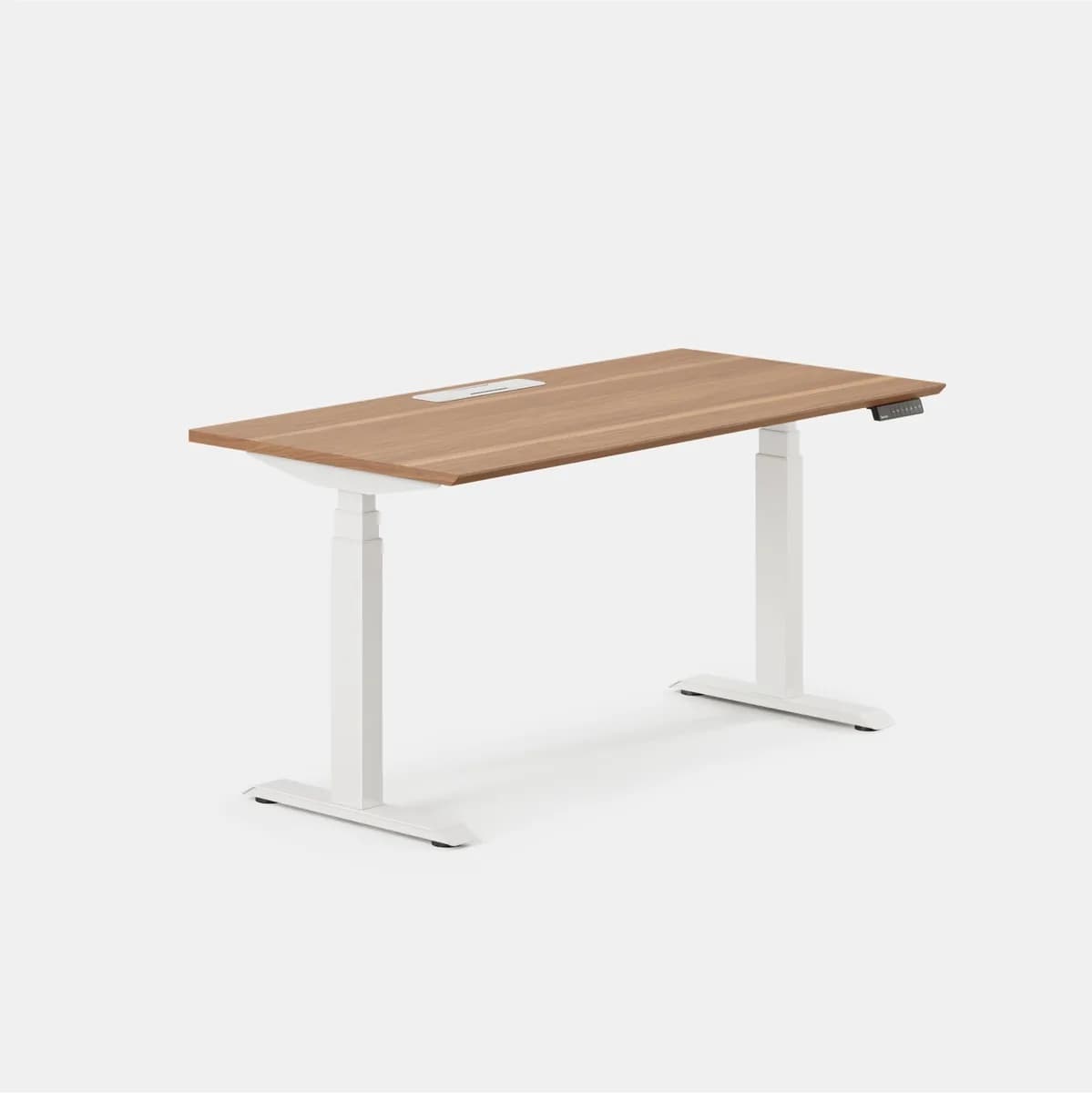
Branch Standing Desk
Not sold new in the US. Branch no longer sells this desk new: its product page redirects to the Tria, and only open-box units remain.
Branch has stopped selling its original two-leg desk new. The product page now redirects to its successor, the Tria, and this desk survives only as open-box stock, from $599 against a $749 list price for the 48×30. As a desk it sits awkwardly beside the Duo: the same 275 lb rating, but four presets, three-stage legs and 26 inches of travel, from 26 to 52 inches, which is a genuinely wide fit window, plus 60 and 72-inch widths the Duo does not offer. Its electronics were covered for three years where the Duo gets ten. If an open-box or secondhand unit is on the table, the range is the reason to take it. If you are buying new, the Tria is now Branch's full-size desk and the Duo its small-room one.
Who this desk fits
estimated, not measured
Reaching 26″ at the bottom and 52″ at the top, this desk can hit both a sitting and a standing elbow height for people roughly 5′5″ to 7′0″ tall.
How the height is quoted: Working-surface height with the melamine top fitted, as Branch quotes it for this desk: "26" adjustment range, from 26" to 52"".
Enter your height — 5'11", 71 or 180cm all work.
What ~$749 buys: Branch's list price for the 48×30 desk, the figure its open-box listing compares against; open-box units sell from $599.
Specifications
At a glance
Features
- Three-stage legs with 26 in of travel
- 275 lb rated lift
- Four memory presets
- 48, 60 and 72-inch widths
- 10-year frame and top warranty
In its favour
- A 26-inch minimum and a 52-inch maximum give the widest fit window in Branch's line
- Available in 60 and 72-inch widths, unlike the Duo
- 275 lb carries a normal multi-monitor setup without strain
- Ten years on frame and top
Against it
- No longer sold new by Branch as of October 2026: the page redirects to the Tria and only open-box units remain, so it is shown for comparison
- Electronics covered for three years against ten on the newer Duo
- $200 more than the Duo for the same capacity
- Melamine only — no bamboo, no solid wood
- Two legs, so the usual movement at standing height on the 72-inch top
These points come from the published specification and the desk's design, not from owner reports — this model has not yet had enough owner discussion collected to draw on.
What owners say
Not enough owner discussion of the Branch Standing Desk has been collected to write this section honestly yet. Rather than fill it with paraphrased marketing copy, it stays empty until there is something real to report. The specifications above come from the manufacturer's own documentation.
Branch Standing Desk, head-to-head
Desks people look at alongside it
More from Branch →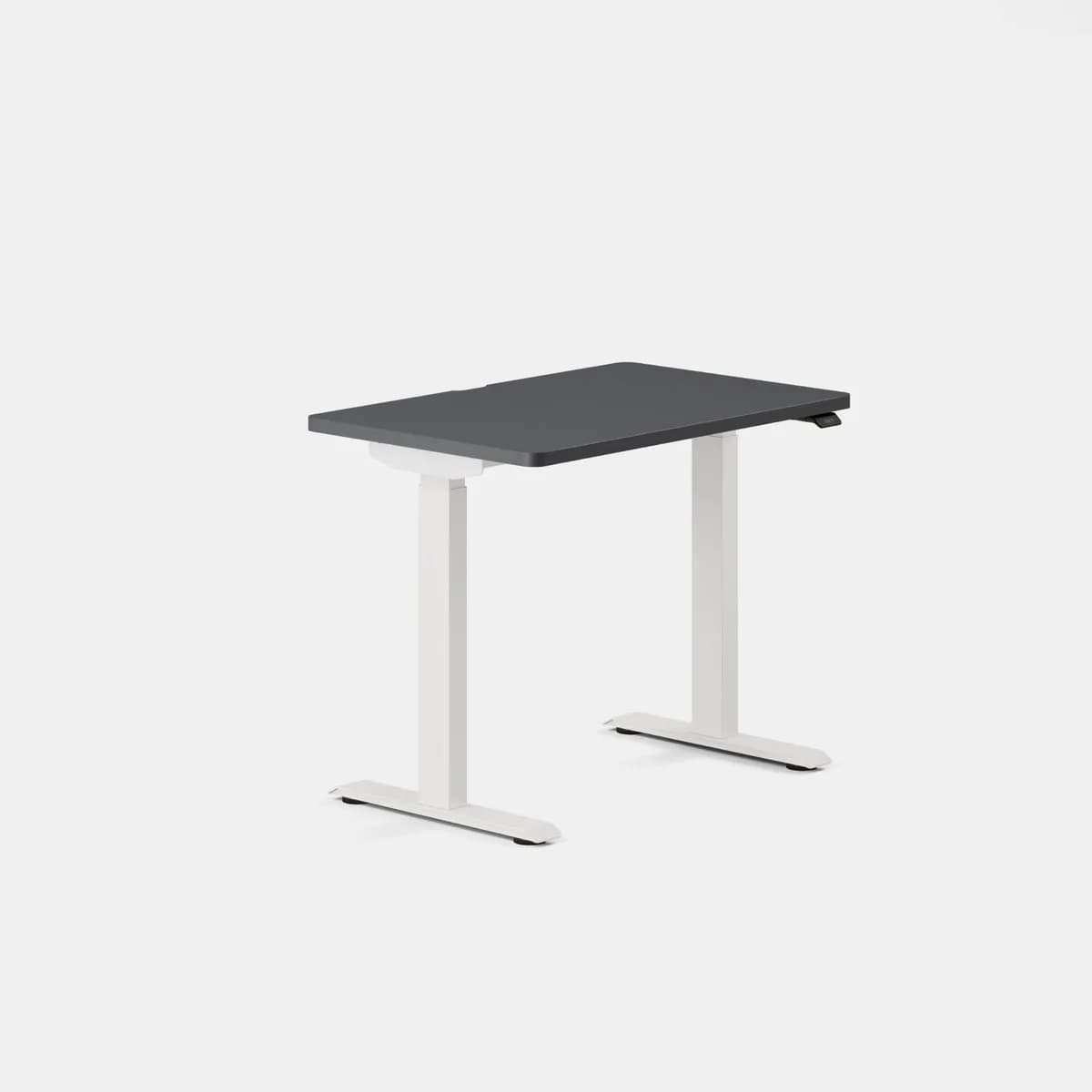
Branch
Branch Duo Standing Desk
Branch built the Duo for rooms that cannot take a full-size desk: 36 or 48 inches wide and 24 deep, with a 58×27 size above them, and a frameless underside so a drawer unit or a chair can sit where a crossbar normally lives. An OLED control panel replaces the usual plastic keypad, the finish options are furniture colours rather than office ones, and the whole thing is covered for ten years including the top — unusual generosity at $549. The compromise is the height range. Two-stage legs give it 19.3 inches of travel starting at 28, which is near the top of what a normal fixed desk measures. That works for an average-to-tall user and does not work for a short one, and no keyboard tray fixes a desk that will not go low enough. Judge it as a compact desk for someone of average height, not as a small version of a full-range one.
Fits 5′10″ to 6′4″ (est.)
Best for: A small room or a shared space where a 60-inch desk will not fit and the user is around average height.
Full spec sheet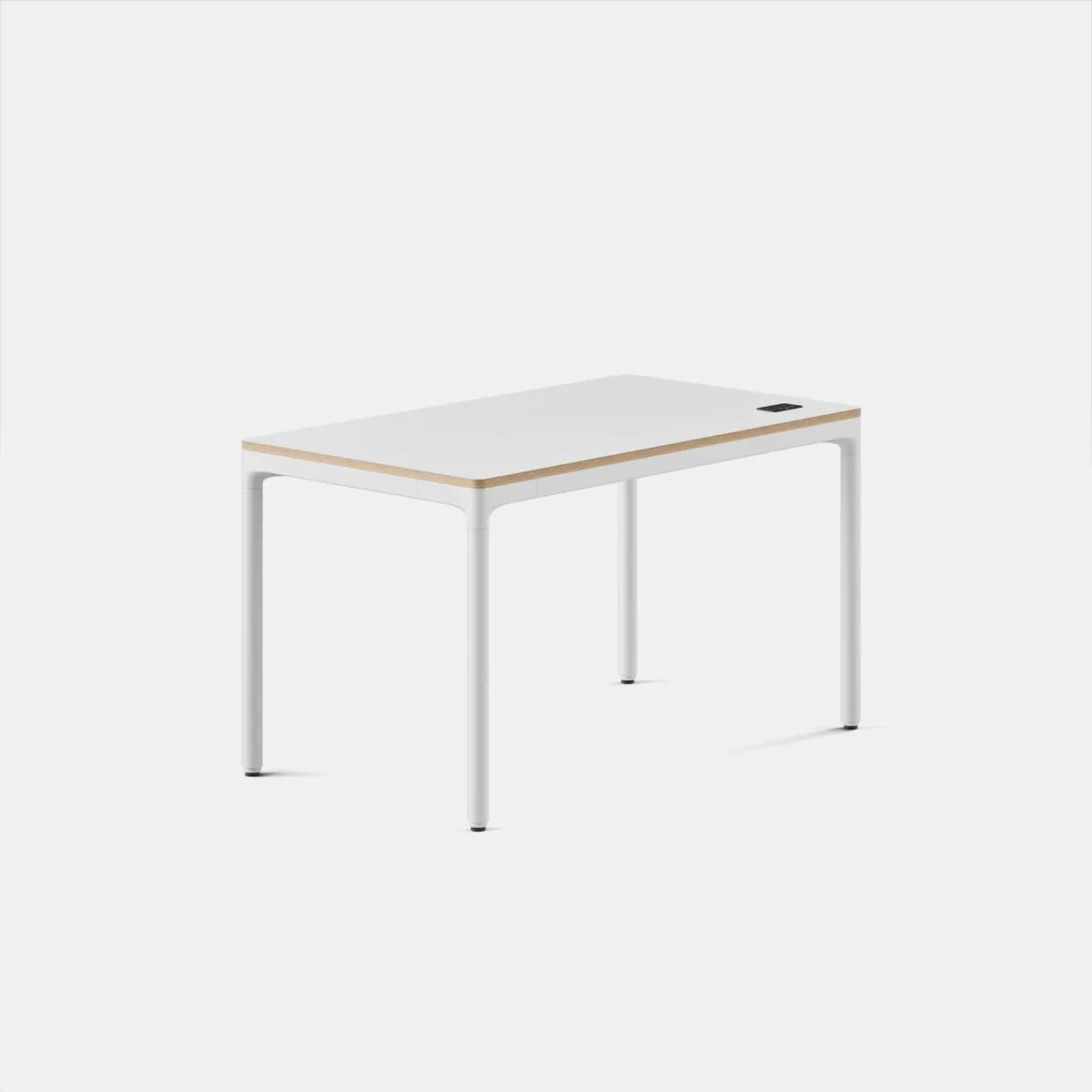
One motor in each of four legs, a ten-year structural warranty, and the clean look Branch sells on — this is the four-leg desk for an office that has to look like a room rather than a workstation. It removes the wobble problem structurally, the way every four-leg desk does, and it does it without crossbars. But the numbers underneath are modest for the money. The 225 lb rating is the lowest of any four-leg desk here, lower than several two-leg frames costing half as much, and the 44.6-inch ceiling is the lowest maximum of any powered desk in this catalog — by the standing-elbow rule that is about right for a 6 ft user and short for anyone taller. At $1,099 it costs more than four-leg frames here rated for well over twice the load. Buy it for the design and the warranty; it is not the spec-sheet choice.
Fits 5′8″ to 6′0″ (est.)
Best for: A visible office where four-leg steadiness and a clean look matter more than reach or capacity.
Full spec sheet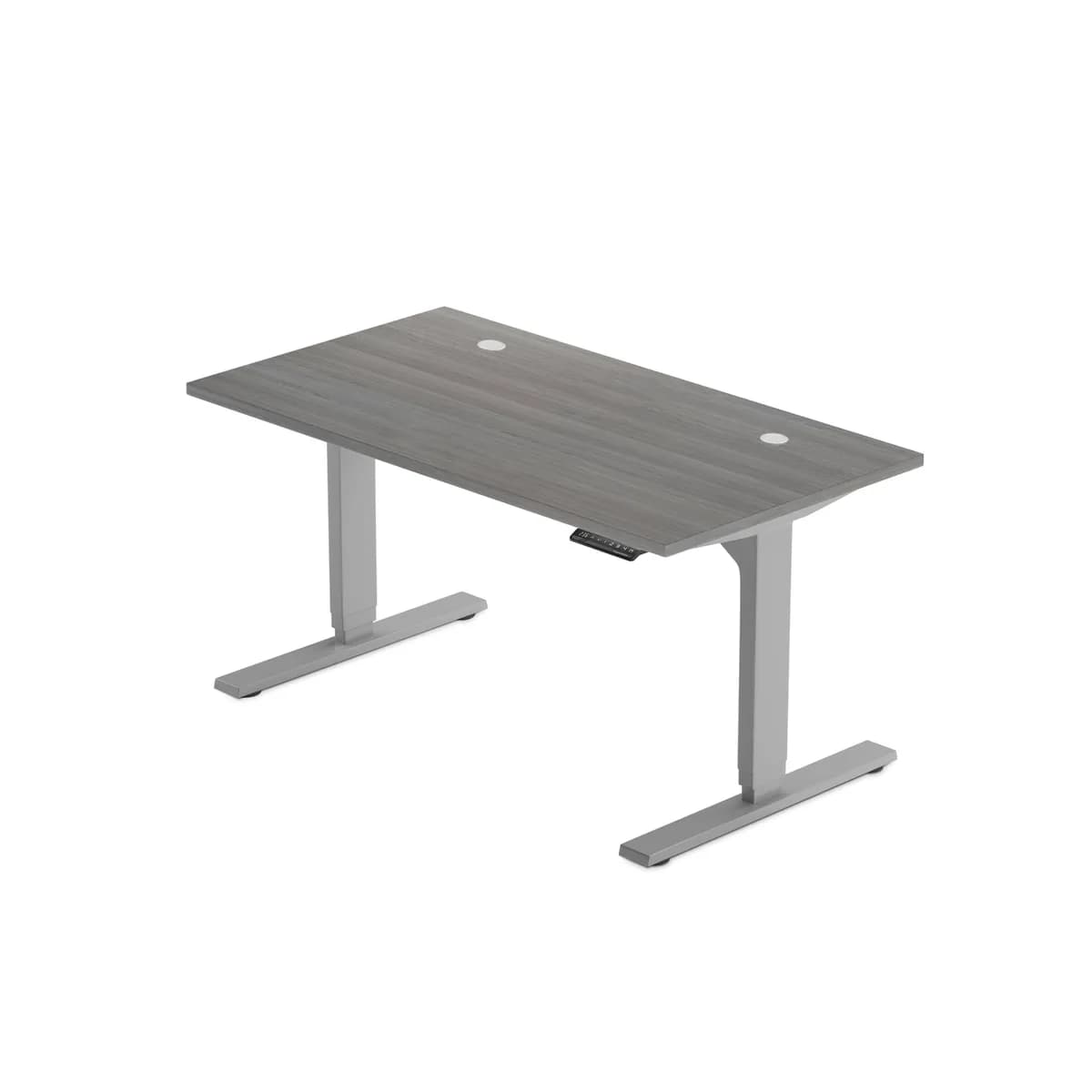
Progressive Desk
Progressive Desk Solo Ryzer
Progressive Desk builds around linear actuators from its own parent company rather than buying a generic control system, which is an unusual amount of vertical integration for a desk brand this size and shows up in a fifteen-year warranty that covers the frame, the electronics and the top alike. The Solo Ryzer is the straight two-leg desk: three-stage legs that put the work surface at about 24.6 to 50.1 inches with a 1-inch top, 270 lb, four presets, and a bamboo or solid-wood surface option at a price where laminate is normal. It is a Canadian brand with US distribution, so it turns up in cross-border comparisons more often than in domestic ones, and its prices move with promotions more than most. Nothing here is class-leading in isolation; the combination of three stages, a published 1.57 in/s and fifteen years of cover on everything at this price is the reason to look.
Fits 5′2″ to 6′9″ (est.)
Best for: A mid-budget build where a long warranty on the whole desk matters more than brand recognition.
Full spec sheet