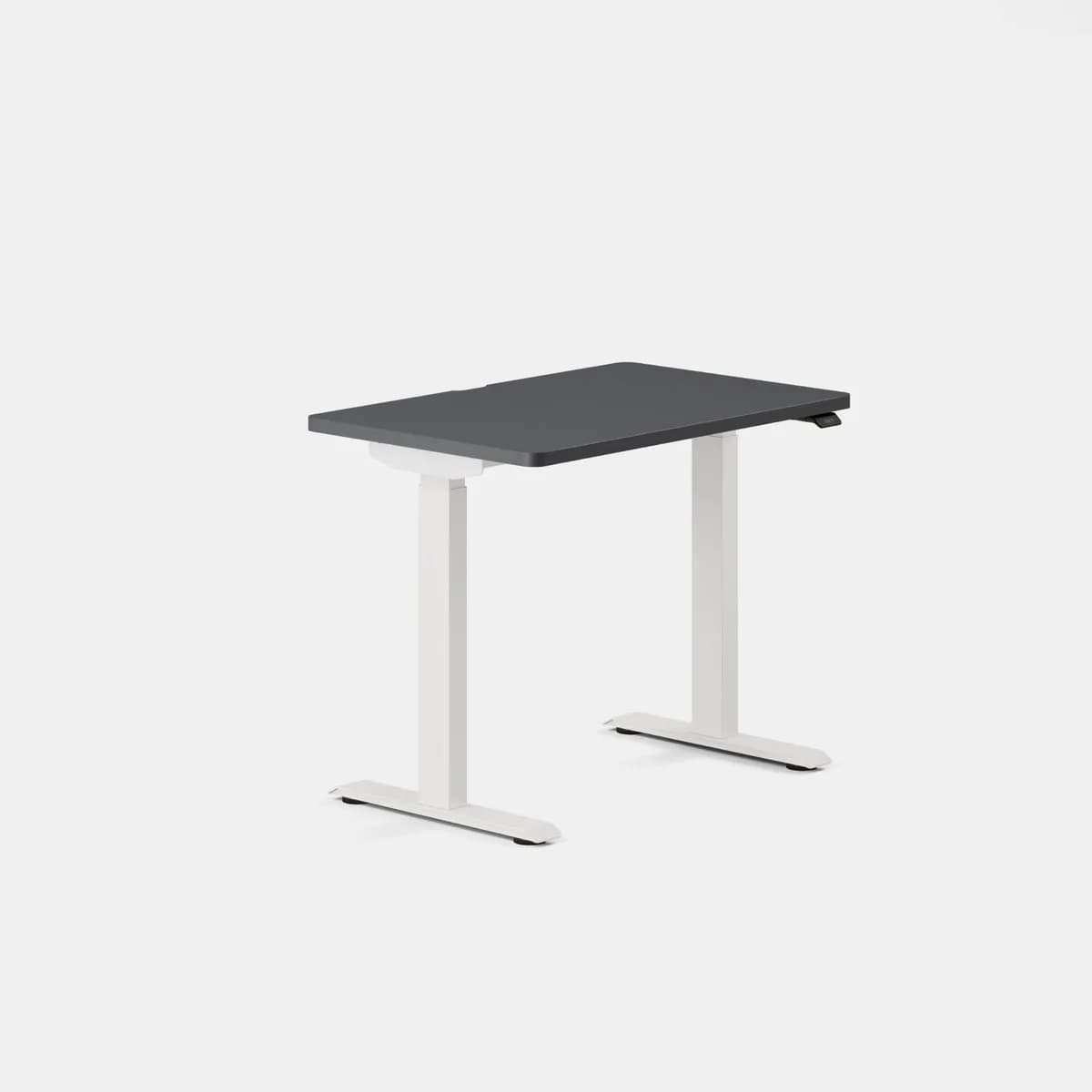
Branch Duo Standing Desk
Branch built the Duo for rooms that cannot take a full-size desk: 36 or 48 inches wide and 24 deep, with a 58×27 size above them, and a frameless underside so a drawer unit or a chair can sit where a crossbar normally lives. An OLED control panel replaces the usual plastic keypad, the finish options are furniture colours rather than office ones, and the whole thing is covered for ten years including the top — unusual generosity at $549. The compromise is the height range. Two-stage legs give it 19.3 inches of travel starting at 28, which is near the top of what a normal fixed desk measures. That works for an average-to-tall user and does not work for a short one, and no keyboard tray fixes a desk that will not go low enough. Judge it as a compact desk for someone of average height, not as a small version of a full-range one.
Who this desk fits
estimated, not measured
Reaching 28″ at the bottom and 47.3″ at the top, this desk can hit both a sitting and a standing elbow height for people roughly 5′10″ to 6′4″ tall.
How the height is quoted: Working-surface height with the laminated top fitted, which is the only way the Duo is sold.
Enter your height — 5'11", 71 or 180cm all work.
What ~$549 buys: Complete 36×24 desk with the woodgrain laminated top; the 48×24 is $649 and the 58×27 is $749.
Specifications
At a glance
Features
- 36×24 and 48×24 sizes for small rooms, plus a 58×27
- Frameless underside, no crossbar
- OLED control paddle with two presets
- 275 lb rated lift
- 10-year warranty covering frame and top
- Ten top finishes in furniture colours
In its favour
- The only desk here that comes as narrow as 36 inches
- Ten years covering the top as well as the frame, at $549
- The frameless underside leaves room for a drawer unit or a chair to tuck fully under
- OLED readout rather than an unlabelled two-button keypad
- Finishes chosen to look like furniture rather than office equipment
Against it
- A 28-inch minimum is about the height of an ordinary fixed desk and too tall for shorter users to sit at
- Under 20 inches of travel, where three-stage desks give 25-plus
- One material — laminated MDF, no bamboo or solid-wood option
- Only two presets, and Branch does not publish travel speed or noise
These points come from the published specification and the desk's design, not from owner reports — this model has not yet had enough owner discussion collected to draw on.
What owners say
Summarised from owner discussions and long-term write-ups, not from anything we tested ourselves.
Branch built the Duo for rooms that cannot take a full-size desk, and at 36 by 24 inches it genuinely is the smallest real standing desk here. The frameless underside is a deliberate and useful choice — no crossbar means a pedestal or a chair goes fully underneath — and ten years covering the top as well as the frame at $549 is unusually good.
The limitation is the height range, and it is the same one that catches out most of the budget and design-led tier. Two-stage legs starting at 28 inches means the lowest it goes is roughly where an ordinary desk already is: it adds a standing position without fixing the sitting one, and no accessory changes that. The people it suits knew their room before they knew their desk. The people it fails are the ones who went looking for a standing desk because sitting at the current one hurt.
What owners like
- The only desk here that comes as narrow as 36 inches, which solves a room problem nothing else in this catalog addresses
- Ten years covering the top as well as the frame at $549 is generous for the price bracket
- The frameless underside means a drawer unit or a chair tucks fully under with no crossbar in the way
- An OLED readout instead of an unlabelled two-button rocker, which makes setting a height by number possible
Common complaints
- A 28-inch minimum is about the height of an ordinary fixed desk, so it does not solve the sitting half of the problem for shorter users
- Under 20 inches of travel from two-stage legs, against 25-plus on three-stage frames
- Laminated MDF only — no bamboo, no solid wood, no upgrade path on the surface
- Branch publishes neither travel speed nor noise, which makes it hard to compare against desks that do
Questions owners ask
Is the Duo too tall for a shorter user?
How does it compare with the original Branch Standing Desk?
Will a drawer unit fit underneath?
Branch Duo Standing Desk, head-to-head
Desks people look at alongside it
More from Branch →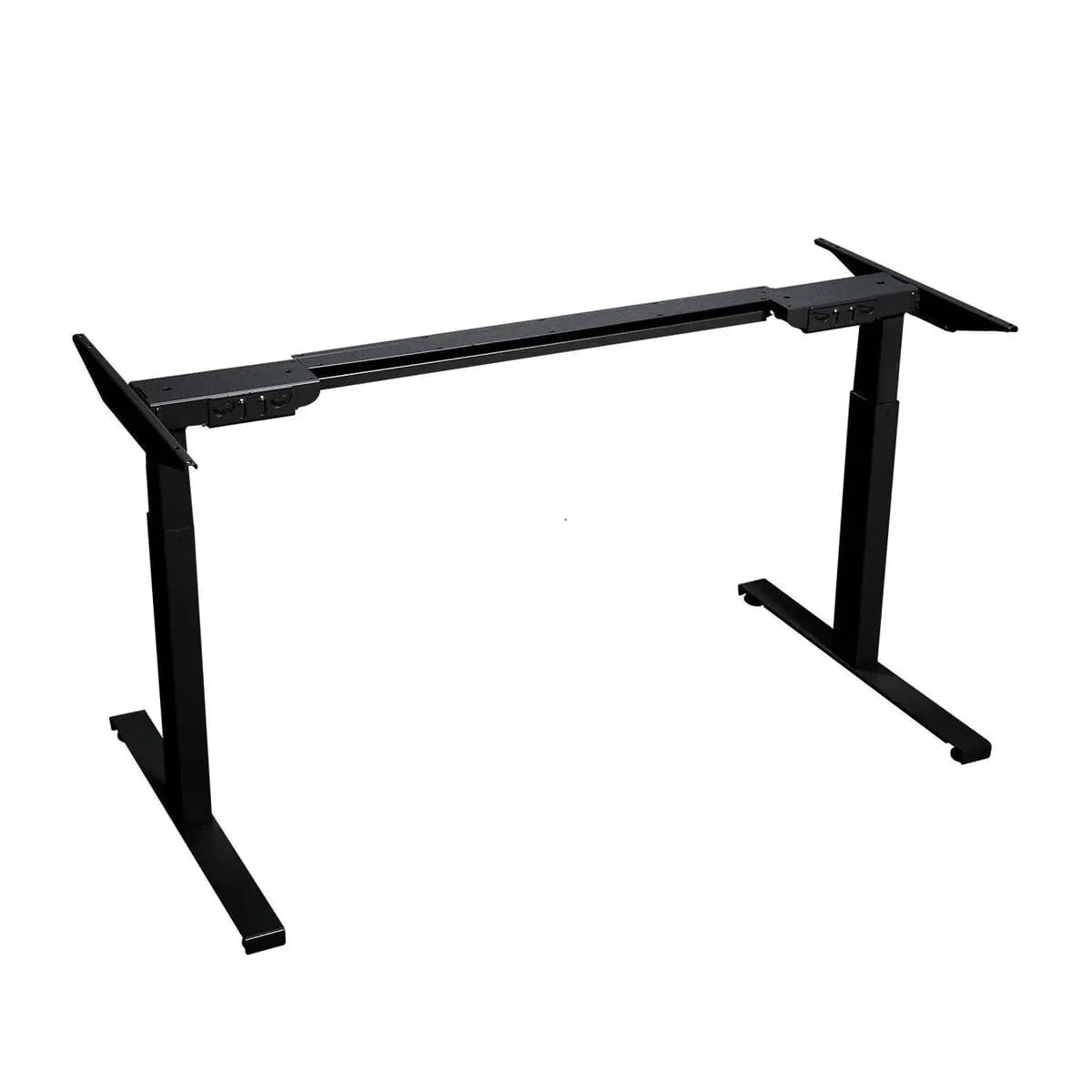
iMovR
iMovR Lander Lite
The Lander Lite is iMovR's base for people bringing their own top, and the specification to watch is which base you are actually buying. The standard base's frame travels 26.6 to 46.75 inches — a narrow 20-inch span with a high floor and a low ceiling, which by the elbow-height rule suits a fairly narrow band of people. The XT base covers 23.25 to 49.25, a much more useful window, and it is the one most buyers should want. Both carry iMovR's lifetime frame warranty with ten years on the motors and electronics, and both use a paddle control with two programmable heights. At 225 lb it is a light-duty base by the standards of this catalog, so pair it with a laminate or bamboo top rather than a two-inch slab.
Fits 5′9″ to 6′5″ (est.)
Best for: A DIY build with a lightweight top, from someone who wants a long US-backed warranty on the base.
Full spec sheet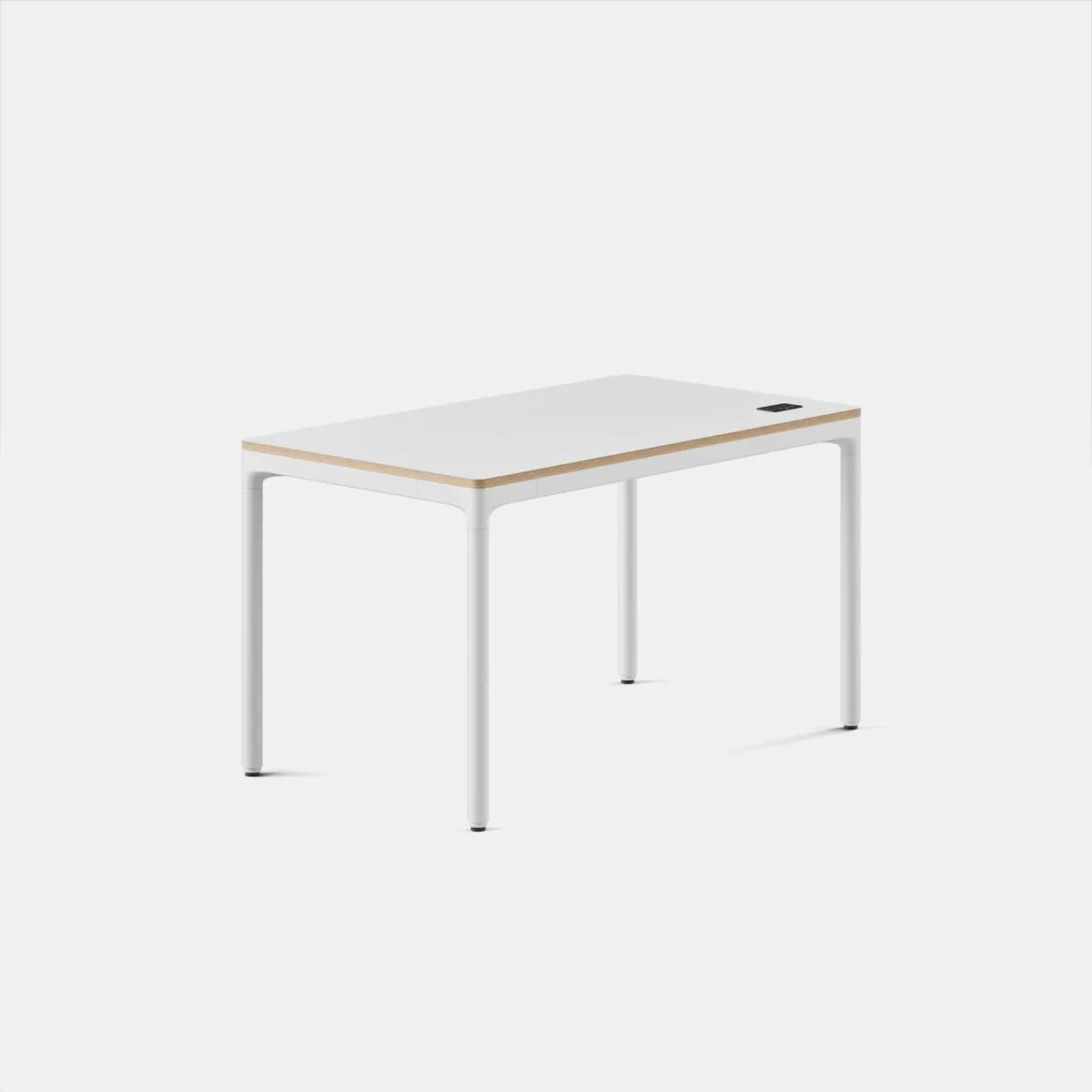
One motor in each of four legs, a ten-year structural warranty, and the clean look Branch sells on — this is the four-leg desk for an office that has to look like a room rather than a workstation. It removes the wobble problem structurally, the way every four-leg desk does, and it does it without crossbars. But the numbers underneath are modest for the money. The 225 lb rating is the lowest of any four-leg desk here, lower than several two-leg frames costing half as much, and the 44.6-inch ceiling is the lowest maximum of any powered desk in this catalog — by the standing-elbow rule that is about right for a 6 ft user and short for anyone taller. At $1,099 it costs more than four-leg frames here rated for well over twice the load. Buy it for the design and the warranty; it is not the spec-sheet choice.
Fits 5′8″ to 6′0″ (est.)
Best for: A visible office where four-leg steadiness and a clean look matter more than reach or capacity.
Full spec sheet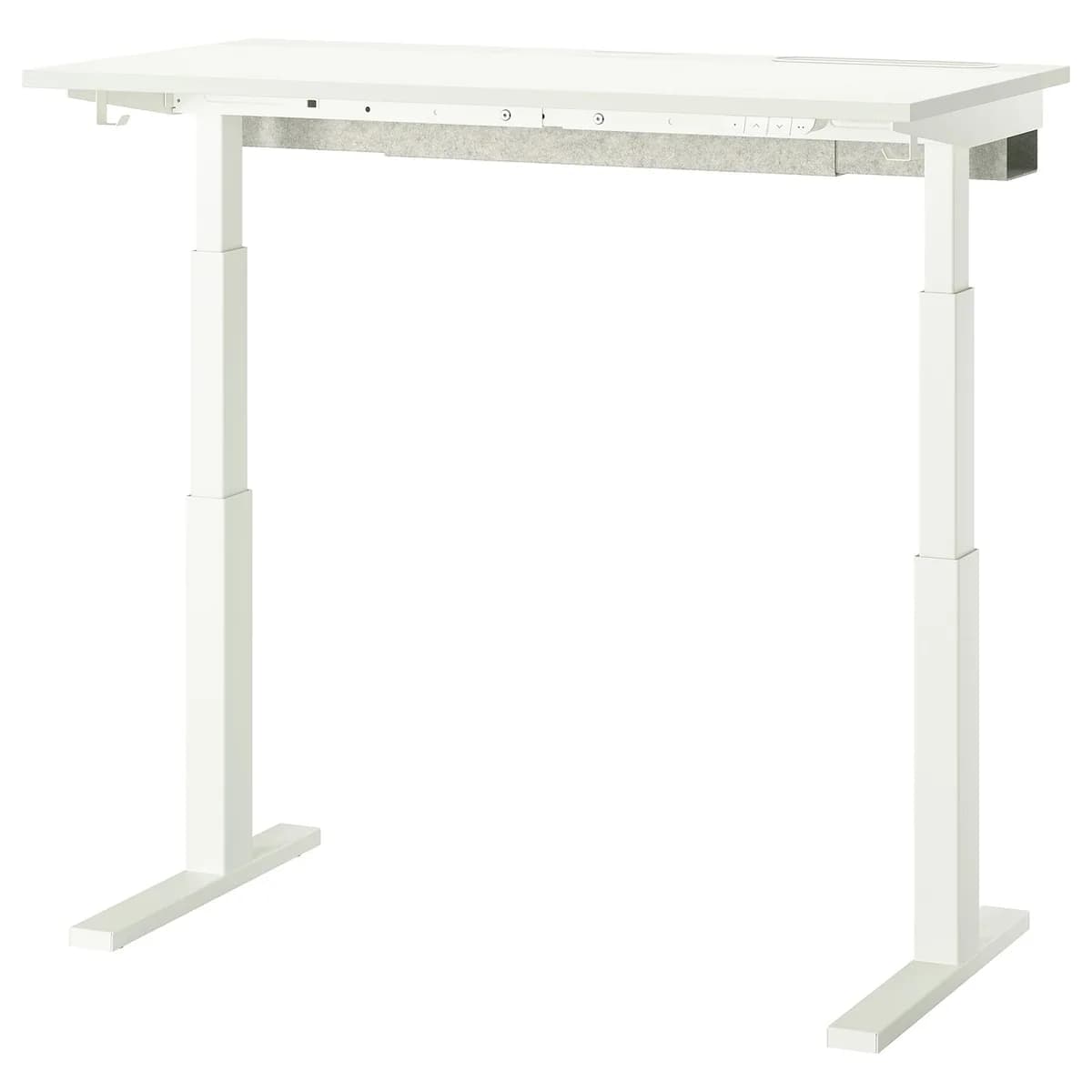
MITTZON is IKEA's newer office range and the sit/stand version is the value pick of the two IKEA desks here. It takes the IDÅSEN's approach — dual motors, collision detection that reverses by an inch or two, a 24.4-inch minimum — adds 22 lb of capacity, includes the cable tray that IDÅSEN charges for, and offers five sizes including two shallow 23.6-inch-deep options that suit a narrow room. It gives up a little perceived solidity and the IDÅSEN's slightly higher build quality. For most people the extra sizes and the included tray matter more. As with every IKEA desk the electronics carry two years against ten on the structure, and the controller is proprietary.
Fits 5′1″ to 6′8″ (est.)
Best for: A narrow room or a tight budget where a 23.6-inch-deep surface solves the problem.
Full spec sheet