Humanscale
Humanscale Float Table
Not sold new in the US. Humanscale no longer lists the Float Table: its page redirects to the general product list, and its standing desks are now the eFloat models and the smaller Float Mini.
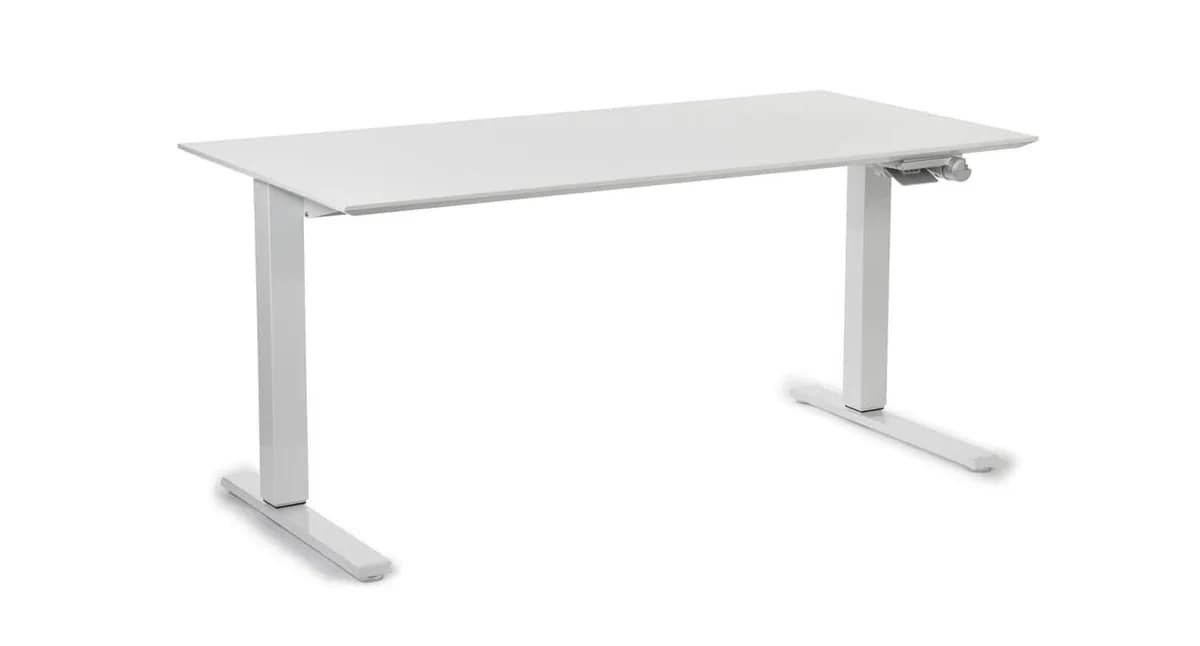
Humanscale no longer lists the Float Table — its page now redirects to the general product list, and the counterbalance desks it sells are the smaller Float Mini and Float Gather — so this entry is a reference for anyone weighing a used one. The Float raises and lowers on an adjustable counterbalance: you dial the mechanism to the weight sitting on the desk, then move twenty inches of height with one hand and no power. There is no crossbar, no control box and no motor, which makes it silent and immediate — no two-second wait, no hum on a call, nothing that stops working when the controller dies. It is a Humanscale product, so the detailing and the finish are a level above the mid-market, and it was priced accordingly, at around $1,635 when last listed. The trade-offs are specific. The counterbalance is tuned to a load, so adding a second monitor means re-tensioning it. The 130 lb capacity is low for a full-size desk. And 27 to 47 inches is a narrower window than most powered desks, suiting roughly 5 ft 7 in to 6 ft 3 in by the elbow-height rule.
Who this desk fits
estimated, not measured
Reaching 27″ at the bottom and 47″ at the top, this desk can hit both a sitting and a standing elbow height for people roughly 5′8″ to 6′4″ tall.
How the height is quoted: Work-surface height with the top fitted; the Float is quoted as a finished table, not a bare base.
Enter your height — 5'11", 71 or 180cm all work.
What ~$1,635 buys: Last list price for the complete table with a laminate top, before Humanscale dropped it from its range.
Specifications
At a glance
Features
- Adjustable counterbalance lift, no motor or power
- 20 in of one-handed travel
- No crossbar and no control box under the surface
- 130 lb of supported desktop weight
- Laminate and solid-wood surfaces
In its favour
- Moves instantly with one hand, with no motor delay or noise on a call
- Nothing electronic means nothing to fail, and no standby power draw
- No crossbar and no control box leaves the underside completely clear
- Finish and detailing a clear step above the mid-market
Against it
- No longer listed by Humanscale as of October 2026: the Float Table's page redirects to the general product list, so it is shown for comparison
- The counterbalance must be re-tensioned whenever the load on the desk changes
- 130 lb of supported weight is low for a full-size desk
- A 27-inch floor and a 47-inch ceiling is a narrow window, suiting roughly 5 ft 7 in to 6 ft 3 in
- About $1,635, well above powered desks with twice the capacity
- No presets, and no way to return to an exact height
These points come from the published specification and the desk's design, not from owner reports — this model has not yet had enough owner discussion collected to draw on.
What owners say
Summarised from owner discussions and long-term write-ups, not from anything we tested ourselves.
The Float is the anti-powered-desk: a tuned counterweight carries the load, so twenty inches of height change happens with one hand, instantly and silently, with no control box, no crossbar and nothing under the surface at all. For a minimal workspace, or for anyone who finds a two-second motor whine on a call irritating, that combination is the point. Humanscale no longer lists the Float Table, so this now describes a used one.
The constraints are specific rather than general. Re-tensioning the mechanism whenever the load changes is a real chore if your setup evolves. It also carries little for a full-size desk, which is not what $1,635 leads you to expect. And the range is narrow — 27 to 47 inches covers roughly 5 ft 7 in to 6 ft 3 in by the elbow-height estimate and nobody outside it, which is a smaller window than several desks a third of the price.
What owners like
- Moves instantly with one hand and makes no noise at all, which no powered desk manages
- No crossbar and no control box leaves the underside completely clear
- Nothing electronic means no standby draw and nothing to fail or replace
- Detailing and finish are a clear step above the mid-market, which is most of what the price buys
Common complaints
- The counterbalance is tuned to a specific load and must be re-tensioned whenever you change what is on the desk
- 130 lb of supported desktop weight is low for a full-size desk
- A 27 to 47-inch window is narrow, suiting roughly 5 ft 7 in to 6 ft 3 in
- About $1,635, well above powered desks with twice the capacity
- No presets and no way to return to an exact height
Questions owners ask
How does a counterbalance desk work?
Is 130 lb going to be a problem?
Who does the 27-to-47-inch range actually fit?
Humanscale Float Table, head-to-head
Desks people look at alongside it
Ergotron
Ergotron WorkFit-D
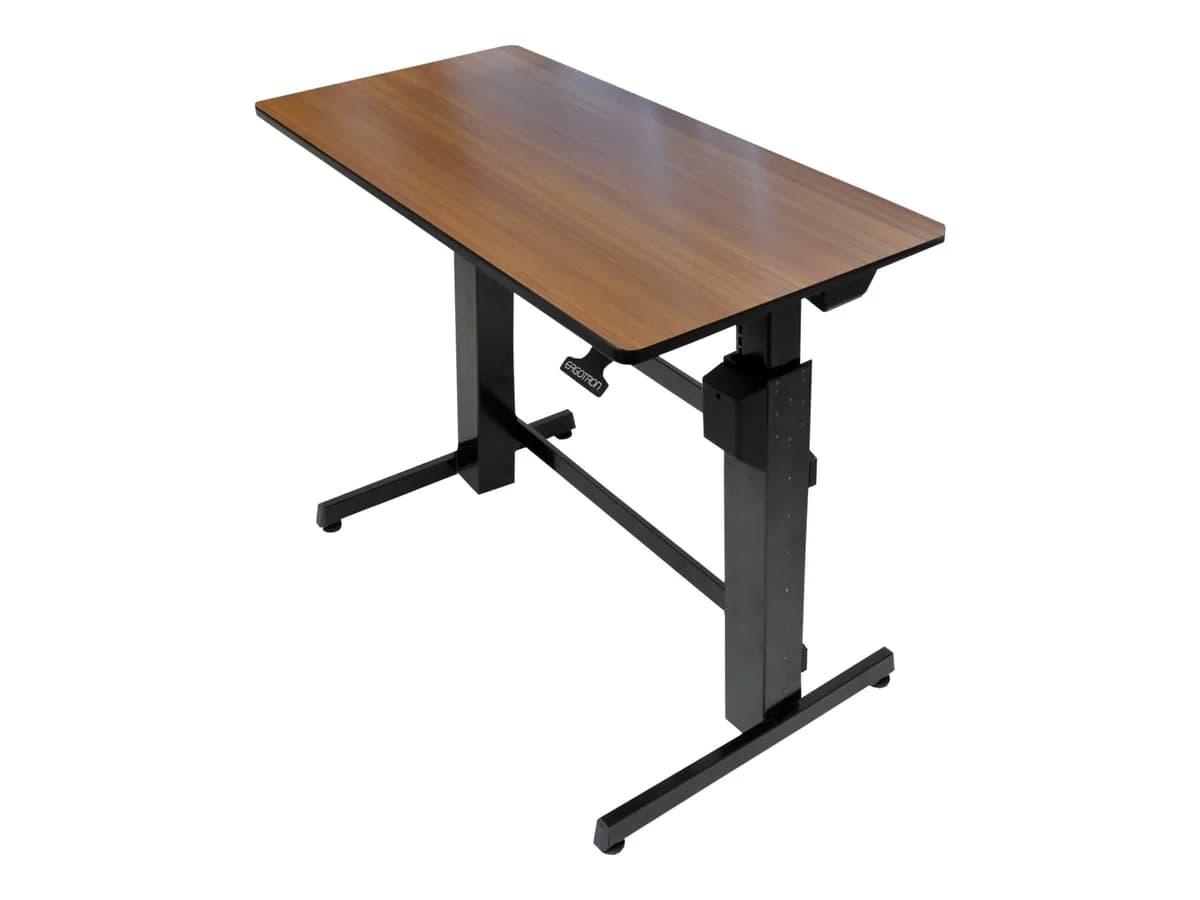
Ergotron's Constant Force mechanism is a coiled spring tuned to the weight on the surface, so the desk rises and falls with one hand at whatever speed you move it, with no motor, no controller and no power lead. Set it up anywhere — a warehouse, a classroom, a room with no free outlet — and it never needs a firmware update or a replacement control box. For the twenty inches between 30.6 and 50.6 that is a genuinely excellent mechanism. The problem is where those twenty inches sit. A 30.6-inch minimum is above the height of an ordinary fixed desk, so by the seated-elbow rule this desk does not lower far enough for anyone under about 6 ft 4 in to sit at comfortably. Treat it as a standing desk that can drop to perching height, not as a sit-stand desk, and it makes sense. Expect it to fail you if you bought it to fix a too-high desk.
Fits 6′5″ to 6′10″ (est.)
Best for: A standing-first workstation, or anywhere mains power and control boxes are a nuisance.
Full spec sheet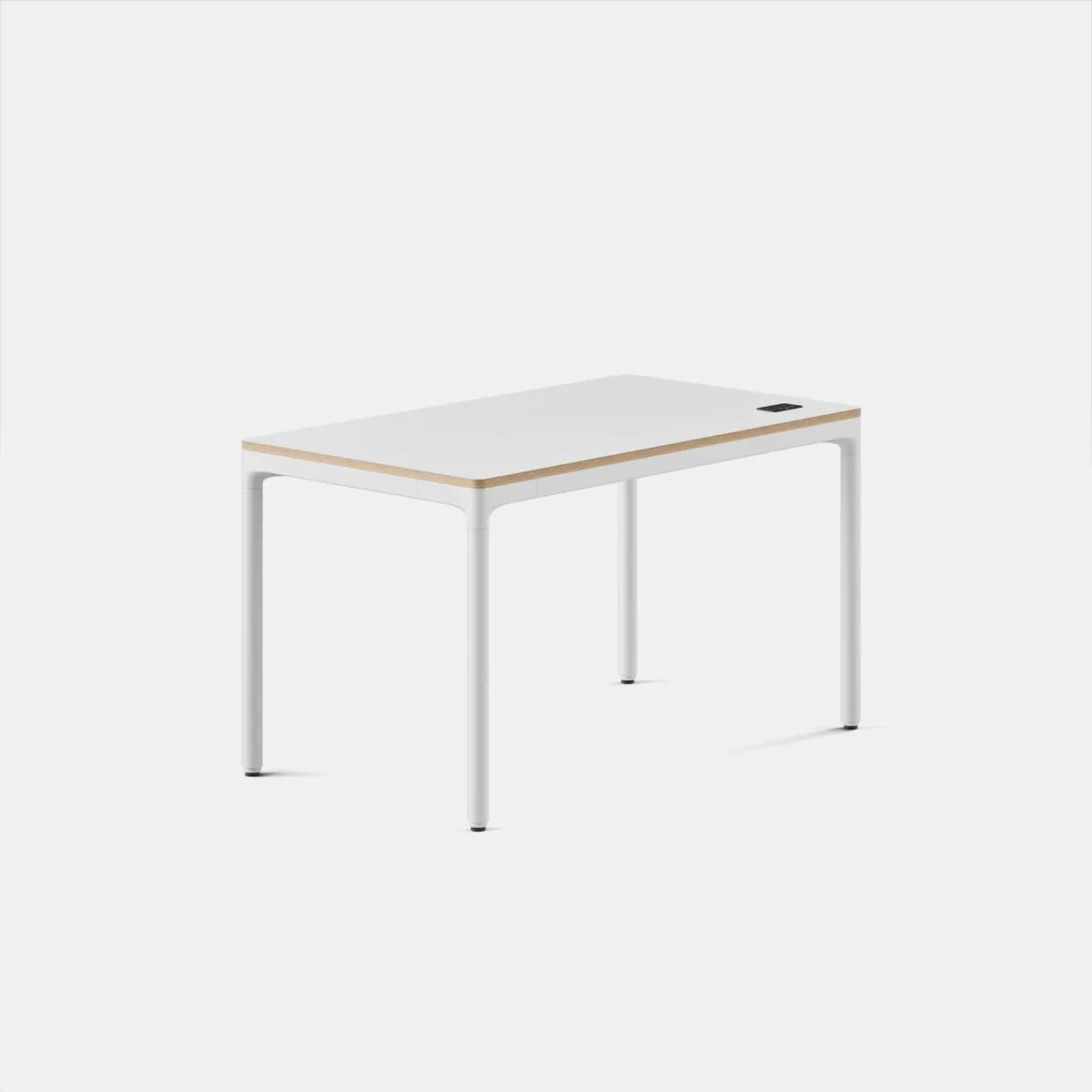
One motor in each of four legs, a ten-year structural warranty, and the clean look Branch sells on — this is the four-leg desk for an office that has to look like a room rather than a workstation. It removes the wobble problem structurally, the way every four-leg desk does, and it does it without crossbars. But the numbers underneath are modest for the money. The 225 lb rating is the lowest of any four-leg desk here, lower than several two-leg frames costing half as much, and the 44.6-inch ceiling is the lowest maximum of any powered desk in this catalog — by the standing-elbow rule that is about right for a 6 ft user and short for anyone taller. At $1,099 it costs more than four-leg frames here rated for well over twice the load. Buy it for the design and the warranty; it is not the spec-sheet choice.
Fits 5′8″ to 6′0″ (est.)
Best for: A visible office where four-leg steadiness and a clean look matter more than reach or capacity.
Full spec sheet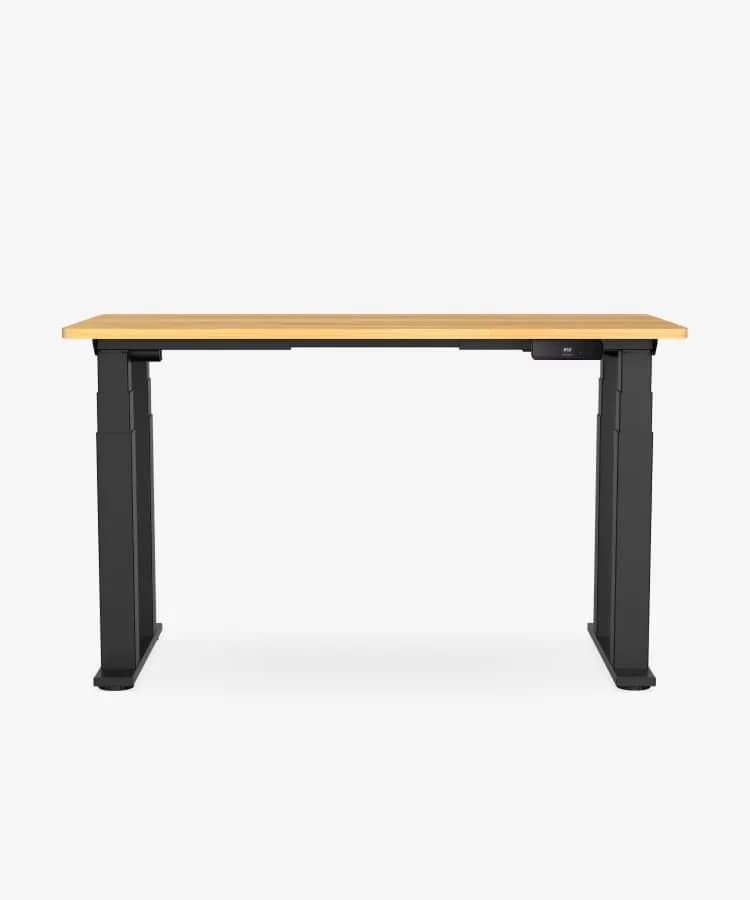
FlexiSpot
FlexiSpot E7 Plus
Four legs, a 440 lb lifting rating and a 52.6-inch working ceiling — the E7 Plus is FlexiSpot's answer to the wobble that dogs every two-leg desk, and owners who bought it specifically to stop their monitors shaking report exactly that outcome at both sitting and standing height. At about $700 with a laminate top it is the cheapest four-leg desk here, which is the whole argument for it, and it carries the same fifteen years on the frame and electronics as FlexiSpot's two-leg frames, with two on the laminate top. The 27-inch working minimum is high — this is not the desk for a short user — and four legs plus crossbars make for a long build and an awkward footprint around a drawer unit.
Fits 5′8″ to 7′1″ (est.)
Best for: Killing monitor shake on a budget, for anyone tall enough that a 27-inch working minimum is not a problem.
Full spec sheet