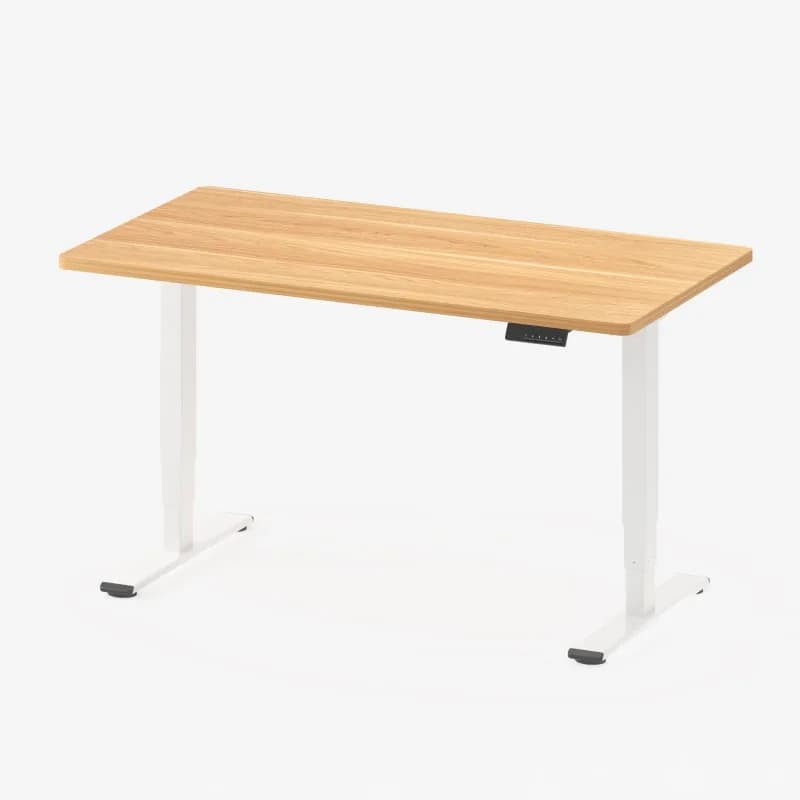
FlexiSpot E5
The E5 is the entry into FlexiSpot's three-stage frames and the answer to the recurring question of whether a cheap desk is automatically a bad one. It is not: three-stage legs, a 25.4-inch working minimum and nearly 25 inches of travel at $350 is a genuinely good specification. The economies are where you would expect — 220 lb of capacity, three presets instead of four, a chipboard top in the base configuration and a cable tray that costs extra. The frame's honest limit is load: at 220 lb it will carry a laptop, two monitors and a lamp without complaint, but it is not the frame for a butcher block and a tower. Shoppers regularly cross-shop it against the E7 and end up paying the extra for the capacity; if your setup is light, that money is doing nothing.
Who this desk fits
estimated, not measured
Reaching 25.4″ at the bottom and 50.2″ at the top, this desk can hit both a sitting and a standing elbow height for people roughly 5′3″ to 6′9″ tall.
How the height is quoted: Work-surface height with a 1-inch top: the 24.4–49.2 in quoted for the E5 is frame travel, so the figures here add an inch to compare with desks quoted at the surface.
Enter your height — 5'11", 71 or 180cm all work.
What ~$350 buys: Frame with a 48×24 chipboard top; bamboo in 60×30 is about $500.
Specifications
At a glance
Features
- Three-stage legs, 24.4–49.2 in frame travel
- 220 lb rated lift
- Three memory presets
- Frame spans 43–71 in
- Collision detection included
In its favour
- Three-stage travel at a price where most rivals are two-stage
- 25.4 inches at the work surface is low enough for most people to sit at properly
- The frame spans 43–71 inches, so it accepts almost any top
- Cheap enough that the whole desk costs less than some frames alone
Against it
- 220 lb rules out a heavy slab plus a tower
- Three presets rather than four, and a plainer keypad
- The base configuration ships a chipboard top that will not age like bamboo
- Cable tray is an add-on
- Five-year frame and two-year electronics warranty
These points come from the published specification and the desk's design, not from owner reports — this model has not yet had enough owner discussion collected to draw on.
What owners say
Summarised from owner discussions and long-term write-ups, not from anything we tested ourselves.
The E5 is the desk people buy when the budget is real and the setup is light, and it holds up better than its price suggests: three-stage legs, a 24.4-inch frame minimum and 25 inches of travel are a genuinely good specification at this money, and owners describe it as stable under load with no anxiety at standing height.
Where it stops is weight. At 220 lb it will carry a laptop, two monitors and a lamp indefinitely; it is not the frame for a butcher block plus a mounted tower, and owners cross-shopping it against the E7 usually pay the extra for capacity they may or may not need. If your setup is light, that money is doing nothing.
What owners like
- Three-stage travel at a price where two-stage is the norm, which is the whole argument for it
- Owners report it stable under full load and say they feel confident at standing height
- The frame span suits almost any top, making it a common base for a first DIY build
- Cheap enough that the complete desk costs less than several frames on their own
Common complaints
- 220 lb is the real ceiling here, and owners loading a heavy slab plus a tower are advised toward the E7 instead
- The chipboard surface in the base configuration is the same one owners of pricier FlexiSpot desks advise avoiding
- Three presets and a plainer keypad than the rest of the line
- Frame and motors are covered for five years, electronics for two
Questions owners ask
Is the E5 enough desk, or should I stretch to the E7?
Is three-stage worth it at this price?
Should I take the chipboard top?
FlexiSpot E5, head-to-head
Desks people look at alongside it
More from FlexiSpot →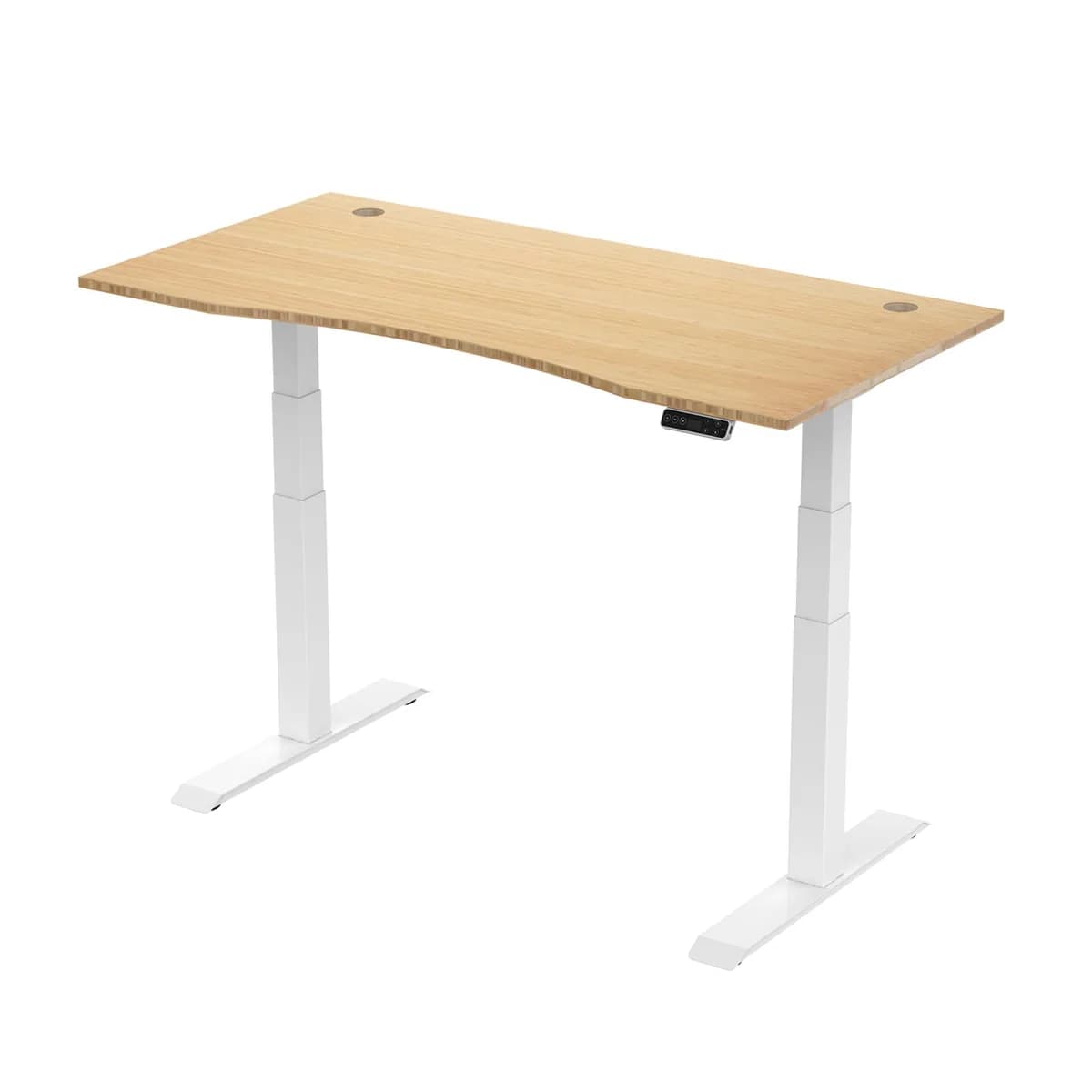
FlexiSpot
FlexiSpot E7
The E7 is the frame that made the mid-market: three-stage legs, a frame that drops to 22.8 inches (23.8 at the surface of a 1-inch top), a 355 lb rating and a fifteen-year warranty at a price that undercuts the American brands by several hundred dollars. It is the default recommendation for anyone putting their own top on a frame, and the reason is the combination of that low minimum with square 2×2-inch columns that resist twist better than the round legs on cheaper frames. The E7's specific advantage inside its own family is easy to miss: it goes lower than the E7 Pro. If you are short, or you sit low, the plain E7 is the better desk despite being the cheaper one. The trade is the same one every two-leg frame makes — owners report it is rock solid seated and moves at standing height, more so as the top gets wider — and the cable tray that the Pro includes is an extra here.
Fits 5′0″ to 6′8″ (est.)
Best for: Putting a butcher block or an existing top on a well-made frame without paying American-brand prices.
Full spec sheet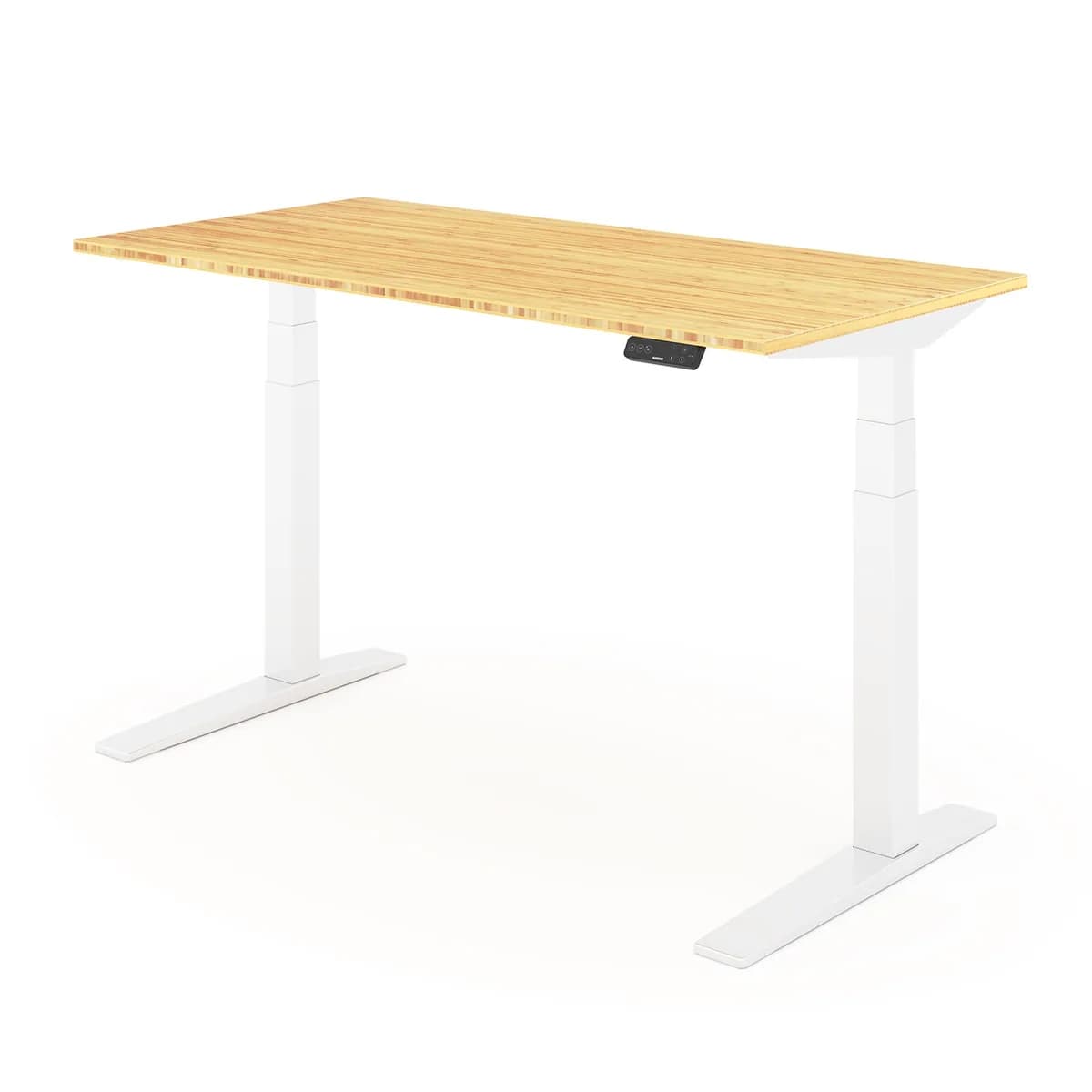
FlexiSpot
FlexiSpot E7 Pro
The Pro is the E7 with heavier columns: 440 lb instead of 355, ten more pounds of steel in the frame, an LED touch keypad with a USB charging port, and a collision system that reverses rather than just stopping. It reaches 51.6 inches at the work surface, which is what makes it one of the few frames that genuinely suits someone around 6 ft 5 in standing. But it buys that top end by giving up the bottom: the working minimum is 26 inches against the plain E7's 23.8. That is the decision. If you are tall, the Pro. If you are short, or you share the desk with someone who is, the cheaper E7 fits more people. Owners describe it as extremely solid seated, with the usual two-leg movement appearing at standing height, and consistently flag one practical detail — set the legs wider than the default if you intend to hang the drawer accessory, because otherwise you knee it all day.
Fits 5′5″ to 6′11″ (est.)
Best for: Tall users and heavy rigs, as long as nobody short needs to sit at the same desk.
Full spec sheet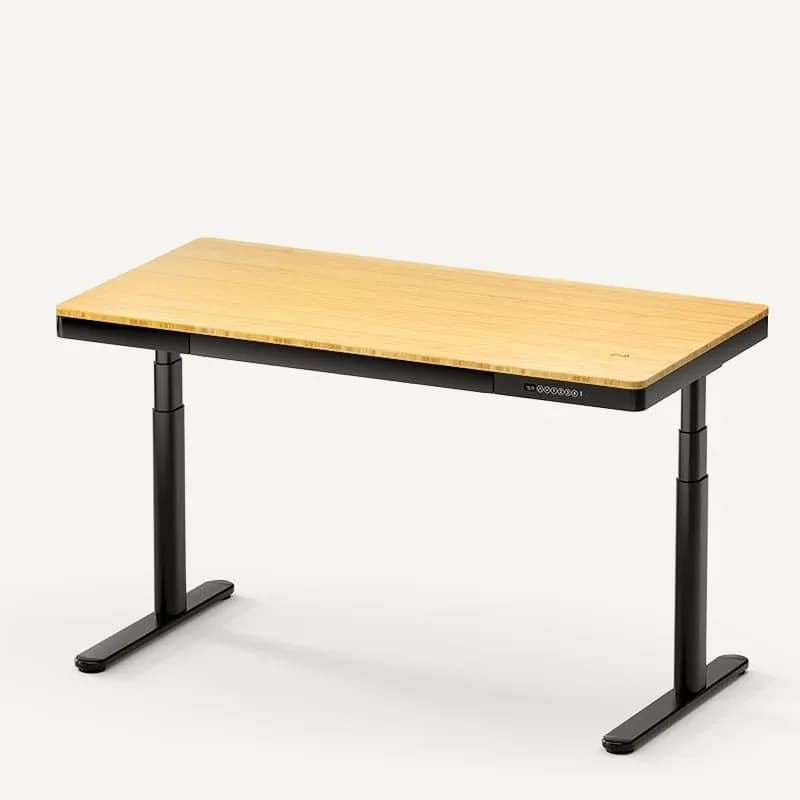
FlexiSpot
FlexiSpot Comhar Pro Q8
The Q8 is the one that doesn't look like a standing desk. A single 55×28 bamboo surface with a shallow drawer built into it, a Qi charging pad set into the top, three USB ports in the front edge and no visible cable tray — it is designed for a bedroom or a living room where an office frame would be an eyesore. Underneath it is a proper three-stage desk, 23.6 to 48.8 inches, which is a wider range than plenty of frames that look far more serious. The limits follow from the design: one size, one shape, 220 lb of capacity, and a drawer that eats the space a keyboard tray would use. It is also not cheap for what it carries. Buy it for the integration and the look; if you want capacity and choice for the same $700 the E7 Plus is four-legged and lifts 440 lb.
Fits 4′11″ to 6′7″ (est.)
Best for: A bedroom or living-room desk that has to look like furniture and still reach a proper sitting height.
Full spec sheet