FlexiSpot E7 vs FlexiSpot E5
FlexiSpot
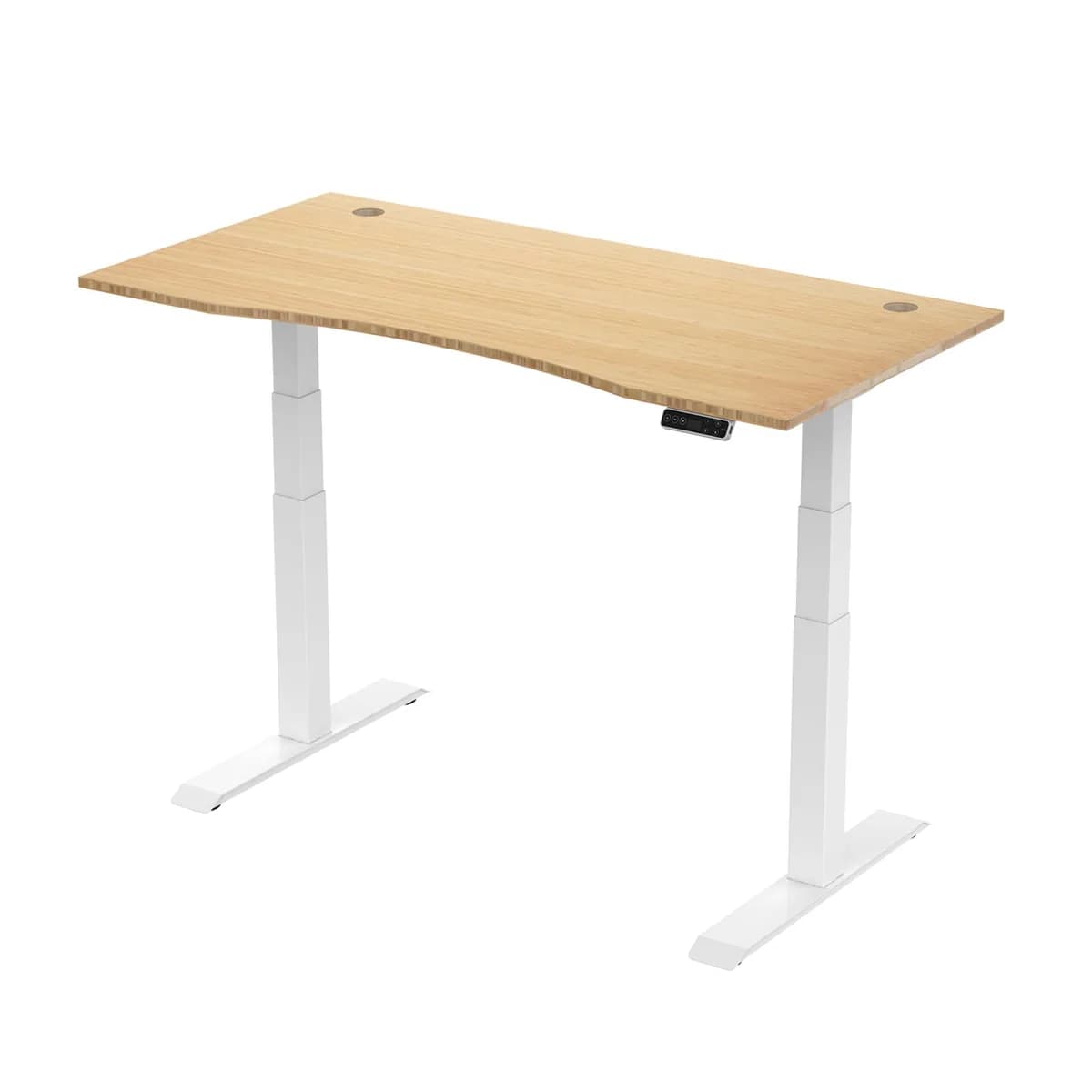
FlexiSpot E7
Fits 5′0″ to 6′8″ (est.)
The E7 is the frame that made the mid-market: three-stage legs, a frame that drops to 22.8 inches (23.8 at the surface of a 1-inch top), a 355 lb rating and a fifteen-year warranty at a price that undercuts the American brands by several hundred dollars. It is the default recommendation for anyone putting their own top on a frame, and the reason is the combination of that low minimum with square 2×2-inch columns that resist twist better than the round legs on cheaper frames. The E7's specific advantage inside its own family is easy to miss: it goes lower than the E7 Pro. If you are short, or you sit low, the plain E7 is the better desk despite being the cheaper one. The trade is the same one every two-leg frame makes — owners report it is rock solid seated and moves at standing height, more so as the top gets wider — and the cable tray that the Pro includes is an extra here.
FlexiSpot
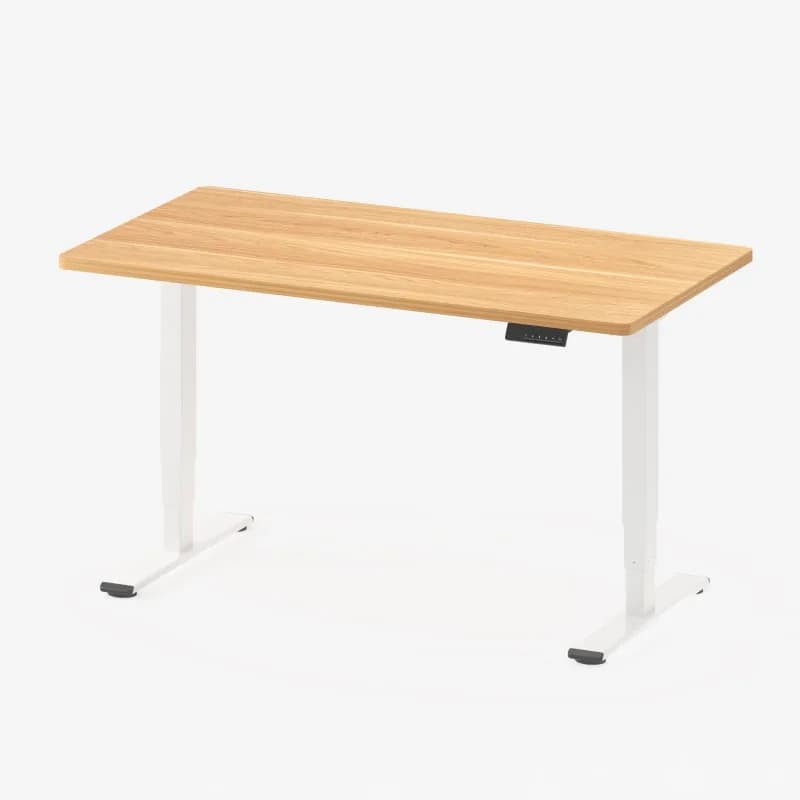
FlexiSpot E5
Fits 5′3″ to 6′9″ (est.)
The E5 is the entry into FlexiSpot's three-stage frames and the answer to the recurring question of whether a cheap desk is automatically a bad one. It is not: three-stage legs, a 25.4-inch working minimum and nearly 25 inches of travel at $350 is a genuinely good specification. The economies are where you would expect — 220 lb of capacity, three presets instead of four, a chipboard top in the base configuration and a cable tray that costs extra. The frame's honest limit is load: at 220 lb it will carry a laptop, two monitors and a lamp without complaint, but it is not the frame for a butcher block and a tower. Shoppers regularly cross-shop it against the E7 and end up paying the extra for the capacity; if your setup is light, that money is doing nothing.
Where they actually differ
- The FlexiSpot E7 gets 1.6″ lower, which matters if anyone using the desk is short — it reaches a sitting height for people down to about 5′0″, against 5′3″ for the FlexiSpot E5.
- The FlexiSpot E5 reaches 0.8″ higher, suiting standing users to about 6′9″ against 6′8″.
- The FlexiSpot E7 is rated for 135 lb more lift, though most home setups stay well under either figure.
- The FlexiSpot E7 is about $10 cheaper as configured — note what each price actually includes, since one may be a bare frame.
- Frame cover runs longer on the FlexiSpot E7 (15 yr frame / 15 yr electronics / 5 yr top). The electronics figure is the one worth reading twice — it is usually the part that fails.
Every line above is generated from the two spec sheets, not from an opinion. Height ranges are quoted on each maker's own basis — check both desk pages before comparing the figures directly.
| Spec | FlexiSpot E7 | FlexiSpot E5 |
|---|---|---|
| Approx. price | ~$340 | ~$350 |
| Height range | 23.8″–49.4″ | 25.4″–50.2″ |
| Travel | 25.6″ | 24.8″ |
| Fits users | 5′0″ to 6′8″ | 5′3″ to 6′9″ |
| Lift capacity | 355 lb | 220 lb |
| Leg stages | 3-stage | 3-stage |
| Motors | 2 motors | 2 motors |
| Speed | 1.4 in/s | 1.4 in/s |
| Noise | 50 dB | not published |
| Memory presets | 4 | 3 |
| Anti-collision | Motor current | Motor current |
| Crossbar | No | No |
| Leg shape | Square | Square |
| Warranty | 15 yr frame / 15 yr electronics / 5 yr top | 5 yr frame / 2 yr electronics / 5 yr top |
| Assembly | Full DIY | Full DIY |
| Cable management | Optional | Optional |
| Desktop sizes | 48×24, 48×30, 55×28, 60×30, 72×30, 80×30 | 48×24, 48×30, 55×28, 60×30 |
| Desktop materials | Laminate, Bamboo, Rubberwood, Solid wood texture | Chipboard, Bamboo, Laminate |
| Type | Electric 3-stage | Electric 3-stage |
Tinted rows are the specs on which these two desks differ.