FlexiSpot E7 Plus vs Deskhaus Peak Pro
FlexiSpot
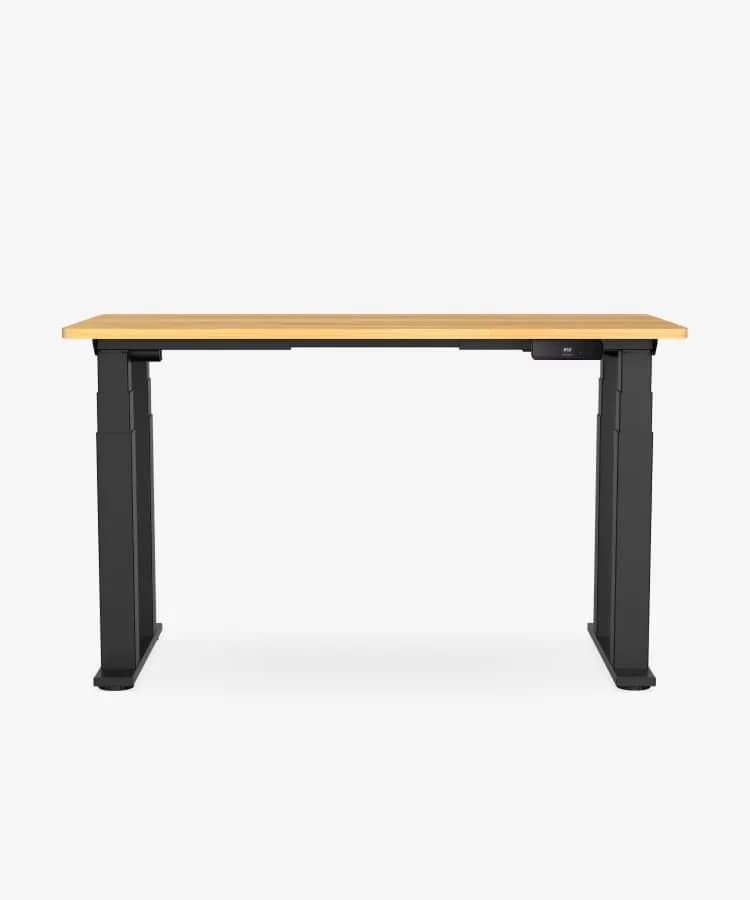
FlexiSpot E7 Plus
Fits 5′8″ to 7′1″ (est.)
Four legs, a 440 lb lifting rating and a 52.6-inch working ceiling — the E7 Plus is FlexiSpot's answer to the wobble that dogs every two-leg desk, and owners who bought it specifically to stop their monitors shaking report exactly that outcome at both sitting and standing height. At about $700 with a laminate top it is the cheapest four-leg desk here, which is the whole argument for it, and it carries the same fifteen years on the frame and electronics as FlexiSpot's two-leg frames, with two on the laminate top. The 27-inch working minimum is high — this is not the desk for a short user — and four legs plus crossbars make for a long build and an awkward footprint around a drawer unit.
Deskhaus
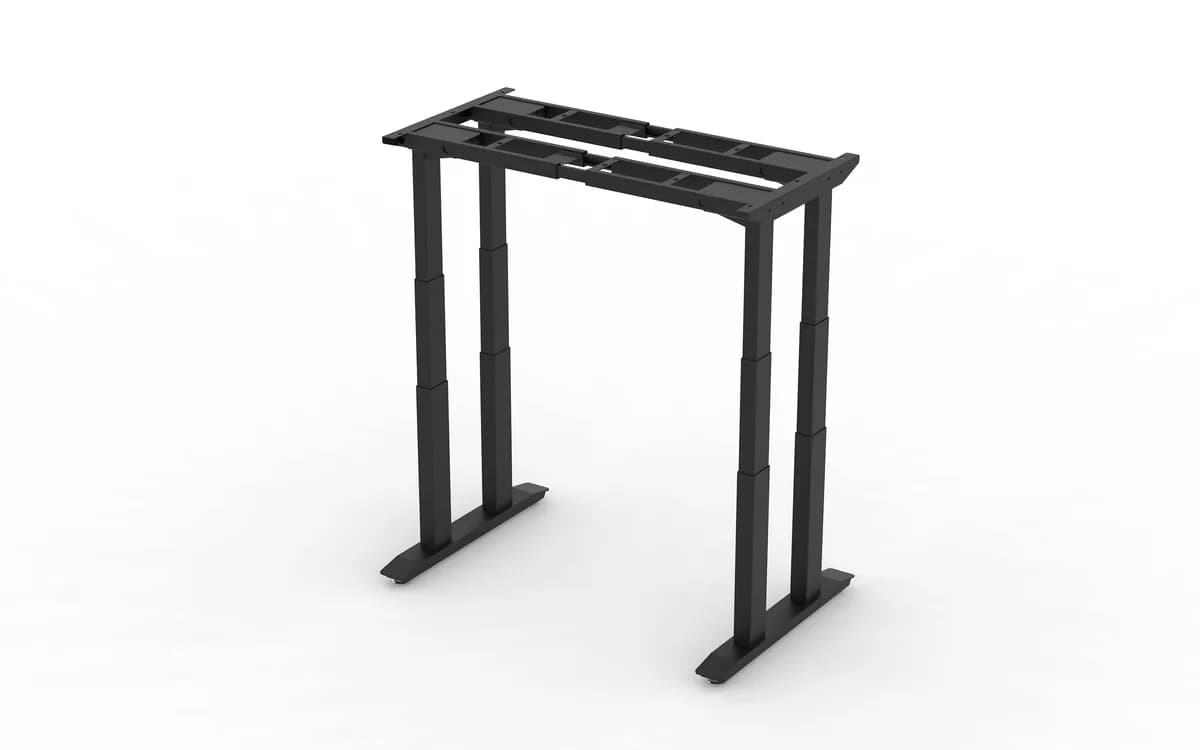
Deskhaus Peak Pro
Fits 5′4″ to 6′10″ (est.)
The Peak Pro is the Apex Pro's three-stage sibling: same four independent motors, same 600 lb rating, same twenty-year warranty, but 25.5 inches of travel that tops out at 51.1 — high enough for someone around 6 ft 6 in to stand at properly. It spans tops up to 80 inches wide, and instead of crossbars it uses support wedges under the surface to take the flex out of a long span, which keeps the floor clear. The trade against the Apex is at the bottom: the three-stage columns start at 25.6 inches rather than 22.5. That is a real loss for shorter users and the reason the cheaper Apex remains the better desk for a lot of people. Think of the Peak as the tall person's version, not the upgraded one.
Where they actually differ
- The Deskhaus Peak Pro gets 1.4″ lower, which matters if anyone using the desk is short — it reaches a sitting height for people down to about 5′4″, against 5′8″ for the FlexiSpot E7 Plus.
- The FlexiSpot E7 Plus reaches 1.5″ higher, suiting standing users to about 7′1″ against 6′10″.
- Only the Deskhaus Peak Pro has four legs, which halves the unsupported span across the top and is the structural fix for front-to-back movement at standing height.
- The Deskhaus Peak Pro is rated for 160 lb more lift, though most home setups stay well under either figure.
- The FlexiSpot E7 Plus is about $25 cheaper as configured — note what each price actually includes, since one may be a bare frame.
- Frame cover runs longer on the Deskhaus Peak Pro (20 yr frame / 10 yr electronics). The electronics figure is the one worth reading twice — it is usually the part that fails.
Every line above is generated from the two spec sheets, not from an opinion. Height ranges are quoted on each maker's own basis — check both desk pages before comparing the figures directly.
| Spec | FlexiSpot E7 Plus | Deskhaus Peak Pro |
|---|---|---|
| Approx. price | ~$700 | ~$725 |
| Height range | 27″–52.6″ | 25.6″–51.1″ |
| Travel | 25.6″ | 25.5″ |
| Fits users | 5′8″ to 7′1″ | 5′4″ to 6′10″ |
| Lift capacity | 440 lb | 600 lb |
| Leg stages | 3-stage | 3-stage |
| Motors | 2 motors | 4 motors |
| Speed | 1.4 in/s | 1.5 in/s |
| Noise | 50 dB | not published |
| Memory presets | 4 | 3 |
| Anti-collision | Motor current | Motor current |
| Crossbar | Yes | No |
| Leg shape | Square | Square |
| Warranty | 15 yr frame / 15 yr electronics / 2 yr top | 20 yr frame / 10 yr electronics |
| Assembly | Full DIY | Frame only |
| Cable management | Included | Optional |
| Desktop sizes | 48×24, 48×30, 55×28, 60×24, 60×30, 72×30, 80×30 | frame only |
| Desktop materials | Bamboo, Solid wood, Walnut, Maple, Laminate | your own |
| Type | Commercial / heavy-duty | Commercial / heavy-duty |
Tinted rows are the specs on which these two desks differ.